by Jean Marie Carey | 19 Sep 2016 | Animals in Art, Art History, Franz Marc
SINTRAX Kaffeebereiter, 1932, Gerhard Marcks.
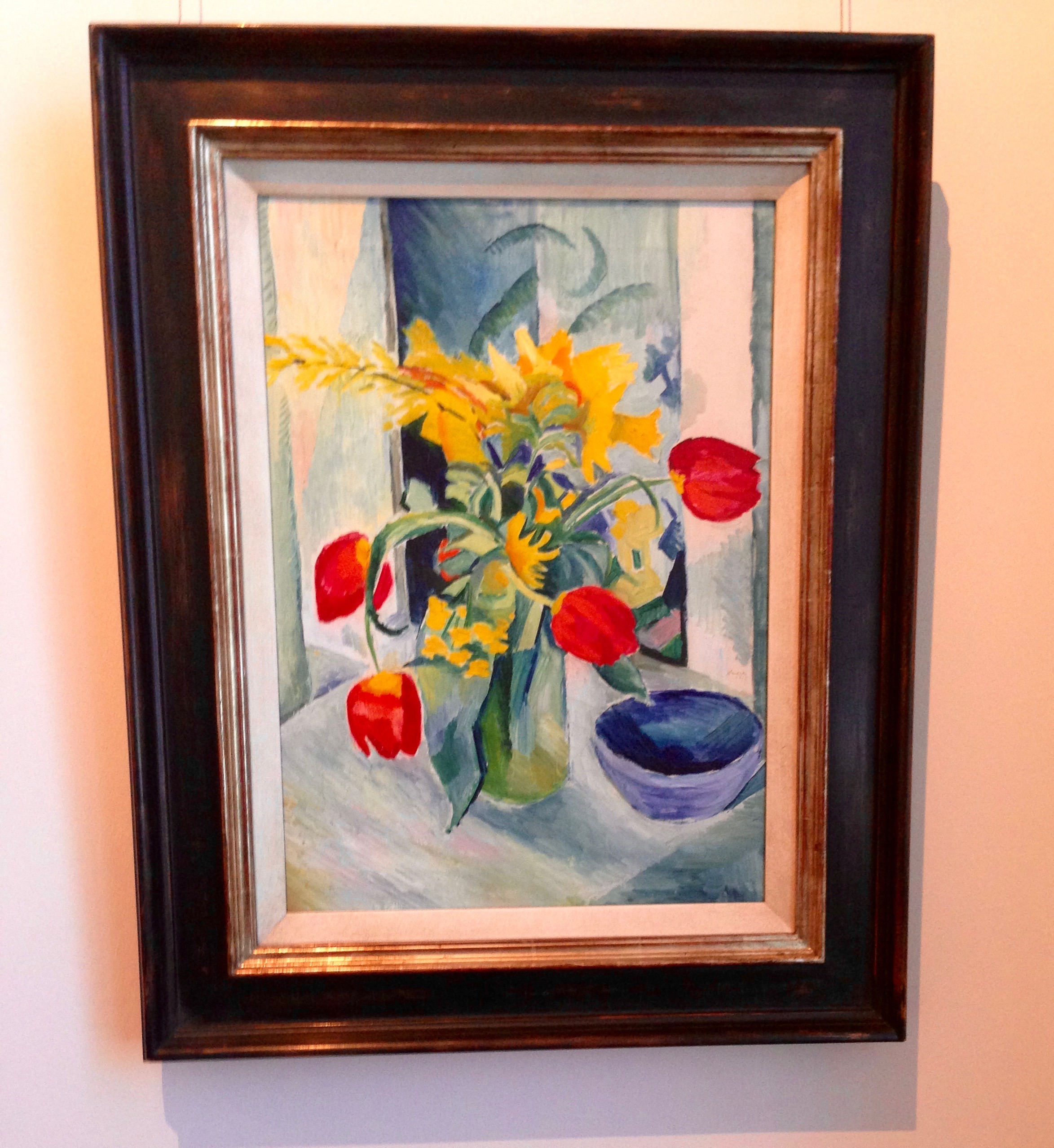
August Macke, Stillleben mit Tulpen, 1912
First I would encourage you to just skip this text and go right to the photos!
Otherwise: I went to Animalia: Interdisciplinary Perspectives and Explorations at the beginning of September mostly to see what the undergraduates and MA candidates were working on. The animal studies program at Carl von Ossietzky Universität Oldenburg is based within the Institute for American / English Studies. Though there was a mix of literary and cultural Human Animal Studies at hand the distinctive approach of this program is to examine the discipline through gender studies.
A highlight of the trip (in fact I devoted a whole day and night and went back the next day for this little side excursion) was visiting the Landesmuseum für Kunst und Kulturgeschichte Oldenburg which is actually three buildings: Oldenburger Schloss, Augusteum, and Prinzenpalais; devoted to regional history, international “Old Masters,” and modern art, respectively.
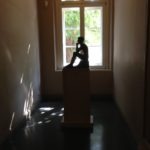
The museums were fantastic in showcasing some artists you hear less about, or in prominent placement of less-famous works by people who are very well-known. The outstanding discoveries for me were a mournful 1937 still life by Gabriele Münter called Puppe, Katz, Kind; a the cheerful small Stillleben mit Tulpen by August Macke (which I think might be unfinished; it is very uncharacteristic in its facture of his work at this time) from 1912; Wilhelm Lehmbruck’s early Grace (1905); the subdued placement of Kurt Lehmann’s Sinnender Knabe (1948), who had a lot to think about, and a delightful whirligig coffee making device from Gerhard Marcks’s highest Bauhaus phase in 1932.
-
-
Wilhelm Lehmbruck, “Grace,” 1905.
-
-
Gabriele Münter, “Puppe, Katz, Kind,” 1937
-
-
Kurt Lehmann, “Sinnender Knabe,” 1948.
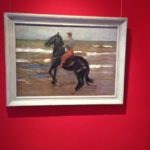
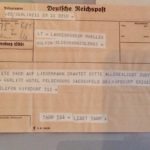
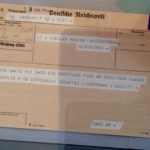
The Prinzenpalais is the collection that recently had its Max Liebermann Reiter am Strand (1909) returned to it, one of the most expeditiously executed rectitudes of the 2013 Cornelius Gurlitt recovery in München. The Prinzenpalais’s reaction to this turn of events seems strangely half-hearted, with just a small vitrine of the correspondence relating to Hildebrand Gurlitt’s involvement in the brokering the resale of the then-Entartete Kunst Reiter, and no explanation of the situational context really anywhere. I asked the docents if they were happy about having the painting back; they clearly weren’t all that happy, and doubly not to have someone ask informed questions.
Oldenburg has a nice Altstadt near the Landesmuseum but as middle-sized German cities go is somewhat difficult to get around in as it has only bus service, no UBahn or even a Straßenbahn or light rail system. Right now there is a lot of road construction with many ersatz Haltestellen and barricaded sidewalks, which the Münster- and Hamburg-aggression level Radler do not seem to be taking into consideration. Excluding Berlin, the farther north I go, the less I like it, and the more I recognize what a confirmed Südländerin I am.
-
-
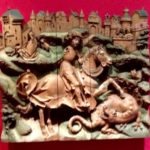
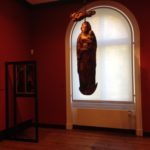
Der H. Georg im Kampf mit der Drachen, c. 1512, Meister de Georgeschreins von Zwischenahn Eiche.
-
-
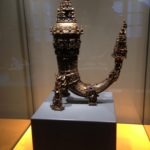
Das Wunderhorn, 1655, Fränkisch.
-
-
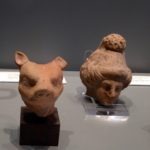
Hundekopf, Kopf des Zeus, c. 200 BCE, Tarent, Italien.
-
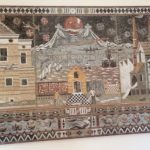
-
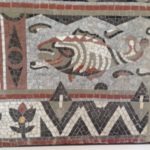
Franz Radziwill, Mosaik, 1948.
-
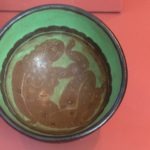
-
Scale mit Kauerndem Frauenakt, 1925, Rena Buthaud.
-
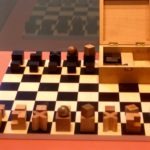
-
Bauhaus Schachspiel, “Model XVI,” 1924. Josef Hartwig.
-
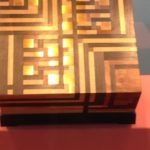
-
Bauhaus Schachspiel, “Model XVI,” 1924. Josef Hartwig.
-
-
-
Franz Radziwill, Mosaik, 1948, Detail.
-
-
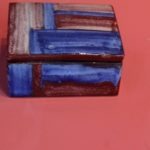
Zigarettendose, Gertrud Kraut, 1928.
-
-
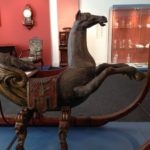
Kinderschlitten um 1730.
-

-
Werbeplakat für Jugend, 1897.
-
-
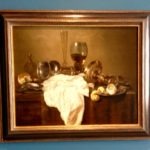
Willem Claesz, Frühstücksstilleben, 1645.
-
-
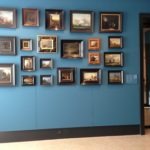
Clutter.
-

-
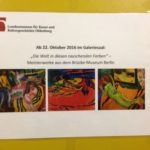
Raum für Max Liebermanns Ölgemälde “Reiter am Strand” von 1909.
-
-
-
-
-
-
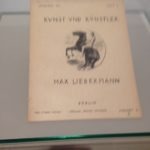
Max Lieberman / Kunst und Künstler.
-
-
Max Liebermanns Ölgemälde “Reiter am Strand” von 1909.
-
-
Dokumentation von Familie Gurlitt von Max Liebermanns Ölgemälde “Reiter am Strand” von 1909.
-
-
Dokumentation von Familie Gurlitt von Max Liebermanns Ölgemälde “Reiter am Strand” von 1909.
-
-
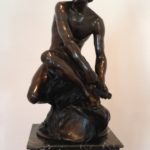
Jean Baptiste Pigalle, Merkur, 1785.
-
-
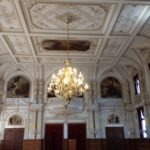
Detail of building.
-
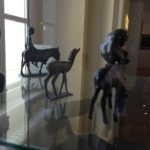
-
Reneé Sintenis, August Gaul, Ewald Mataré, Richard Scheibe
-
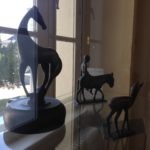
-
Reneé Sintenis, August Gaul, Ewald Mataré, Richard Scheibe
-
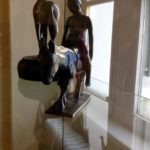
-
Reneé Sintenis, August Gaul, Ewald Mataré, Richard Scheibe
-
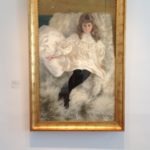
-
Hans Hermann Weyl, Anneliese von Arnim als Kind, 1905.
-
-
Erich Heckel’s plate from Die Brücke catalogue…

by Jean Marie Carey | 28 Jul 2016 | Animals, Animals in Art, Art History, Franz Marc
Franz Marc’s mysterious nude in a landscape from around 1911.
In clear contrast to the well-planned execution of the grazing horses on its front, the verso of Weidende Pferde IV is wild, mysterious, and haunting, and provides an intimate look at Franz Marc’s more intuitive approach to color and form.
Though the composition is partially obscured, the underlying motifs are clear enough.
Shown is a reclining female nude in a dimly lighted landscape under a deep blue sky. The figure rests on her back, her right leg is bent. Her head with long and flowing red hair is slightly tilted to the right; her arms clasped behind her. This figure is somewhat characteristic for Marc in terms of the visible hatching and decorated, colorful outlines. The left of the picture area seems to indicate another figure whose gender and position we can only guess at. The middle of the picture consists of a dramatic, deeply-hued landscape, which in turn is what the reclining nude in the foreground would be part of and also looking at. Though Marc often painted nude figures relaxing outside, this painting does not seem to correspond to another finished work.

Weidende Pferde IV, 1911
Weidende Pferde IV is also a stunning picture when considered in terms of Marc’s efforts to produce it: Three red horses with purple mane prance against a lemon-yellow sky and a deep blue rock formation. Marc had devoted a lot of time to developing the arrangement of the horses’ bodies in this formation. Marc had been preoccupied, and had made a difficult and lengthy process of, how exactly to balance the shapes and colors of the horses in the overall composition.
Weidende Pferde IV is the star of the second part of the exhibition trilogy “Franz Marc: Zwischen Utopie und Apokalypse,” presented by the Franz Marc Museum in Kochel on the 100th anniversary of the death year of the painter. This is one of just a few paintings that Marc saw hung in a museum himself, following its creation in 1911 and first display at the Thannhauser’s Galerie Moderne in Munich
The same year the collector Karl Ernst Osthaus purchased Weidende Pferde IV for the Folkwang Museum’s first incarnation in Hagen. The painting sold for 750 marks, as Marc triumphantly informed his brother Paul on 3 December 1911.
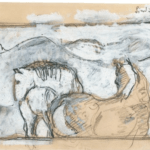
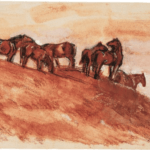
Marc had been constantly busy with live horses during his years in Kochel and Sindelsdorf (“Pferde auf Bergeshöh gegen die Luft stehend”), and he studied them in detail as he drew, printed and painted them.
-
-
Franz Marc, c. 1909
-
-
Franz Marc, c. 1910
-
-
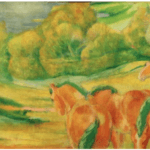
Franz Marc, c. 1910
The day before Alexej Jawlensky, Marianne von Werefkin and Adolf Erbslöh first visited Marc in Sindelsdorf on 3 February 1911, he wrote to Maria Marc who had at this time had left Bavaria to stay with her parents in Berlin, “Ich habe noch ein großes Bild mit 3 Pferden in der Landschaft, ganz farbig von einer Ecke zur anderen, angefangen, die Pferde im Dreieck aufgestellt. Die Farben sind schwer zu beschreiben. Im Terrain reiner Zinnober neben reinem Kadmium und Kobaltblau, tiefem Grün und Karminrot, die Pferde gelbbraun bis violett.”
The visitors loved the paintings, and by the day of his 31st birthday on 8 February Marc was a co-chairman of Neue Künstlervereinigung München.
Certainly the powerful painting of the reclining redhead should be regarded as an entirely discrete creation and given a proper name and place in the artist’s catalogue raisonné. It is curious that Harvard University’s Busch-Reisinger Museum, which purchased the painting when it was declared Entartete Kunst in 1937, has not taken the initiative to see that this is done. If only this painting could be permanently repatriated to Kochel, where it belongs.

by Jean Marie Carey | 18 Feb 2016 | Animals, Animals in Art, Dogs!, Franz Marc, German Expressionism / Modernism, LÖL
During February and March I am a Wissenschaftliche Gäste of sorts at the Universität Kassel’s Tier-Mensch Gesellschaft. I’m doing some research in the dOCUMENTA Archiv, finishing up a chapter in my dissertation, and giving a talk at this first-of-its-kind conference, “Animal Biographies: Recovering Animal Selfhood through Interdisciplinary Narration?”.
The program is incredible and the speakers amazing, each talk as fascinating as the next. There are also several installations and exhibits by Mathias Antlfinger and Ute Hörner and the interspecies collective from CMUK Köln. The program is free and you can register through 25 February through the link above.
I don’t know if I can quite live up to the talents of the other panelists, but I am confident of the attraction, pathos, and intrigue of my animal biographic subject, Russi Marc, whose death exactly 100 years ago this week was noted by his lifelong human companion, Franz Marc, who made many drawings and paintings of Russi through their lives together. Franz Marc himself died just a few weeks later. Studying Russi has taken on a life of its own in my research, and as this was a very well-documented dog and one who had many humorous and thrilling adventures I am very excited to be able to share his story with other animal lovers.
One thing I like so much about animal studies (in discussing the title of our nascent discipline, which is now beginning something like its second wave most of us are happy to jettison the “human-” prefix) is that its adherents are for the most part partisan activists. This challenge to the academy as we fight the losing battle of the Anthropocene and the Sixth Mass Extinction has not gone unnoticed; this week, a sort of prank article was exposed (and one could extrapolate perhaps planted by the same people or person), in the December 2015 issue of the academic journal Totalitarismus und Demokratie. In retrospect, perhaps a “discovery” about the inherited aggression of “German” German Shepherds was too good to be true…but I am very curious to see what the fallout will be, since the “research” depended upon “primary sources” about dogs…another reason to be glad for Russi’s well-established canine celebritude, I guess.
by Jean Marie Carey | 24 Nov 2015 | Art History, Expressionismus, Franz Marc, German Expressionism / Modernism, Re-Enactments© and MashUps
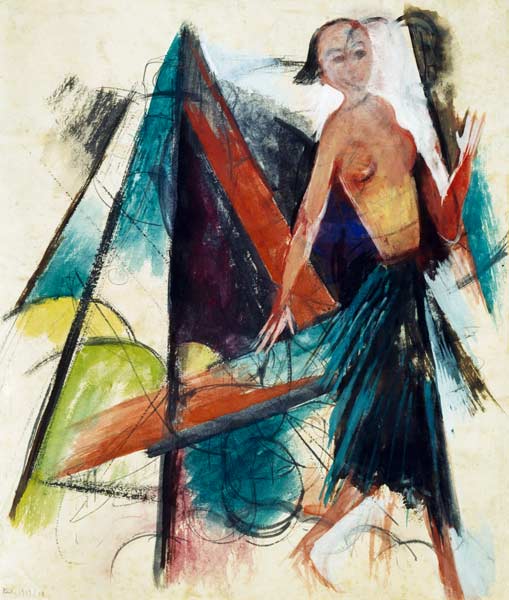
Miranda, 1914
So I am pleased and grateful to report the publication of my first peer-reviewed anthology chapter in the journal Expressionismus in the special issue Der performative Expressionismus. The article is called “‘Der Sturm’ und die Wilden.? Franz Marcs Entscheidungskampf mit der Theatralität,” which translates imperfectly to something like “‘The Tempest’ and the Savages: Franz Marc’s Decisive Encounter with Theatricality.” (Entscheidungskampf can also mean something like Armageddon/scorched earth, which in this case is accurate.)
The article is currently behind the Neofelis Verlag paywall (for a very reasonable €13), but you will soon find it on JSTOR and elsewhere. If you have any questions about how to view article please email me.
This side project to my main research corrects some chronological errors that have consistently been repeated in both Expressionist and Dada literature about the collaboration of Franz Marc and Hugo Ball on a planned production of The Tempest at the Münchner Kammerspiele. Because the story takes place in early 1914, it has been tempting for scholars – some of them quite formidable – to conclude that it was the war that usurped these plans. However, that is not at all the case.
“What really happened” is of course quite interesting on its face and as a reminder that we in fact know very little in the way of actual facts about the historical avant-gardes, who are fast disappearing into hagiography.
More interesting to me, in terms of writing and research, was the analysis of the two small drawings Marc made as character studies of The Tempest’s Miranda and Caliban personalities. This is the first time these drawings, housed in the Kunsthalle Basel, have been subjected to such scholarly scrutiny and each contains many clues and psychological implications.
I was also intrigued to discover that Marc had sent a draft of his June 1914 essay »Das abstrakte Theater,« (also analyzed in the article) about his frustrating foray into the theater to August Macke, and that the two had previously had many exchanges about the performing arts. In fact it is clear that the very precocious Macke – who at only 21 had been the chief set designer for the theater in Düsseldorf – had had a great influence on Marc’s ideas on the subject – ideas being the key word, since Marc had no firsthand dramaturgical knowledge up until this point.
My colleague here at the university, Prof. Dr. August Obermayer, was the very gracious translator but he also provided invaluable editing and advising, and the Neofelis editors were also a pleasure to learn from.
All in all a great experience and I hope readers will find the unraveling of Expressionist mysteries as fascinating as I do.

Caliban, 1914
by Jean Marie Carey | 5 Mar 2015 | August Macke, Expressionismus, Franz Marc, German Expressionism / Modernism, Re-Enactments© and MashUps
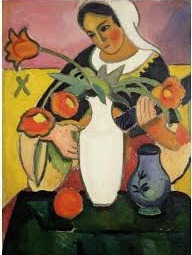
Die Lautenspielerin, August Macke, 1910
“Recent publications” is in quotes because all of the great opportunities to preach the gospel of Marc lately have come to me strictly through the generosity of other people, so I will quickly get to the point of thanking Trang Vu Thuy and the curatorial staff at the Lenbachhaus and Janine Arnold of Notes About Art. (Please click through the links to view the articles themselves.)
My post (which is present entirely owing to the patience of Vu Thuy) “Ein Manifest der Freundschaft” is in honor of the August Macke und Franz Marc: Eine Künstlerfreundschaft exhibition (on through 3 May 2015 in the Lenbachhaus Kunstbau) and concerns one of my favorite subjects, the Paradies mural.
“Von »Köstlichen Figürchen« und »Wunderherlichen Farben«” by assistant curator Monika Bayer-Wermuth is actually the most wonderful post, though, on the gifts sent by the Marcs to the Mackes and is told in the same thoughtful, personal vein as are many of the chapters in the companion catalogue.
Thanks to the generous invitation of Arnold, I have two entries on her Notes About Art website, one called “Confrontations & Reconciliations” about my interpretation of Franz Marc’s gift of the painting Blaues Pferdchen, Kinderbild to August Macke and the other a bit about the history of Marc’s two Turm der blauen Pferde.
I am very happy to see art historians collaborating across distance and language just because we like the art and want for other people to be able to know about and appreciate the work of Der Blaue Reiter. (more…)