Eden and Everything After

From: 21 January 2023-21 December 2023

Opening: 21 January 2023, 14:00

University of Stavanger Archaeological Museum

Peder Klows gate 30A 4010 Stavanger Norway

Hours:

Tuesday 11 – 20

Wednesday – Sunday 11 – 16

Monday closed.

Information: post-am@uis.no

Online: Twitter |Facebook | uis.no/nb/arkeologisk-museum

Catalogue: Eden and Everything After, Jean Marie Carey and Kristin Armstrong-Oma, eds. University of Stavanger (2023), ISBN 978-82-7760-196-0.

Eden and Everything After explores Eden as utopia in the past, present, and as futuristic visions. It is a meeting point between prehistoric objects, German Modernist art of the Blaue Reiter, and Norwegian contemporary artist Tanja Thorjussen. Animals and their poignant presences weave together these divergent strands as beings imbued with a spirituality and mysticism that inspired past and present artists.  

This historic exhibition places prehistoric objects, found materials, and visual arts side by side, combined, or adjacent. These artworks share some special visual or symbolic relationship. Juxtapositions of pieces are seen differently than as by single displays.

The eponymous catalogue is conceived as a tribute to “modernism’s integrative personality,”[1] Franz Marc, and his reimagining of paradise. Contributors to the catalogue include Dolly Jørgensen, Olaya Sanfuentes, Mira Shah, Kristin Armstrong-Oma, Stephanie Lebas Huber, Siv Kristoffersen, Håkon Reiersen, Tanja Müller-Jonak, Laura Hohlwein, Siddarth Sareen, and Ellen Hagen, plus features prose and artwork by Thorjussen. The article “Traumatic Imagination in Franz Marc’s Animalisation of Art” by Julie Kim Rossiter and Jean Marie Carey presents new research on the artist’s last painting, Abstrakte Landschaft mit fabelhaftem Tier (Rotwild) (1915) and analysis of his Skizzenbuch aus dem Felde.

Eden and Everything After opens on 21 January 2023 and will be open through the year at the University of Stavanger Archaeology Museum, 30A Peder Klows gate, 4010 Stavanger, Norway. Please send questions to curator Jean Marie Carey, whose work on the project is funded by the U.S.-Norway Fulbright Foundation and the European Union’s Marie Sklodowska Curie Actions.

Tupilaq Relic Slange. Animal figurine, snake, gold, Bronze Age or Iron Age (1800 BCE–CE 1050), from Hesby, Finnøy. Tanja Thorjussen, 2022. Photo: Annette Græsli Øvrelid
Detail of the atelier and the replica of the Paradies mural made in situ by August Macke and Franz Marc in 1912. Photo: Jean Marie Carey

[1] Robin Lenman, “The Internationalization of the Berlin Art Market 1910-1920 and the Role of Herwarth Walden,” in Künstlerischer Austausch – Artistic Exchange, vol. 3, ed. Thomas W. Gaehtgens (1993), pp. 535-542 (537).

Art History at the Library

Art History at the Library

Art History at the Library

I was very happy to have the grant renewed and be invited back to the SouthShore Regional Public Library for another series of “Art History at the Library” discussions.

The library had in mind a series that was a little more intensive than “art appreciation”-cruise ship type talks. I did try out some kind of conceptual themes last time, but I also was able to implement my tech whirligigs and to do something I had wanted to do for a long time, have the audience be able to drive a lot of the content. I experimented with this just by stopping often to ask if people had questions or comments, and to my delight they did.

I try to memorise what I’m going to talk about so it’s possible to both extemporise as desired by the patrons’ concerns and also not get thrown off track.

Anyway the schedule for the fall is below. Thank you again to the Hillsborough Public Library Cooperative for supporting this project.

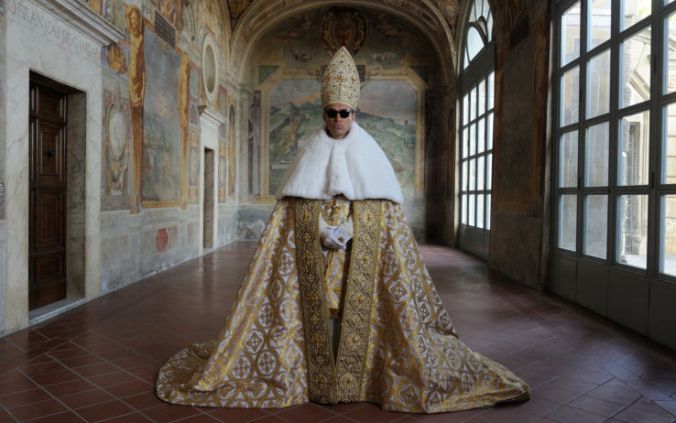
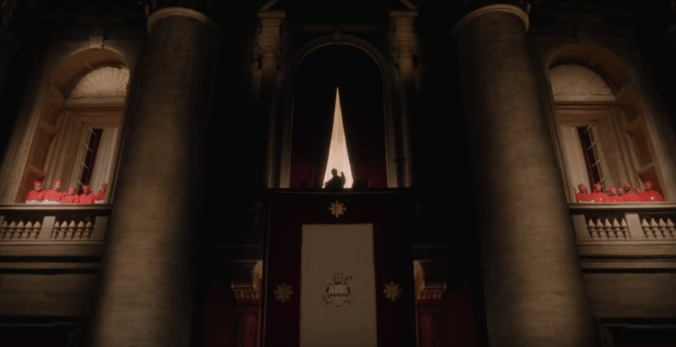
15 September: Special Guest Appearances: Art in Movies and on Television.” Participants are invited to think of their own favorite examples to discuss and share. This talk will examine the appearance of artworks and references to famous works of art in popular movies and television programs, including Vikings, Bojack Horseman, The Young Pope, Skyfall,  and more. We’ll also discuss films that are about artists and art. I am especially excited to be able to talk about some of the painterly images from The Young Pope, which so centre the body. I know a lot of people hated this show, but I liked how it looked, and found director Paolo Sorrentino and cinematographer Luca Bigazzi neomodernist visual world were stunning but also very ambiguous about the questions of faith and the supernatural raised by the narrative.

20 October: “The Body in the Book: Beauty and Suffering in Illuminated Manuscripts.”The session will be about the process of making illuminated manuscripts and scrolls including well-known examples such as the Book of Kells and the Grimani Breviary as well as less-familiar secular texts.

17 November: “What’s the Difference Between Arts and Crafts? Fashion, Textiles, and Design.” Rather than trying to come up with a definitive answer to this question, we will discuss how aesthetic hierarchies come to be. Which tdo we prize more, purely aesthetic innovation, of the form of utilitarian objects, and why? Participants are invited to share examples of their own works and of course their opinions!

15 December: “A Celebration of Animals in Art.” This discussion will cover artwork that recognizes the power of animal life, from the cave paintings of Chauvet and Alta to Tanja Thorjussen’s endangered Arctic wildlife and everything in between.

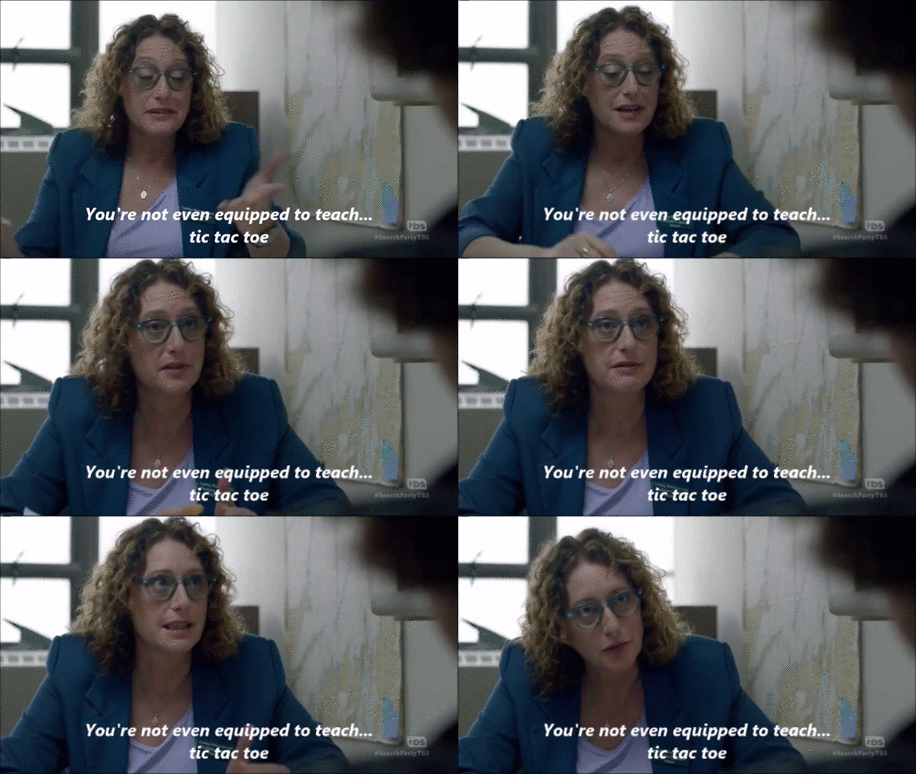
Franz Marc’s Blaues Pferd I (1911) in Bojack Horseman, above, and shots from The Young Pope (2016) below.

RECENTLY ON MICHELANGELOST™...

Email

8 + 7 =

Unfollow Me on Twitter

The only social media I participate in; this feed is mostly about art history and animals.

Hillsborough County Library Cooperative Art History “Lecture” Series

Hillsborough County Library Cooperative Art History “Lecture” Series

So, now that my time at the Rifkind Center is coming to an end, I have some breaking news announcements to post in sequence…

First, beginning this Saturday and through the summer months I will … well, be involved in a series of discussions about art history sponsored through a grant I received from the  Hillsborough Public Library Cooperative. It’s all kicking off at the SouthShore Regional Public Library in Ruskin.

IKR

The SouthShore Library has a great history of funding arts programs for the patrons in its off-the-track corner of the county and I am very grateful to receive this support and for being able to work around upcoming travel obligations. The library staff had in mind a formal sequence of talks, but the proposal I made is for something more experimental that I have had in mind for a while…

…which is why I hesitate to call these “lectures.” Each session is going to be very interactive and will unfold in a participant-driven way, and there will be a digital component posted for downloading during and after each event.
(more…)

The La Brea Tar Pits: Dire Wolves

The La Brea Tar Pits: Dire Wolves

Dire Wolves

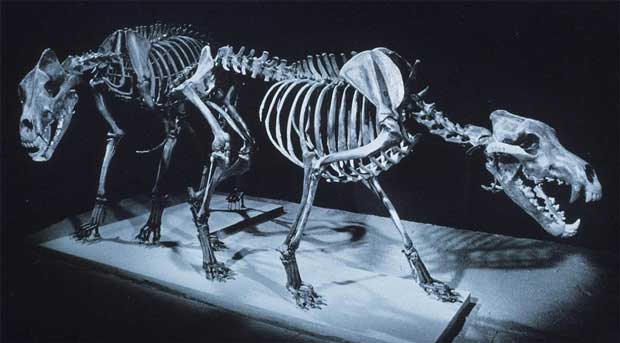
Skeletons of dire wolves at the La Brea Tar Pits Museum, Los Angeles


One of the first animals I became fascinated with when I was very little was the dire wolf (canis dirus). This was not for the “dinosaur” reason (although I was also very interested in Sauropterygia), a sense of what-if nostalgia for an unknowable past, but for the opposite, that being just a bit bigger than wolves of today, and relatively recently extinct (in the late Pleistocene, about 10,000 years ago) surely there could be a few hanging out still in the Fagne.


Around the same time I was also horrified to learn of the existence of the La Brea Tar Pits, despite its amazing contents of millions of prehistoric animal remains. I couldn’t stop thinking about all the animals slowly suffocating in the tar. I guess I must have pushed this memory aside somehow because despite knowing that the tar pits were right in the middle of Los Angeles (also from the famous sequence in Bad Influence (1990)), I was astonished to see that the LBTP are immediately adjacent to the Los Angeles County Museum of Art.


Staying just down the street, I can walk through the excavation sites on my way to the museum. As many other people have commented the sunniness and wide-boulevardisation of Los Angeles compared to its low pedestrian density is uncanny already. Most of the time the paths around the tar pits are also eerily quiet. There have been a few days of heavy rain, and during those times of precipitation accumulation, water collects on top of the gravel, the grass, and the tar beneath. It’s a strange thing to witness.


Anyway the La Brea Tar Pits Museum has collected the skulls of more than 400 dire wolves, which yielding lots of information about the sizes and shapes of the animals and even allowed them to be divided into two subspecies, Canis dirus guildayi and Canis dirus dirus.


Bruce Nauman

Bruce Nauman, “La Brea/Art Tips/Rat Spit/Tar Pits,” 1972


documenta diaries ii: topical solution

documenta diaries ii: topical solution

One of the paradoxes that has emerged from documenta 14 is that many of its spectacular installations make very simple statements about global consumerism using enormous material expenditures. In fact it can be difficult to see past the pyramids, windmills, and tents erected to comment on issues such as migration and the market-possessed-body – elaborate efforts to illustrate political generalities – to documenta’s truer theme, an attempt by curator Adam Szymczyk to assail, or at least supplement, canonical art history with work by indigenous and overlooked artists. 

iQhiya, Monday, 2017, Performance und Installation, Ehemaliger unterirdischer Bahnhof (KulturBahnhof), Kassel, documenta 14, Foto: Fred Dott

iQhiya, Monday, 2017, Performance und Installation, Ehemaliger unterirdischer Bahnhof (KulturBahnhof), Kassel, documenta 14, Foto: Fred Dott

But the contemporary art fair world floats above scholarship on a bubble of self-satisfaction. The documenta participants who are the big draws – Mona Hatoum and Pierre Huyghe for example – aren’t worried about posterity. So what was meant to be exposure becomes competition for a footnote. Some of this lesser-known work also really struggles when removed from its local context. Poor facture and inappropriate plinths meant as fauxnaïf comes across as a weird form of doubled sociological good intentions gone awry, and, amid Kassel’s half-hearted Brutalist buildings, calls to mind Bernd and Hilla Becher’s photographs of Bavarians dressed as Native Americans. In this respect, perhaps it was afterall an important achievement, and more consistent with Szymczyk’s goal, to move the most of documenta to Athens.

One excellent work, shown above, is iQhiya’s Monday (2017), which unfortunately was performed only once on 13 June. Staged in Kassel’s “little” Bahnhof, the spoken, moved, video, books, saws, pens, needles cloth, and film endurance piece used an eight-hour projection loop of Sarafina! (1992) to examine the “hidden curriculum” experience of black, South African women college students. Mimicking the rhythm of a real school day, naturally people wandered in and out. The coming and goings of the Eurobahn and Regio trains moving through the station plinked the hour glass and also made a rumbling vibration that was unsettling and comforting at the same time. I’m not sure if the reference to Pascale Marthine Tayou’s Human Being @Work (2009) was intentional or ephemeral coincidence, but the eleven-member iQhiya troupe made use of sound and light in a similar way as Tayou’s (also very successful) occupation of the Biennale di Venezia’s Arsenale – only with real trains.

Now, about Olu Oguibe…

(more…)