Eden and Everything After

From: 21 January 2023-21 December 2023

Opening: 21 January 2023, 14:00

University of Stavanger Archaeological Museum

Peder Klows gate 30A 4010 Stavanger Norway

Hours:

Tuesday 11 – 20

Wednesday – Sunday 11 – 16

Monday closed.

Information: post-am@uis.no

Online: Twitter |Facebook | uis.no/nb/arkeologisk-museum

Catalogue: Eden and Everything After, Jean Marie Carey and Kristin Armstrong-Oma, eds. University of Stavanger (2023), ISBN 978-82-7760-196-0.

Eden and Everything After explores Eden as utopia in the past, present, and as futuristic visions. It is a meeting point between prehistoric objects, German Modernist art of the Blaue Reiter, and Norwegian contemporary artist Tanja Thorjussen. Animals and their poignant presences weave together these divergent strands as beings imbued with a spirituality and mysticism that inspired past and present artists.  

This historic exhibition places prehistoric objects, found materials, and visual arts side by side, combined, or adjacent. These artworks share some special visual or symbolic relationship. Juxtapositions of pieces are seen differently than as by single displays.

The eponymous catalogue is conceived as a tribute to “modernism’s integrative personality,”[1] Franz Marc, and his reimagining of paradise. Contributors to the catalogue include Dolly Jørgensen, Olaya Sanfuentes, Mira Shah, Kristin Armstrong-Oma, Stephanie Lebas Huber, Siv Kristoffersen, Håkon Reiersen, Tanja Müller-Jonak, Laura Hohlwein, Siddarth Sareen, and Ellen Hagen, plus features prose and artwork by Thorjussen. The article “Traumatic Imagination in Franz Marc’s Animalisation of Art” by Julie Kim Rossiter and Jean Marie Carey presents new research on the artist’s last painting, Abstrakte Landschaft mit fabelhaftem Tier (Rotwild) (1915) and analysis of his Skizzenbuch aus dem Felde.

Eden and Everything After opens on 21 January 2023 and will be open through the year at the University of Stavanger Archaeology Museum, 30A Peder Klows gate, 4010 Stavanger, Norway. Please send questions to curator Jean Marie Carey, whose work on the project is funded by the U.S.-Norway Fulbright Foundation and the European Union’s Marie Sklodowska Curie Actions.

Tupilaq Relic Slange. Animal figurine, snake, gold, Bronze Age or Iron Age (1800 BCE–CE 1050), from Hesby, Finnøy. Tanja Thorjussen, 2022. Photo: Annette Græsli Øvrelid
Detail of the atelier and the replica of the Paradies mural made in situ by August Macke and Franz Marc in 1912. Photo: Jean Marie Carey

[1] Robin Lenman, “The Internationalization of the Berlin Art Market 1910-1920 and the Role of Herwarth Walden,” in Künstlerischer Austausch – Artistic Exchange, vol. 3, ed. Thomas W. Gaehtgens (1993), pp. 535-542 (537).

Piazzetta Provenance Project CFA: Raubkunst at the Ringling: A Catalogue in Absentia

Piazzetta Provenance Project CFA: Raubkunst at the Ringling: A Catalogue in Absentia

Piazzetta Provenance Project CFA: Raubkunst at the Ringling: A Catalogue in Absentia

Circle of Giovanni Battista Piazzetta 1682 -1754), Pastoral Scene, c. 1750. Oil on canvas, (92.1 x 134 cm). The John and Mable Ringling Museum of Art, Object number: SN627.


Raubkunst at the Ringling: Franz Marc’s Schöpfungsgeschichte has got a lot of attention. Surprisingly many responses have come from people who think they might be in possession of some Raubkunst themselves. I confer with trusted colleagues on these tips, but we keep this information to ourselves. We’ve been tantalizingly close to some long-missing works we would all love to see returned to the public view.

I have found though that what most inquirers are seeking is not absolution but verification. I have been asked to authenticate two works by Franz Marc just in the past year. I am reluctant to do so in these conscience cases. For one thing, as the recent book by Stefan Koldehoff and Tobias Timm, Falsche Bilder Echtes Geld: Der Fälschercoup des Jahrhunderts – und wer alles daran verdiente makes clear, art forgers have become increasingly wily and technically proficient. The current interest in Provenienzforschung created almost as many opportunities for grift as the thieves and opportunist of the Third Reich themselves did in the 1930s and 1940s. The well-meaning art historians who mistakenly declared the fakes by Wolfgang Beltracchi to be long-lost works by Georges Braque, Max Ernst and others had their careers and reputations destroyed. There is a movement toward creating a professional standard for authenticating lost works, likely by a panel of experts in the work of the artist in conjunction with the formidable forensics of the Doerner Institut.

But for the moment in this respect we keep a low profile and our ears to the whispers in the wind.

While avalanches roar above, business continues below, on the tasks that can be accomplished: reuniting artworks whose authenticity is unimpeachable with the families or museums to whom they once belonged. To that end, a researcher and writer is being sought to investigate the provenance of a quartet of quirkily shaped, sized, and framed 18th Century oil paintings associated with the work of Venetian artist Giovanni Battista Piazzetta (1682-1754). The genre pastoral scenes are in the collection of the John and Mable Ringling Museum of Art in Sarasota, Florida, having been purchased by the museum in 1949. The destination for this research is the collaborative book project Raubkunst at the Ringling: A Catalogue in Absentia, scheduled for publication in 2020. A worthy publisher and esteemed contributors are already aboard, though like me, their expertise is in Modernist art, hence our quest.

The Piazzetta-esque works were sold to the Ringling by the German-Jewish art, antique, and textiles dealer Adolph Loewi, who operated galleries in the Veneto as well as New York City and Los Angeles. In 1939 Loewi fled Italy with his family, losing some of his files in the process. Whether the documentation for the Piazzetta-adjacent works was among those documents is not clear; in any case, no record of their provenance exists prior to the Ringling purchase.

Circle of Giovanni Battista Piazzetta 1682 -1754), Pastoral Scene, c. 1750. Oil on canvas, (56.5 x 92.7 cm).The John and Mable Ringling Museum of Art, Object number: SN629. Header image: Circle of Giovanni Battista Piazzetta 1682 -1754), Pastoral Scene, c. 1750. Oil on canvas56.5 x 92.7 cm). The John and Mable Ringling Museum of Art, Object number: SN630.

Circle of Giovanni Battista Piazzetta 1682 -1754), Pastoral Scene, c. 1750. Oil on canvas, (92.1 x 134 cm). John and Mable Ringling Museum of Art, Object number: SN627

[1]Recent books such as Simon Goodman’s The Orpheus Clock: The Search for My Family’s Art Treasures Stolen by the Nazis (2016) and The Lady in Gold: The Extraordinary Tale of Gustav Klimt’s Masterpiece, Portrait of Adele Bloch-Bauer (2015) by Anne-Marie O’Connor detail the eventual triumph of the resourceful Goodman and Altmann families pitted against adversaries in museums and galleries over the course of lengthy and expensive court battles. Some cases turn less flamboyantly but more emotionally. The Austrian art dealer Lea Bondi-Jaray lost her beloved Portrait of Wally, a 1912 painting by her friend Egon Schiele, in the Anschluss in 1939. She went to her grave fighting to have the painting returned from private gallerist Rudolph Leopold who had acquired the painting in collusion with the Austrian government in 1954. Bondi-Jaray’s family continued the battle, eventually taking on no lesser adversaries than Ronald Lauder, the Museum of Modern Art, and Austria’s Leopold Museum. The case turned when the family produced pre-war photographs of Portrait of Wally in Bondi-Jaray’s Vienna apartment, convincing the United States Customs Service to seize the painting  and United States District Court for the Southern District of New York Judge Loretta A. Preska to allow the case to proceed to trial. The Leopold Museum settled with the family in 2010.

As I’ve noted, because the Modern Art that had been declared entartete – degenerate – by the Third Reich was seized by the Germans from German government-sponsored museums it is – technically – not considered Raubkunst, stolen art, though certainly the Nazis profited from its sale. Works that were stolen from private owners and collectors, or procured through forced sales, are truestolen objects, and subject to return to the families of their original owners.

Even in seemingly clear-cut cases, this process can be challenging. In many instances, entire families were murdered in their homes or in concentration camps, and no heirs exist to lay claim upon what should have been prized heirlooms. The few remaining survivors of Nazi art theft or their descendants must file official claims with the German government or bring private litigation against museums and auction houses. Claims to works must be substantiated by proof of ownership – a paradox that ends many legal proceedings before they begin since receipts, ledgers, diaries, and documentary stamps were often destroyed, dispersed, or concealed by those who had stolen the artworks in the first place.[1]

Because of their appealingly peculiar nature and the seeming completeness of the grouping of four, it seems likely that the Piazzetta workshop paintings came from a private collection. But whose? The task of the writer-researcher who takes on this investigation will be to unravel this mystery. The outcome may be as simple as a lost receipt establishing a chain of custody that puts the Ringling in the clear, or as profound as reuniting the quartet with a family who thought them lost decades ago.


I began this project in 2016 when I discovered two woodblock prints by the Blaue Reiter artist Franz Marc (1880-1916) in the Ringling collection, identified them as Raubkunst, and eventually traced them back to their original owners in Stuttgart and Mannheim. My findings were accepted as a “closed case” this past February by the Commission for Looted Art in Europe. So the investigation has since expanded in scope, to say the least. I would welcome collaboration with, as well as questions and advice from, members of the “Raubkunst Research” community. Contact me and I’ll get back to you.

RECENTLY ON MICHELANGELOST™...

Art History at the Library

Art History at the Library

Art History at the Library

I was very happy to have the grant renewed and be invited back to the SouthShore Regional Public Library for another series of “Art History at the Library” discussions.

The library had in mind a series that was a little more intensive than “art appreciation”-cruise ship type talks. I did try out some kind of conceptual themes last time, but I also was able to implement my tech whirligigs and to do something I had wanted to do for a long time, have the audience be able to drive a lot of the content. I experimented with this just by stopping often to ask if people had questions or comments, and to my delight they did.

I try to memorise what I’m going to talk about so it’s possible to both extemporise as desired by the patrons’ concerns and also not get thrown off track.

Anyway the schedule for the fall is below. Thank you again to the Hillsborough Public Library Cooperative for supporting this project.

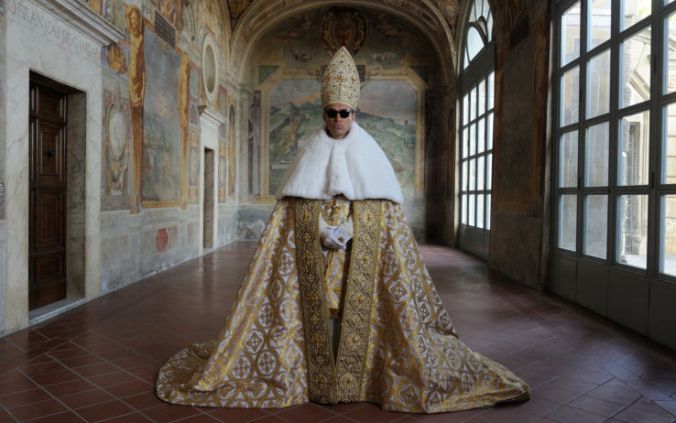
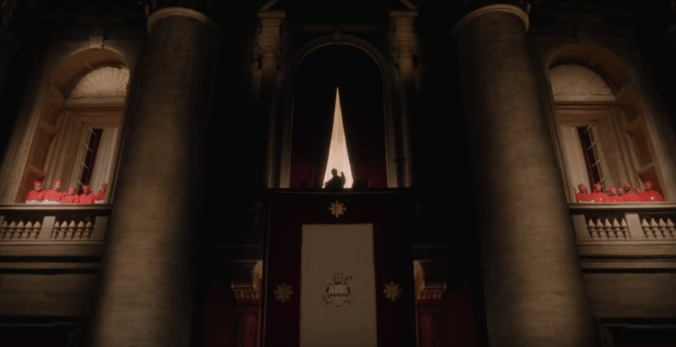
15 September: Special Guest Appearances: Art in Movies and on Television.” Participants are invited to think of their own favorite examples to discuss and share. This talk will examine the appearance of artworks and references to famous works of art in popular movies and television programs, including Vikings, Bojack Horseman, The Young Pope, Skyfall,  and more. We’ll also discuss films that are about artists and art. I am especially excited to be able to talk about some of the painterly images from The Young Pope, which so centre the body. I know a lot of people hated this show, but I liked how it looked, and found director Paolo Sorrentino and cinematographer Luca Bigazzi neomodernist visual world were stunning but also very ambiguous about the questions of faith and the supernatural raised by the narrative.

20 October: “The Body in the Book: Beauty and Suffering in Illuminated Manuscripts.”The session will be about the process of making illuminated manuscripts and scrolls including well-known examples such as the Book of Kells and the Grimani Breviary as well as less-familiar secular texts.

17 November: “What’s the Difference Between Arts and Crafts? Fashion, Textiles, and Design.” Rather than trying to come up with a definitive answer to this question, we will discuss how aesthetic hierarchies come to be. Which tdo we prize more, purely aesthetic innovation, of the form of utilitarian objects, and why? Participants are invited to share examples of their own works and of course their opinions!

15 December: “A Celebration of Animals in Art.” This discussion will cover artwork that recognizes the power of animal life, from the cave paintings of Chauvet and Alta to Tanja Thorjussen’s endangered Arctic wildlife and everything in between.

Franz Marc’s Blaues Pferd I (1911) in Bojack Horseman, above, and shots from The Young Pope (2016) below.

RECENTLY ON MICHELANGELOST™...

Email

4 + 4 =

Unfollow Me on Twitter

The only social media I participate in; this feed is mostly about art history and animals.

Introducing Michelangelost™

Introducing Michelangelost™

Michelangelost is the newest name for the blog I have been writing since 2006, which began as mostly about dogs and animals. It has since had several titles, including Errata and German Modernism, and expanded to include numerous topics. Even though this website is becoming more of an official enterprise, I have kept my experimental and sometimes idiotic posts in the archive. The name Michelangelost™ came to me in Berlin, where Michelangelostraße is one of the stops on the Tiergarten Buslinie 200. Because the name of the stop is so long it was (funnily to me) abbreviated as “Michelangelost” on the scrolling Haltestelle legend. A remarkable photo was taken to document this occasion. I love obscurantist plays on words plus it seems descriptive of where we are in the art world right now. I had intended the Michelangelost™ project to be devoted to art criticism in the broadest sense, extended beyond galleries and museums to organisations, scenes, and academic affiliates, but I like the word and this photo in a more general way. So you will have to stay tuned for that secondary project, which now tentatively has the name “Intersectional Criminal Tribunal.”  Meanwhile I am experimenting with this new design and how to retroactively typeset the older posts. – Until soon.

RECENTLY ON MICHELANGELOST™...

Hillsborough County Library Cooperative Art History “Lecture” Series

Hillsborough County Library Cooperative Art History “Lecture” Series

So, now that my time at the Rifkind Center is coming to an end, I have some breaking news announcements to post in sequence…

First, beginning this Saturday and through the summer months I will … well, be involved in a series of discussions about art history sponsored through a grant I received from the  Hillsborough Public Library Cooperative. It’s all kicking off at the SouthShore Regional Public Library in Ruskin.

IKR

The SouthShore Library has a great history of funding arts programs for the patrons in its off-the-track corner of the county and I am very grateful to receive this support and for being able to work around upcoming travel obligations. The library staff had in mind a formal sequence of talks, but the proposal I made is for something more experimental that I have had in mind for a while…

…which is why I hesitate to call these “lectures.” Each session is going to be very interactive and will unfold in a participant-driven way, and there will be a digital component posted for downloading during and after each event.
(more…)