by Jean Marie Carey | 20 Jan 2014 | Animals, Animals in Art, Art History, Dogs!, Franz Marc, German Expressionism / Modernism, LÖL, Re-Enactments© and MashUps
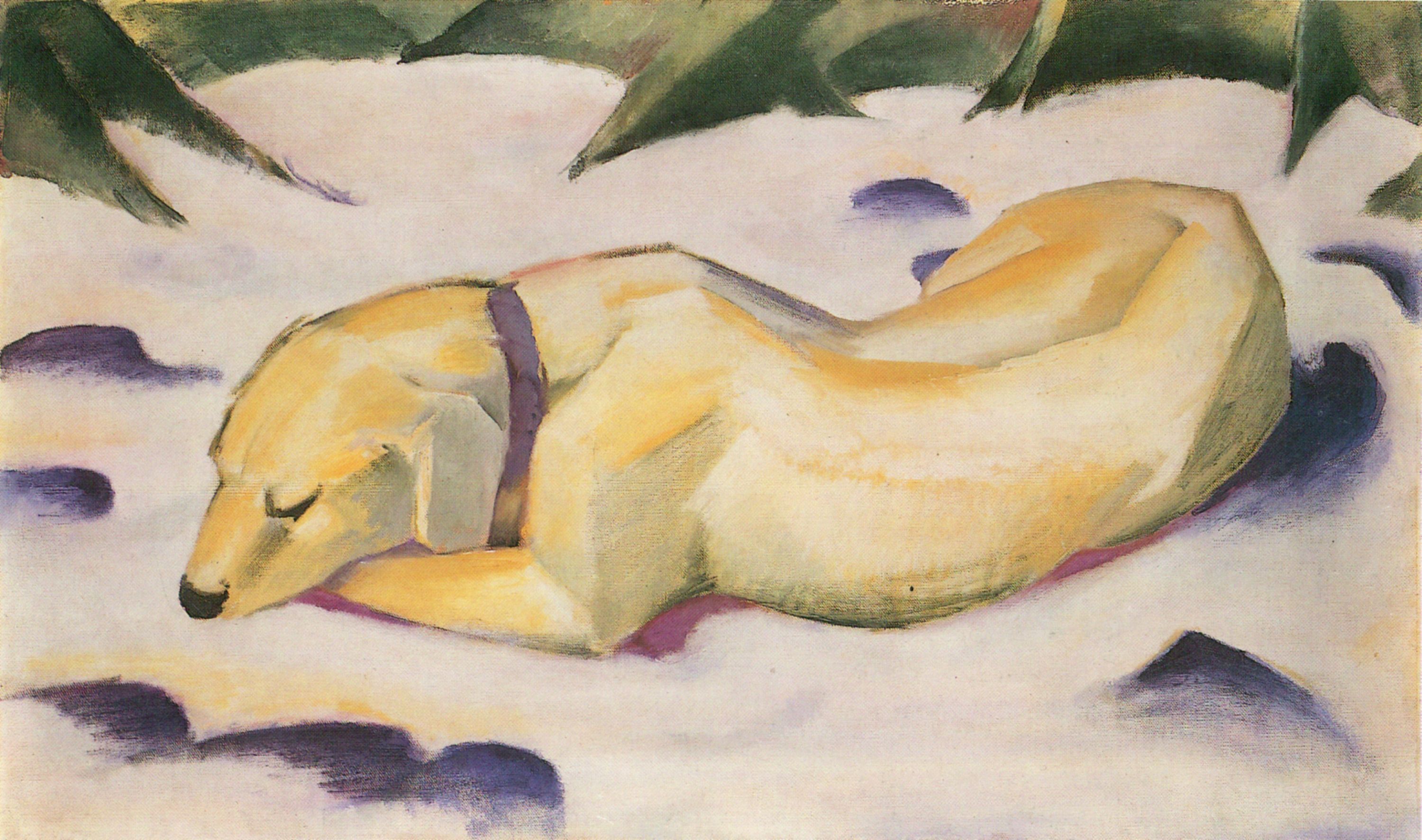
Liegender Hund im Schnee, Franz Marc, 1911
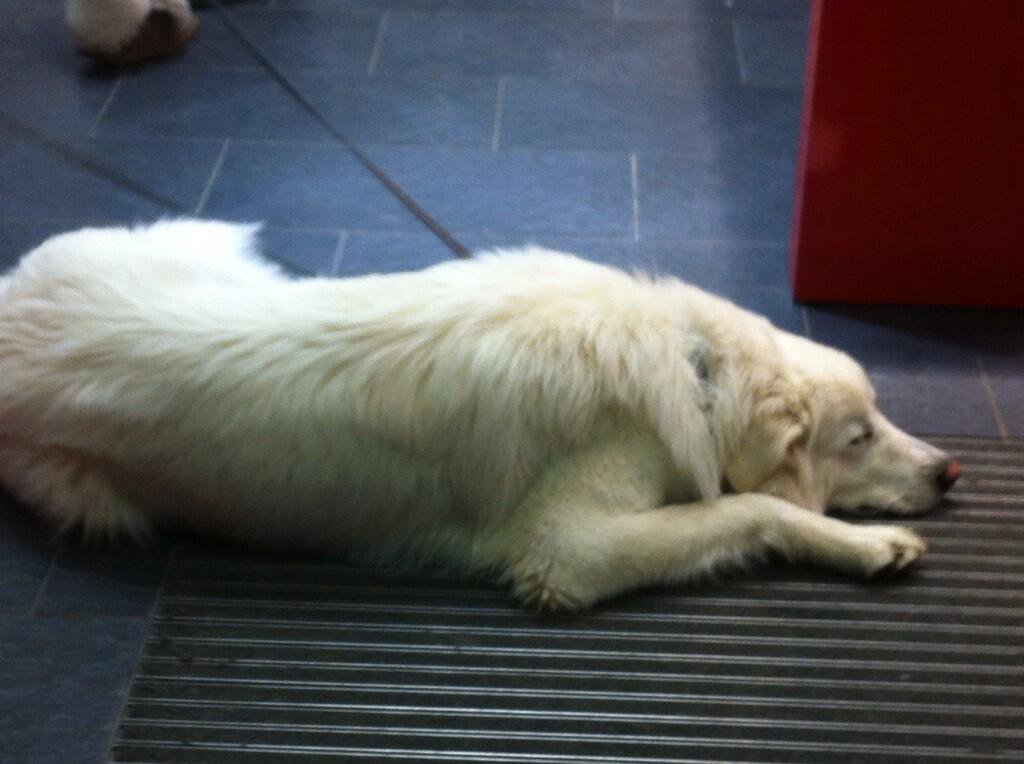
“… Du kannst Dir kaum vorstellen, wie wunderbar schön der Winter in diesen Tagen hier ist, schleierloses Sonnenlicht und dabei den ganzen Tag Rauhreif; sehr kalt, aber von jener schönen, erfrischenden Kälte, die einen nur äußerlich, nicht innerlich frieren macht. … Gegen Abend wird es chromatischer, statt blau weiß treten rosa und komplementär grünliche Töne auf, auch violett gegen farbige Abendluft. Ich habe zwei Sachen im Schnee in Arbeit: die Rehe unter schneebedeckten Ästen und den Russi im Schnee liegend. Ich komme mit beiden ganz gut weiter, sehr farbig. …”
Franz Marc, 17.1.1911

by Jean Marie Carey | 3 Jan 2014 | Art History, Franz Marc, German Expressionism / Modernism, Re-Enactments© and MashUps
One hundred years ago today, August Macke celebrated his 27th birthday – his last.
I spend a lot of research time excavating lost, unpublished, and little-known writings and facts about August Macke and his cousin (more like a little brother) Helmuth Macke. Franz Marc really loved the Mackes and his interactions with them are important for many reasons. But the Mackes are amazing on their own.
Famous Hyperbolic Color Chart
Like Franz Marc, August Macke was incredibly prolific across a number of mediums. As Marc notes from their first meeting, August is inescapably a benthic Capricorn, materialistic and practical. Yet his prose reads like verse, exploding with jokes (especially at the expense of Marc to whom he often “mit seinen im Ulk treiben”), imagery, sounds, and cheerful energy.
by Jean Marie Carey | 10 Nov 2013 | Art History, Franz Marc, German Expressionism / Modernism
Atlas Mikromega @ the Lenbachhaus
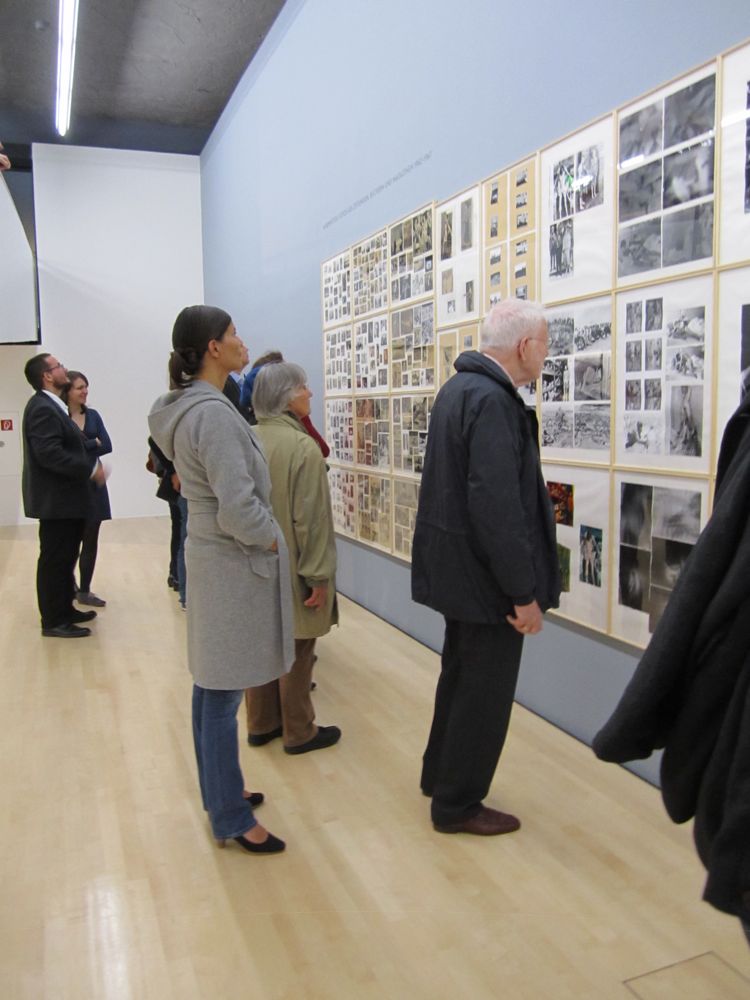
A few years ago I went through a phase of being consumed with interest in Gerhard Richter’s cycle of 15 paintings, Baader-Meinhof (18. Oktober 1977). Writing this now my obsession seems doubly strange because I did not then have the geographic or cultural context for these works I have in 2013. One spring break I had seen the paintings – based upon photographs of Ulrike Meinhof, Holger Meins, Gudrun Ensslin, Andreas Baader; the funeral of Jan-Carl Raspe, and Baader’s books and record player – at the Museum of Modern Art and had a very strong reaction to them. I think I explored this subject so intently because my response was the opposite from my feelings for Franz Marc’s animals. The blurred details of the black and white photographs of portraits, news stills, and police snapshots made the subjects abjectly lifeless. The effect was like the dream of freezing; cold, sad, and bitterly empty. The paintings made me drained and ill. Yet I was fascinated by the tension – and desire – that was generated by being repelled by images whose subjects I was very drawn to.
(more…)
by Jean Marie Carey | 23 Jul 2013 | Art History, German Expressionism / Modernism
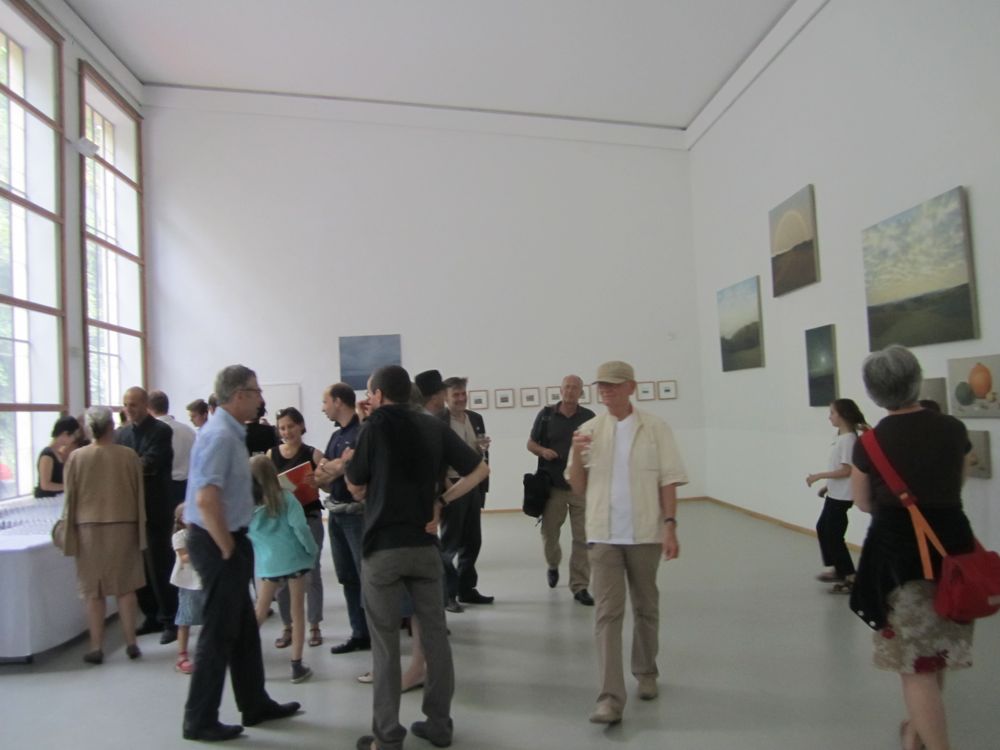
Danaé Xynias’s “Weite Fluren” is a good match for the Orangerie.
In framing the composition of a landscape painting, the challenge to the image maker, following eons of tradition, comes down fundamentally to where to place the horizon line. Contemporary painters have toyed with this problem experimentally, such as in Colin McCahon’s various large-panel installations of volcanic vistas in New Zealand. At the far reaches of these modern manifestations falls Trevor Paglen’s Covert Operations and Classified Landscapes (2010) presenting the horizon as, also, metaphorically unreachable. To sort of put things back into perspective, so to speak, Danaé Xynias makes the brave choice to return to the subject of landscape painting – the meeting of land (or water) and sky – allowing the horizon line to settle for the most part naturally in the center of her canvases.
Xynias’s current exhibition, “Weite Fluren,” is a mixture of landscapes and stylized still-lifes. (The still-lifes are certainly interesting in their own right, with rounded forms of pumpkins and melons against a zero-depth background intensifying the relationship between subject and frame.)
A reference in the catalog for the show marks an oblique historical lineage by referencing both Caspar David Friedrich and Jacob van Ruisdael, demurring that Xynias doesn’t quote them directly. This is true, though particularly the low clouds often associated with the van Ruisdael family are a clear evocation of the past. Make no mistake though Xynias is strictly a modernist, in the sense that her facture is very clean, the painted surface entirely flat and removed from the content in careful application. The space Xynias makes reference to in the exhibition title is obviously something that is of keen interest in its totality to the painter, a graduate of the Kunstakademie Düsseldorf who practices in a remote studio in Niederbayern. “Weite Fluren” is luminous in its incarnation at the Orangerie in the Englischer Garten, the classicizing space with the summer-lush exterior always at the peripheral always in view. The show is hung simply, without name markers as a distraction, with the larger landscapes singly or in groups slightly above eye-level, making visitors have to look “up” into the skies of the paintings.

by Jean Marie Carey | 9 Jun 2013 | Art History, German Expressionism / Modernism
There were opportunities during Isabelle Graw’s presentation this past week at the Lenbachhaus to make some some site-specific comments about the collections at hand, and Graw did make tangential connections to work by Joseph Beuys and Wolfgang Tillmans, thought not those which belongs to the museum’s Kunst Nach 1945 collection.
Intensely and yet breezily theoretical (I have heard Graw speak several times, on one of those occasions dismissing the Adorno-Horkheimer ‘culture industry’ works most art historians spend their lives trying to understand as insufficiently complex for her needs in explaining the reification of art) Graw is an engaging speaker, readily admitting that many of her contentions create oppositional paradoxes which thus cannot be argued against. Graw herself occupies dual roles, as professor for Art Theory and Art History at Staatliche Hochschule für Bildende Künste in Frankfurt am Main and as an art critic and co-founder of Texte zur Kunst, the respectable but for-profit Berlin art journal. Graw also has a heavy amount of street cred coming from a lengthy association with Martin Kippenberger during Kippenberger’s time in Cologne.
 Her talk at the Lenbachhaus, Malerei als indexikalisches Medium in der neuen Ökonomie recasts the idea that paintings are “alive” somehow in the sense that they emanate an autonomous value in terms of the role of Painting with a “P” as both commodity and part of the larger “organism” of the process and documentation of the making of art.
Indexical is a word mostly associated in art history with photography, and photography is important to Graw’s current interest, which expands upon many of the ideas she raised in her recent book High Price: Art Between the Market and Celebrity Culture in the sense that “documentary indexicality” is all but a de-facto given the ubiquity of record-making technology. Additionally, in the trinity of “icon/index/symbol,” “index” marks a definite place and time by compelling a reaction in the beholder. But I think it is the more abstruse “referential indexicality” that most interests Graw in this sense, as she used Diedrich Diedrichsen’s term “Selbstdarsteller” to describe Kippenberger’s performances of himself as himself (as opposed to performing “the other” or just “being” himself).
(more…)