by Jean Marie Carey | 5 Nov 2013 | Animals, Animals in Art, Art History, Franz Marc, German Expressionism / Modernism, LÖL
Recovered Blue Horses
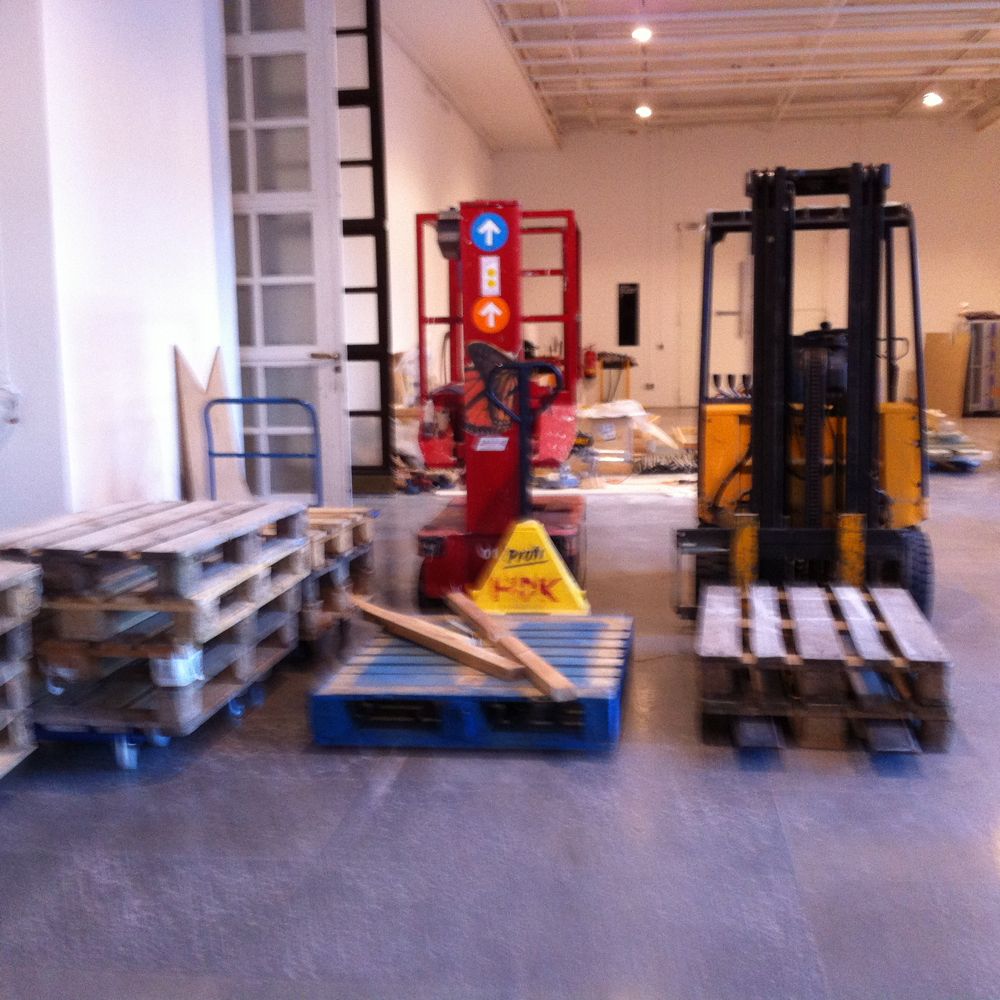
So you have probably heard by now the incredible story of how hundreds of amazing paintings were recovered right here in München – right here in Schwabing! – from the derelict apartment of an “art dealer” who had stored them in haphazard fashion amid cans of apricots and bottles of sherry. Included in the cache are long-missing works by Max Beckmann, Picasso, Renoir, Matisse. Of course most happily found is the painting above, one of Franz Marc’s Blue Horses missing for more than 70 years.
It has been super-exciting to be so lucky to be here for this momentous occasion. Everyone – not just at the museum but everyone in the city – is talking about the fantastic aspects of the story (please read up on it; it’s sure to become even more fascinating) but what is most awesome is the jubilation and delight people are expressing. I can’t think of many places where a city-wide celebration would erupt over such a story.
Of course I am not unmoved. FOCUS magazine broke this story on Monday. When I saw the headline in the Süddeutsche Zeitung’s Twitter feed I ran out to the news vendor to get a copy and snagged the last one, and the last print SZ in the stack too. I am very happy to have these print artifacts of this wonderful occasion.
Here are links from the Daily Mail (UK); Time Magazine (US); and Süddeutsche Zeitung (DE).
I am thrilled that one of the missing Blue Horses was found period, but it’s beyond overwhelming to be right here…Hopefully Turm der Blauen Pferde is hanging out in someone’s garage or wine cellar or something.
by Jean Marie Carey | 20 Oct 2013 | Art History, German Expressionism / Modernism
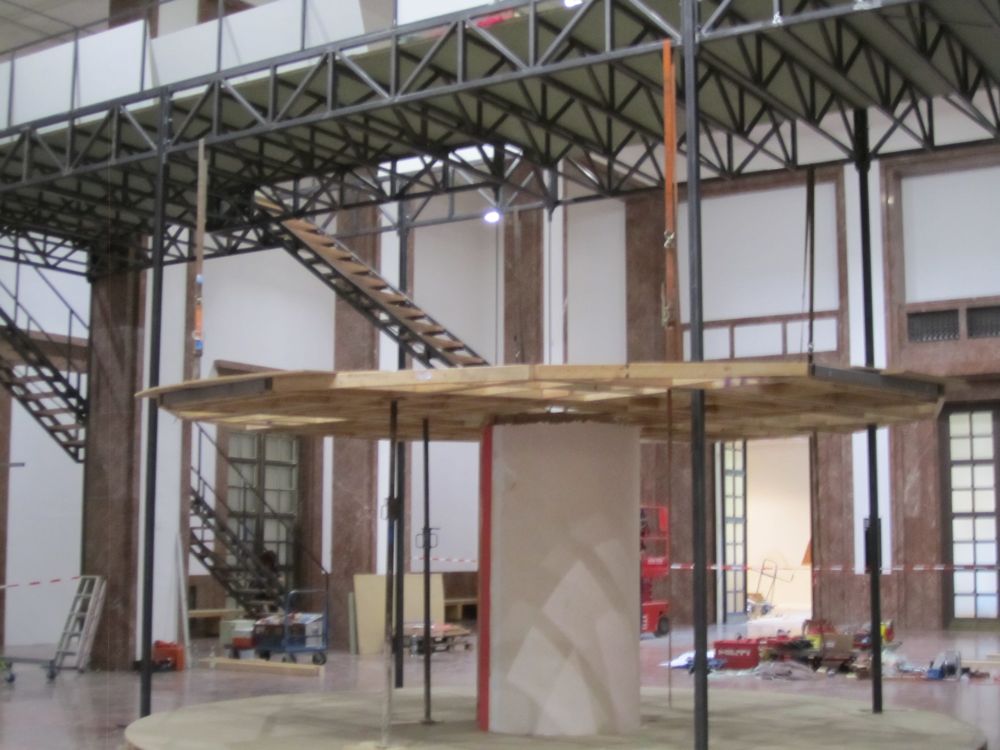
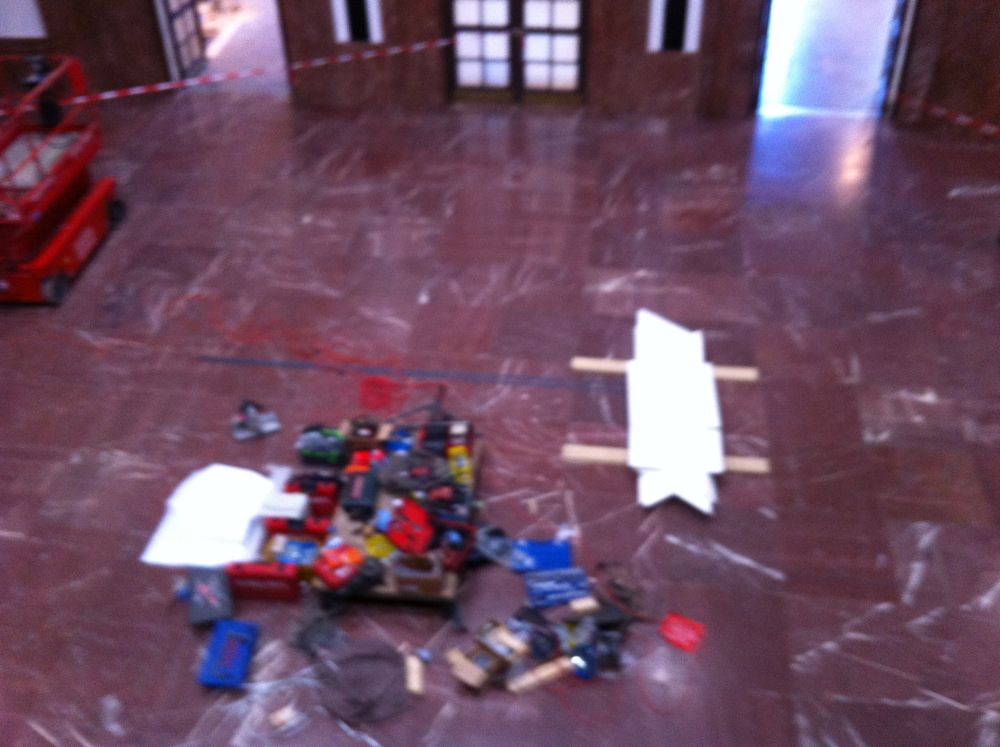
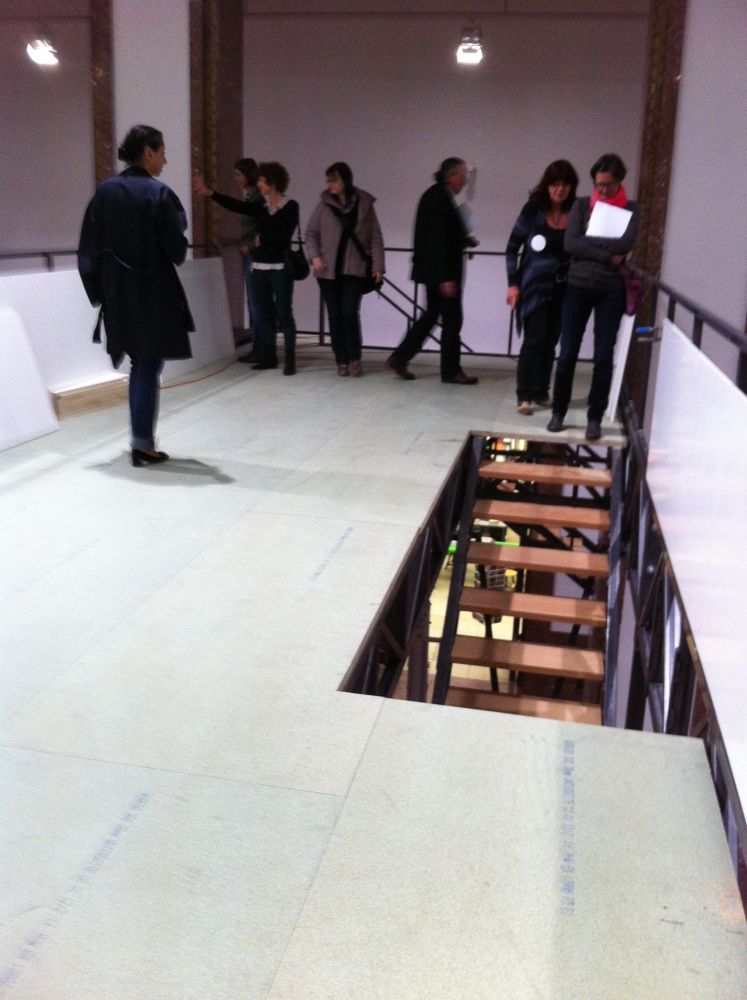
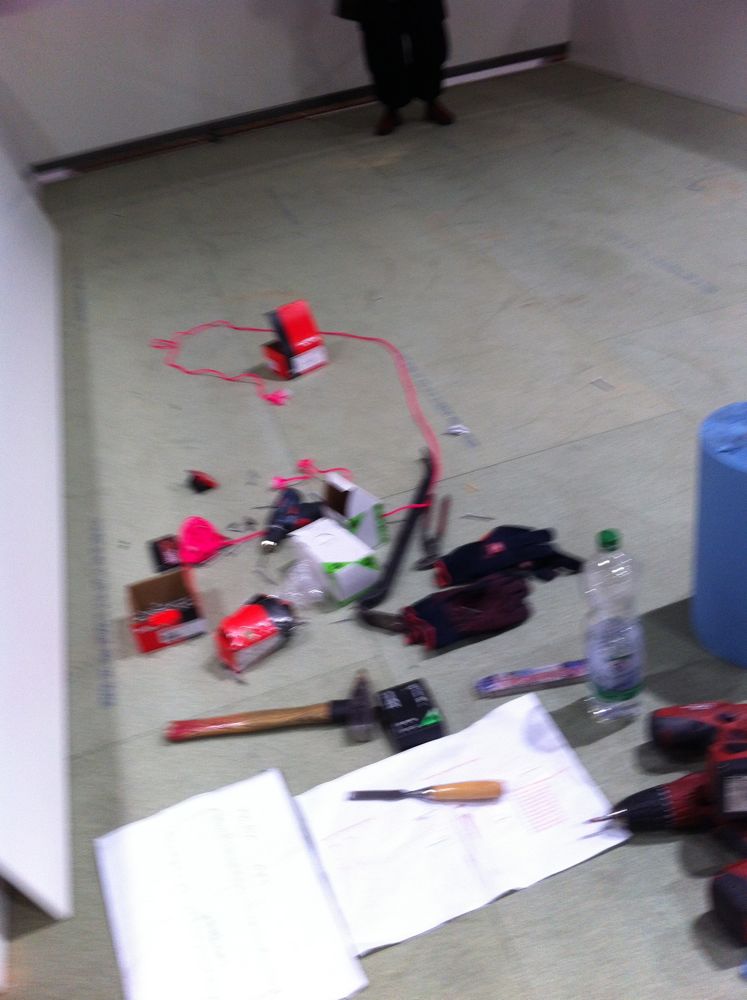
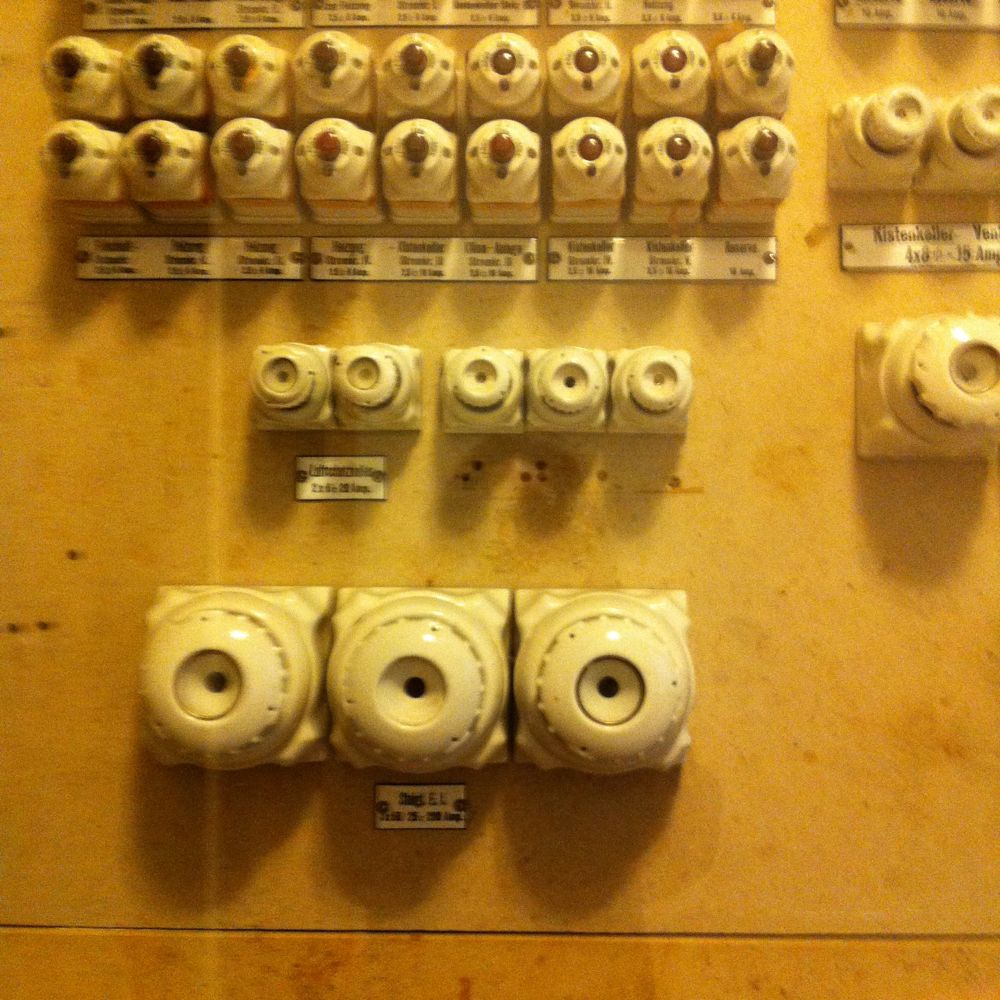
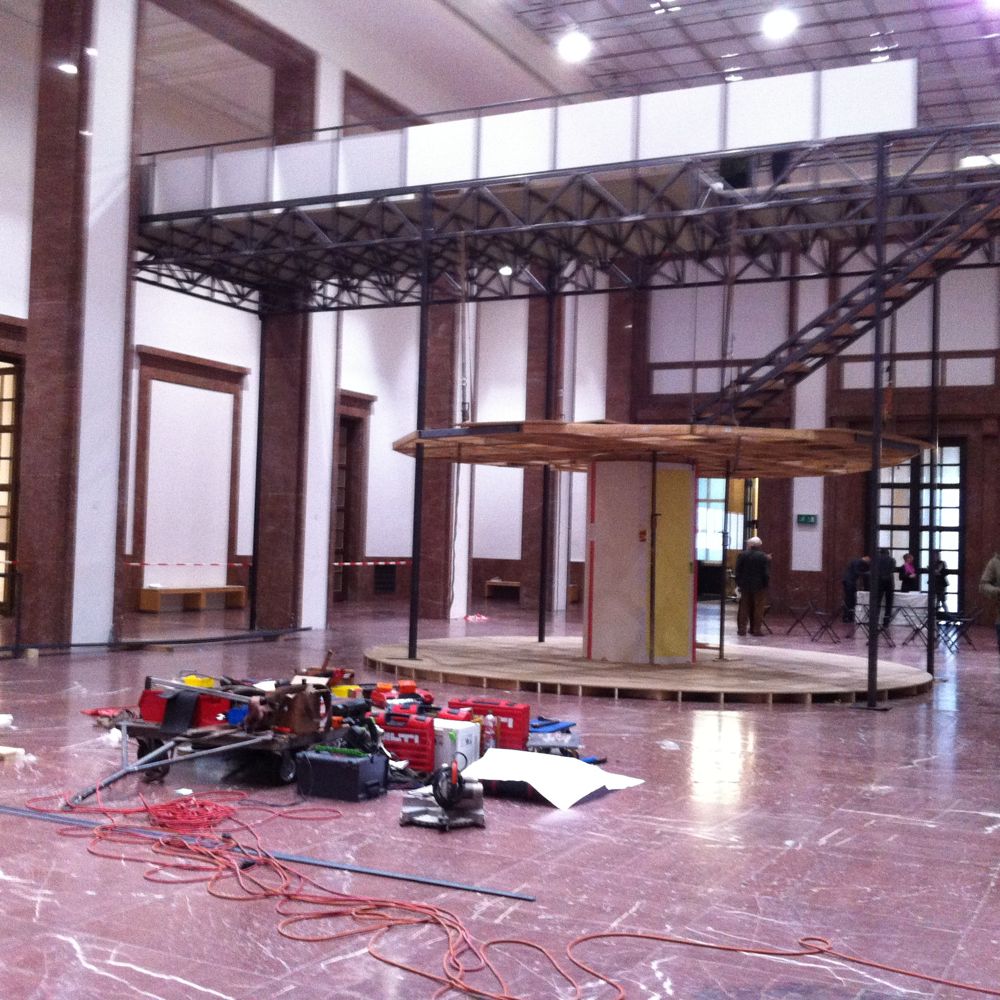
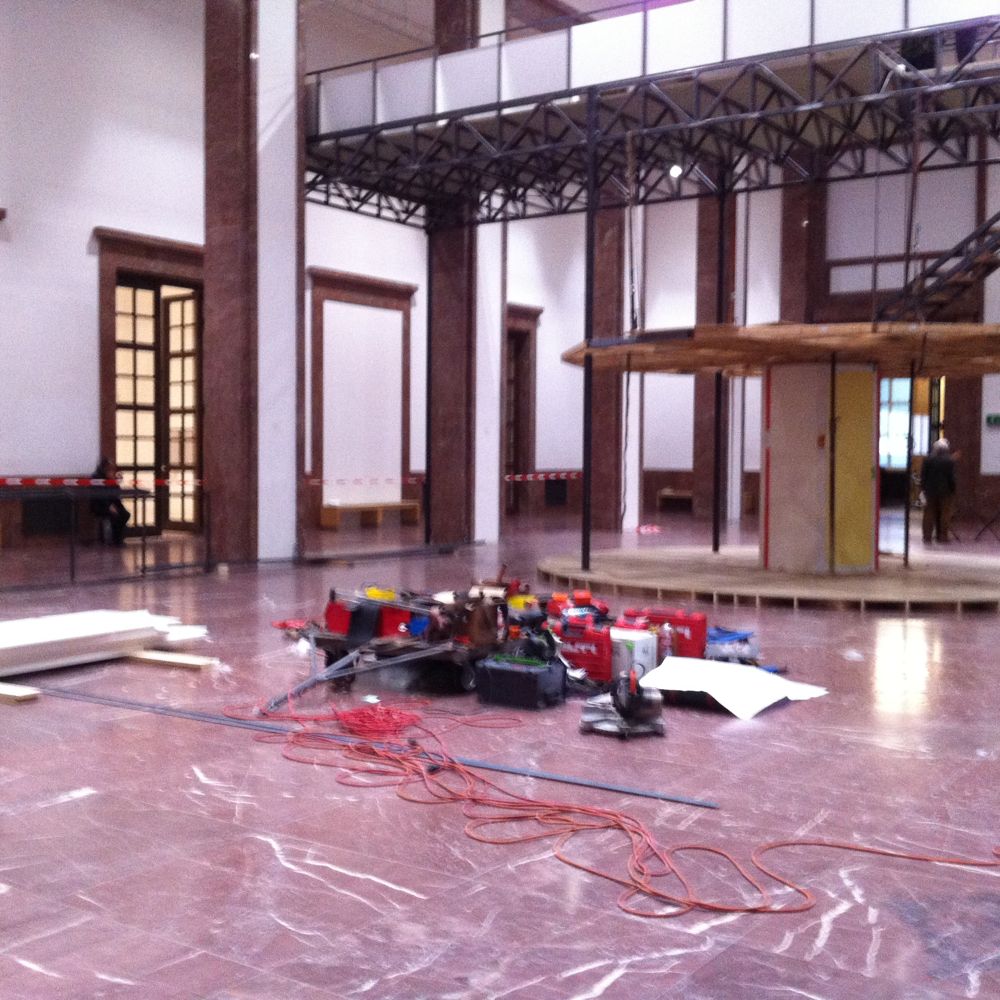
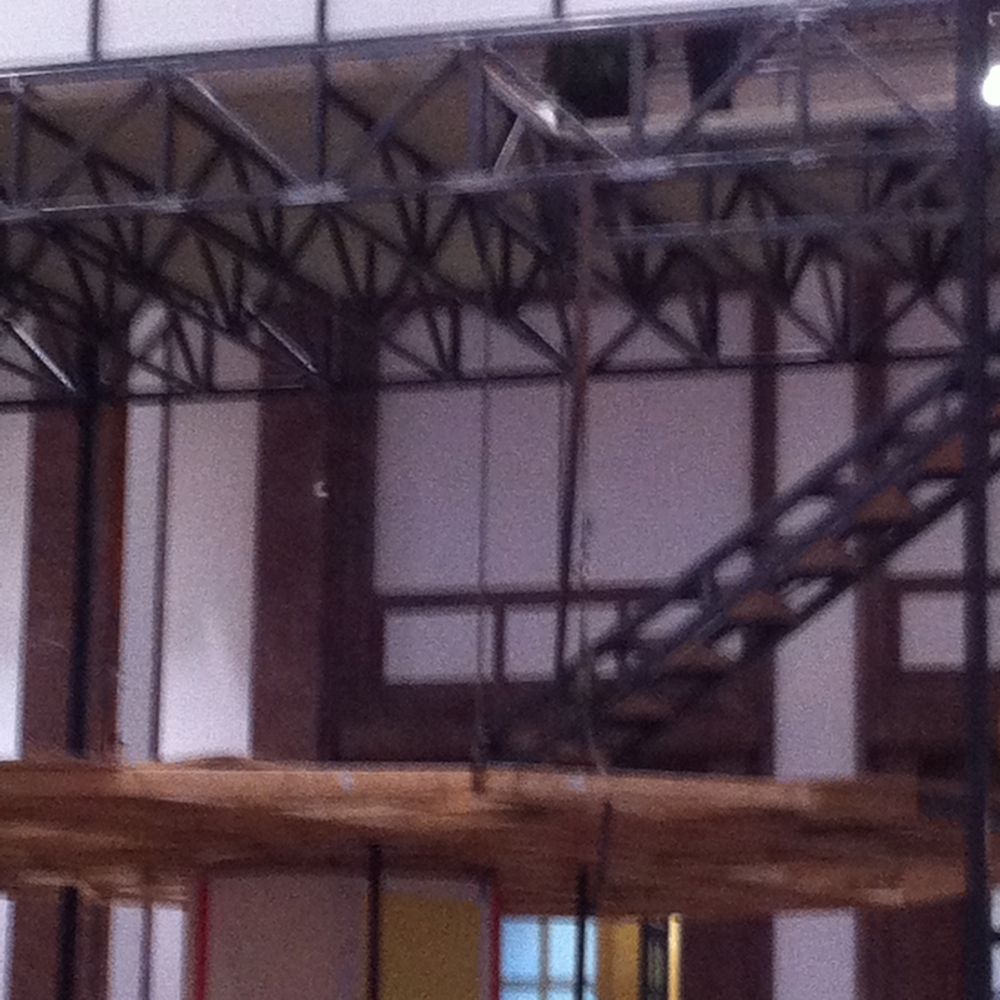
I cannot explain better what 18 of the 21 photographs above are better than the Haus der Kunst press release about this very subject, so here it is, partially ellipsed for brevity:
Manfred Pernice ... will create an expansive, accessible installation consisting of various, often "recycled" works. The artist is interested not only in the reusing of found objects and materials of various origins, but also, what is more remarkable, he uses his own earlier works as architectural elements for new works or as installation pieces in altered contexts of meaning. Pernice's planned intervention for Haus der Kunst's central Middle Hall relates directly to the space's architecture and consists of two main elements: Pernice will place his architectural sculpture "Tutti" from the year 2010 in the middle of the room. A spiral staircase leads up to the sculpture's roof. From there, via a second staircase, the visitor reaches a bridge, which spans the Middle Hall and from which visitors can continually view the room from new perspectives. For the bridge, the artist will develop an installation, which, as a result of the work process, will evolve on site. This form of spontaneous response to the spatial conditions is characteristic of Pernice's sculptural approach.
My friend who came with me to the opening exclaimed more succintly: “Mager! Ich mochte lieber sehen…”
Additionally, the director of HdK, Okwui Enwezor (who is having a cusp birthday this week), described Pernice’s work as an “intervention in the global crisis of modernity.”
The artist and sponsors (the Friends of Haus der Kunst) also spoke at length about the sculptural installation, which seems to suggest they realize that even for HdK regular patrons it requires some type of backgrounding. I give HdK a lot of credit for trying out global-art-fair-type works in its austere central hall and for the integration (too seamlessly really) into the “renovation.”
Having just been in six airports in six days, the kind of indistinguishable elevations, chutes, and stopping spaces of those reminded me of Tutti IV in sort of a vague “I’m tired” (not “I’m aware of phenomenology) way. I think maybe also for people living in München the trappings of renovation – with both the Lenbachhaus and the Pinakothek der Moderne having recently reopened – plus the endless “installations” of scaffolding and rerouting at the Hauptbahnhof and Marienplatz – are part of the normal whirring scenic backdrop of the city.
by Jean Marie Carey | 1 Sep 2013 | Animals, Animals in Art, Art History, Franz Marc, German Expressionism / Modernism
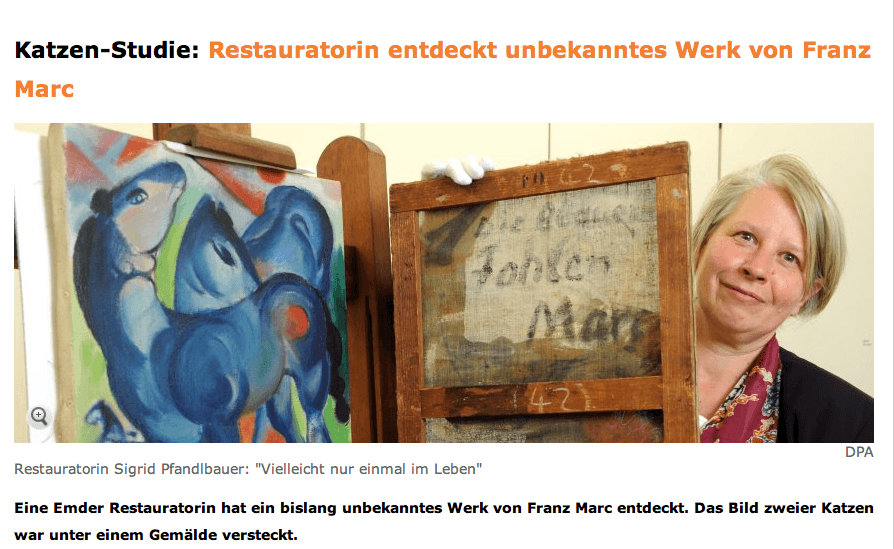
Der Spiegel online had a story today about an art restorer’s amazing discovery of a new Franz Marc painting on the reverse of 1913’s Blauen Fohlen. Sigrid Pfandlbauer of the Kunsthalle Emden found the study of two cats bearing Marc’s signature while restoring Blauen Fohlen for an upcoming exhibition. What an incredible, exciting discovery…how much there is still to be learned about Marc.

by Jean Marie Carey | 20 Aug 2013 | Art History, Franz Marc, German Expressionism / Modernism, LÖL
Postkarte am Bubi, Franz Marc and Auguste Macke, 1911. This looks like mostly AM really. I love the way the feathers become the fish…
“We actually had many more exciting exchanges back-and-forth, most of which were very unproductive and very unbecoming of two grown men.” LÖL.
by Jean Marie Carey | 23 Jul 2013 | Art History, German Expressionism / Modernism
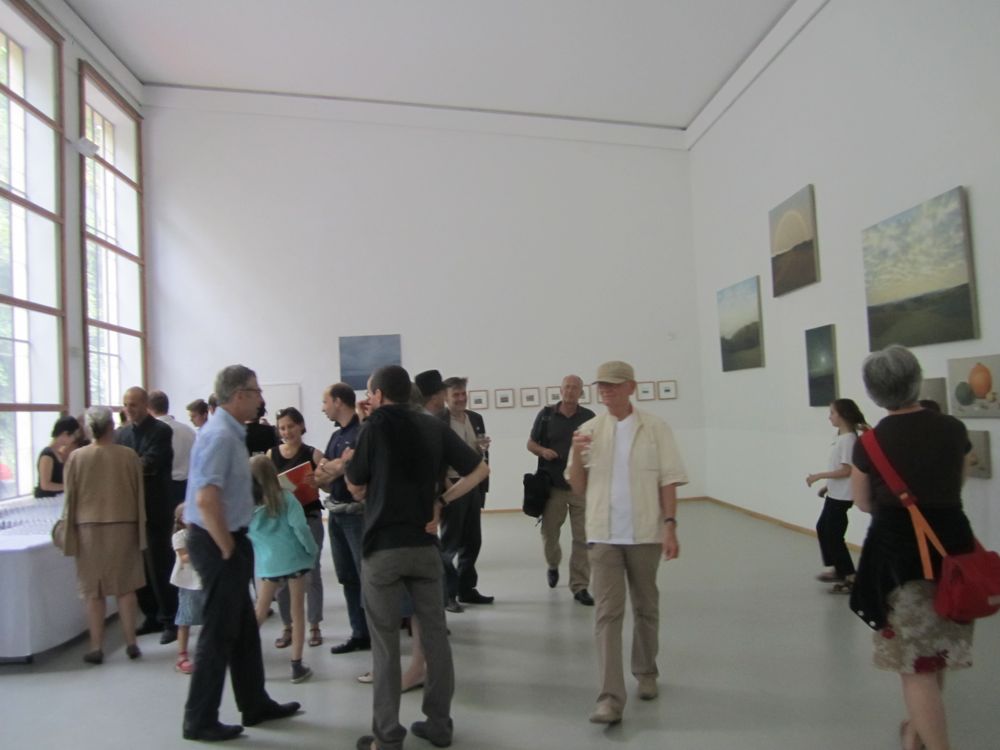
Danaé Xynias’s “Weite Fluren” is a good match for the Orangerie.
In framing the composition of a landscape painting, the challenge to the image maker, following eons of tradition, comes down fundamentally to where to place the horizon line. Contemporary painters have toyed with this problem experimentally, such as in Colin McCahon’s various large-panel installations of volcanic vistas in New Zealand. At the far reaches of these modern manifestations falls Trevor Paglen’s Covert Operations and Classified Landscapes (2010) presenting the horizon as, also, metaphorically unreachable. To sort of put things back into perspective, so to speak, Danaé Xynias makes the brave choice to return to the subject of landscape painting – the meeting of land (or water) and sky – allowing the horizon line to settle for the most part naturally in the center of her canvases.
Xynias’s current exhibition, “Weite Fluren,” is a mixture of landscapes and stylized still-lifes. (The still-lifes are certainly interesting in their own right, with rounded forms of pumpkins and melons against a zero-depth background intensifying the relationship between subject and frame.)
A reference in the catalog for the show marks an oblique historical lineage by referencing both Caspar David Friedrich and Jacob van Ruisdael, demurring that Xynias doesn’t quote them directly. This is true, though particularly the low clouds often associated with the van Ruisdael family are a clear evocation of the past. Make no mistake though Xynias is strictly a modernist, in the sense that her facture is very clean, the painted surface entirely flat and removed from the content in careful application. The space Xynias makes reference to in the exhibition title is obviously something that is of keen interest in its totality to the painter, a graduate of the Kunstakademie Düsseldorf who practices in a remote studio in Niederbayern. “Weite Fluren” is luminous in its incarnation at the Orangerie in the Englischer Garten, the classicizing space with the summer-lush exterior always at the peripheral always in view. The show is hung simply, without name markers as a distraction, with the larger landscapes singly or in groups slightly above eye-level, making visitors have to look “up” into the skies of the paintings.