Teenage Catalyst: Helmuth Macke and Franz Marc
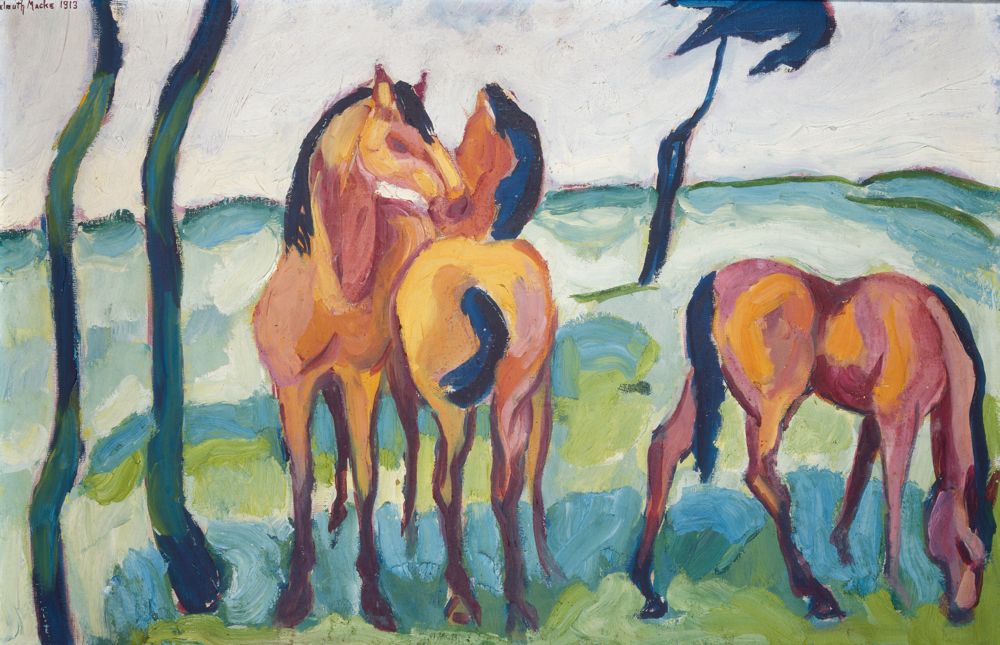
Helmuth Macke,
Drei Pferde,
1913
“The ‘boarding school’ is in session,” Franz Marc wrote nervously to his friend August Macke.[1] Pining for company in the same letter, Marc nonetheless wondered if August should come and get Helmuth Macke, August’s young cousin, whom the Macke family had deposited some weeks earlier at Marc’s small apartment in rural Sindelsdorf. It was late November 1910. Marc would soon turn 31, and Helmuth was 18. Until Helmuth’s arrival, Marc had been working alone for some time. At the insistence of her concerned parents, Maria Marc had returned to Berlin. Marc was just beginning to see the slightest of incomes from his painting, but he was irritable and distracted. And now August, himself adjusting with his wife Elisabeth to the birth of their son, expected Marc to find ways to entertain a teenager.
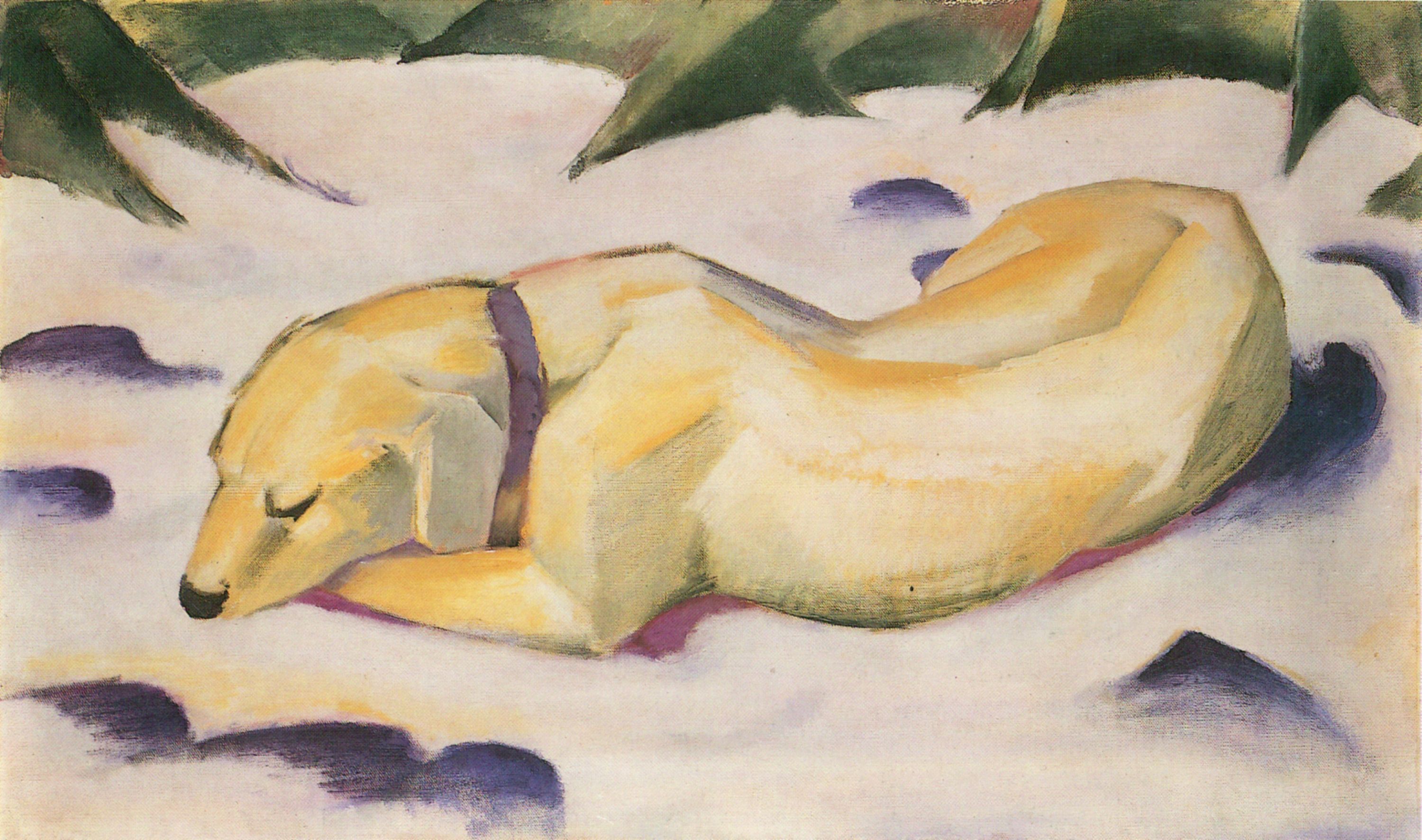
Yet Helmuth was resourceful and clever. During the weeks in Sindelsdorf, (which become months and longer: “Helmuth’s fine, he’s still growing,” Marc reported the following summer)[2], Helmuth taught himself enough Dutch to communicate with Heinrich Campendonk; chopped wood and built a fence; practiced painting and drawing, befriended Marc’s dog Russi; and demonstrated a talent for cooking and baking. This latter skill commanded Marc’s particular favor. Animated but sympathetic, Helmuth provided stability and encouragement. By Christmas Marc had breezily informed August that Helmuth would be staying on.[3]
As the calendar turned to 1911, the chrysalis of Sindelsdorf opened and released a new Marc to Munich. Seeking a sophisticated way to celebrate New Year’s, Helmuth pointed Marc toward a performance of Arnold Schönberg quartets. The music had a vivid impact on Marc, which he reported with great excitement to Maria, August, and a new friend who had missed the concert – Wassily Kandinsky. At a the soirée given by Marianne von Werefkin at which Marc and Kandinsky met at last in person, Helmuth was at Marc’s side, and witnessed the twinkle in the eye of fate that became Der Blaue Reiter.[4]
After the party, Helmuth and Franz took the late train from Munich to Penzburg, laughing and marveling over their adventure as they walked jauntily through the falling snow back to Sindelsdorf. Neither traveler was concerned for the future at that joyful moment, and mercifully, neither could know what the future held.
Helmuth Macke died in 1936 when his small boat capsized in a sudden storm on Lake Constance, having given his sailing companion the only life preserver.
[1] Franz Marc, August Macke: Briefwechsel. (Köln: DuMont, 1964), 20-21.
[2] Marc and Macke: Briefwechsel, 42.
[3] Marc and Macke: Briefwechsel, 28.
[4] Dominik Bartmann, Helmuth Macke, (Recklinghausen: Verlag Aurel Bongers, 1980), 26.