
Airporty

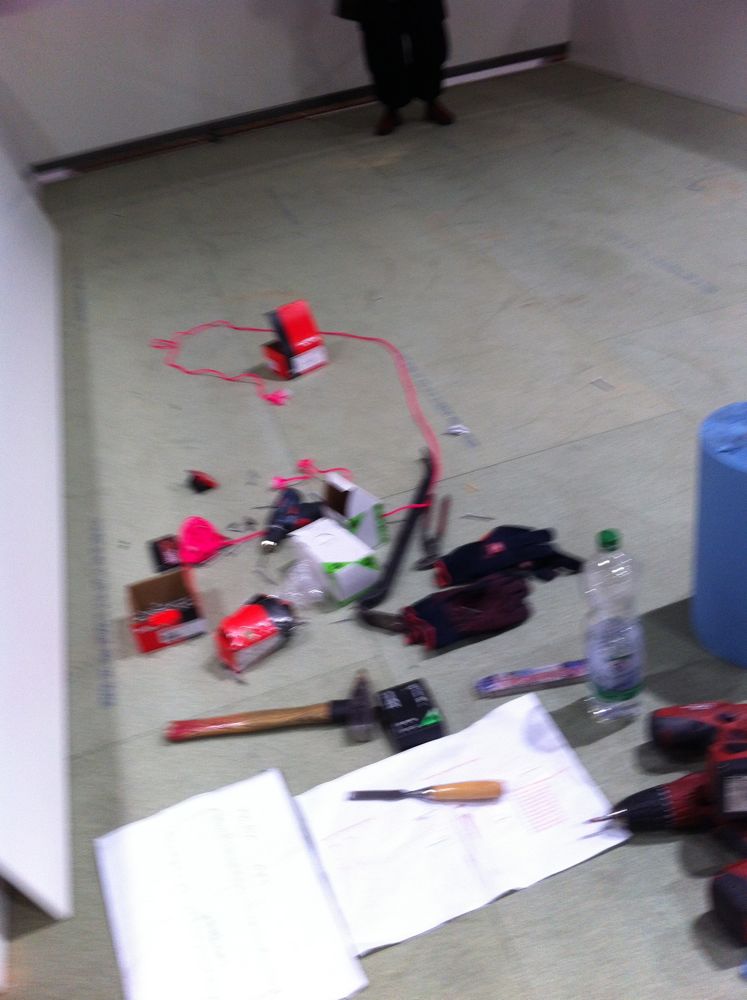

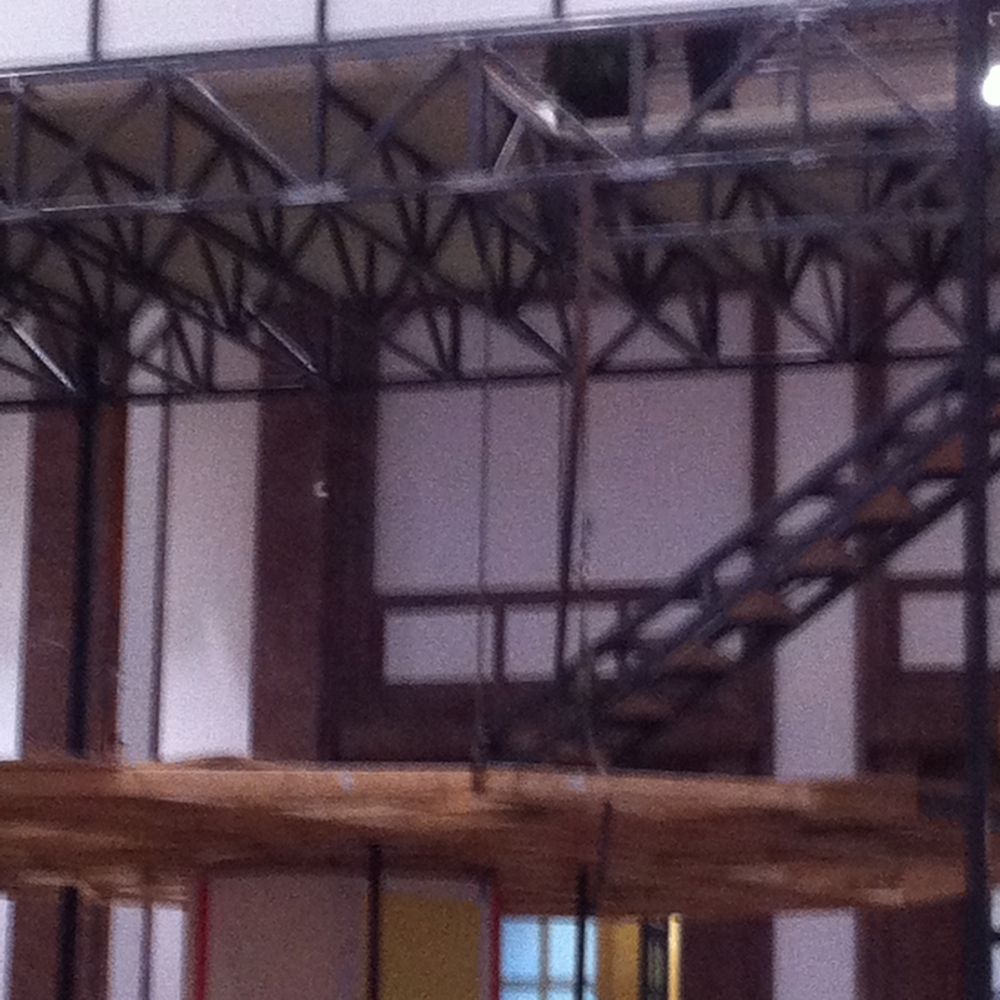
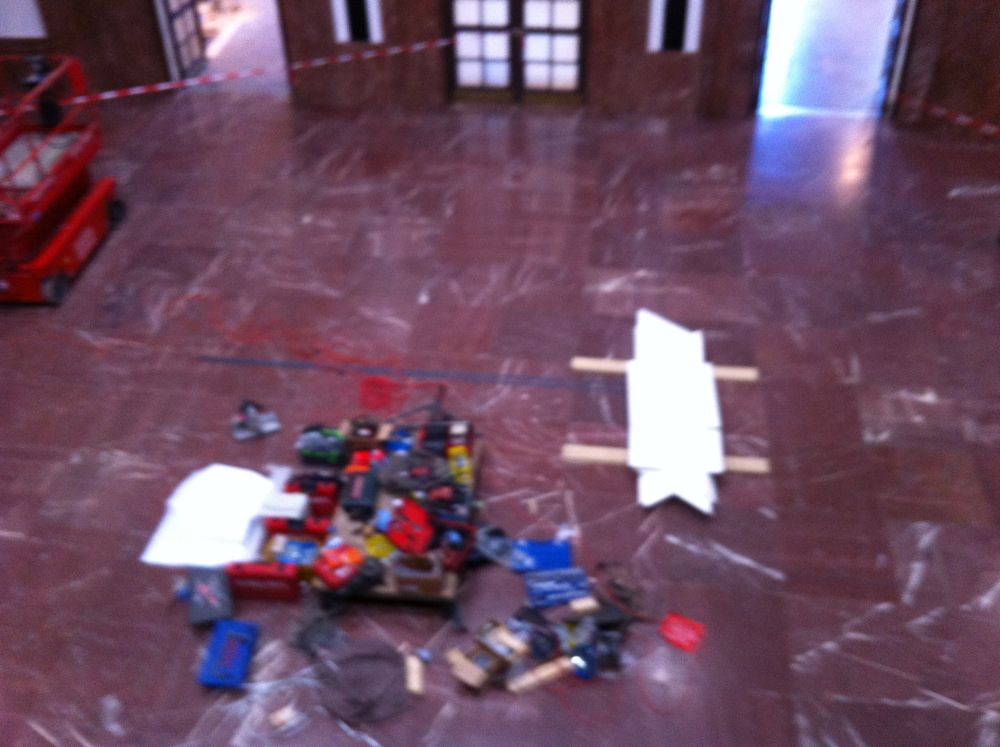
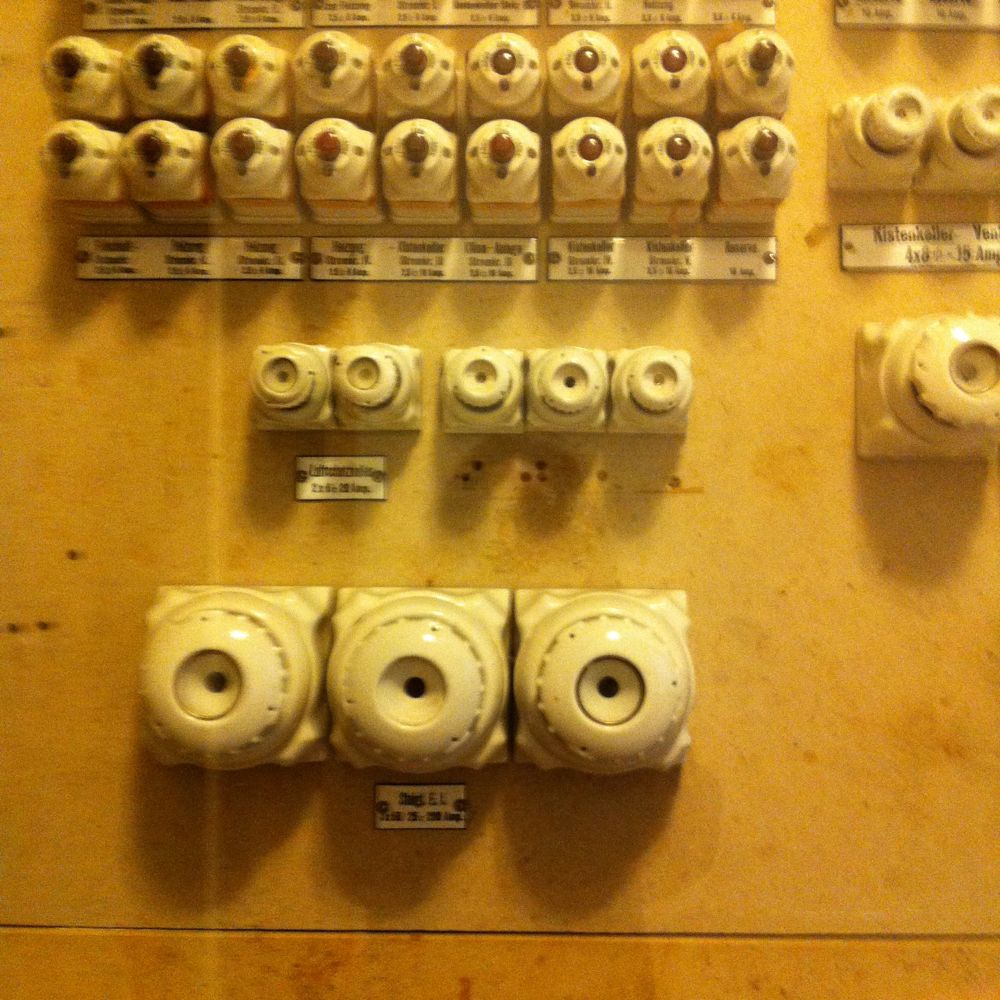
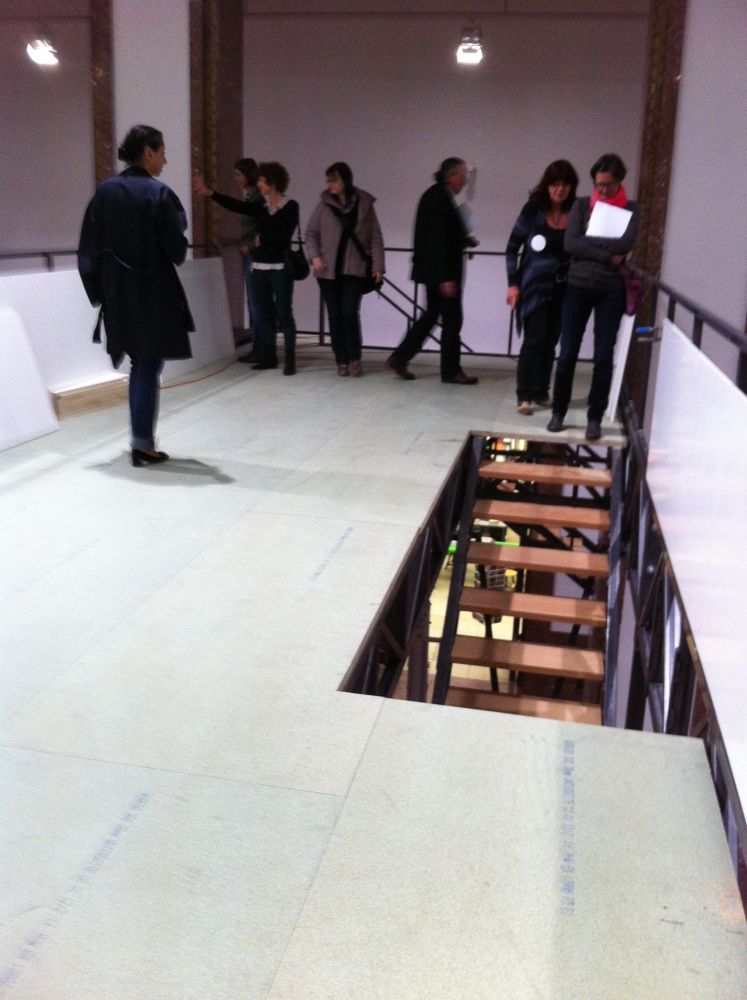


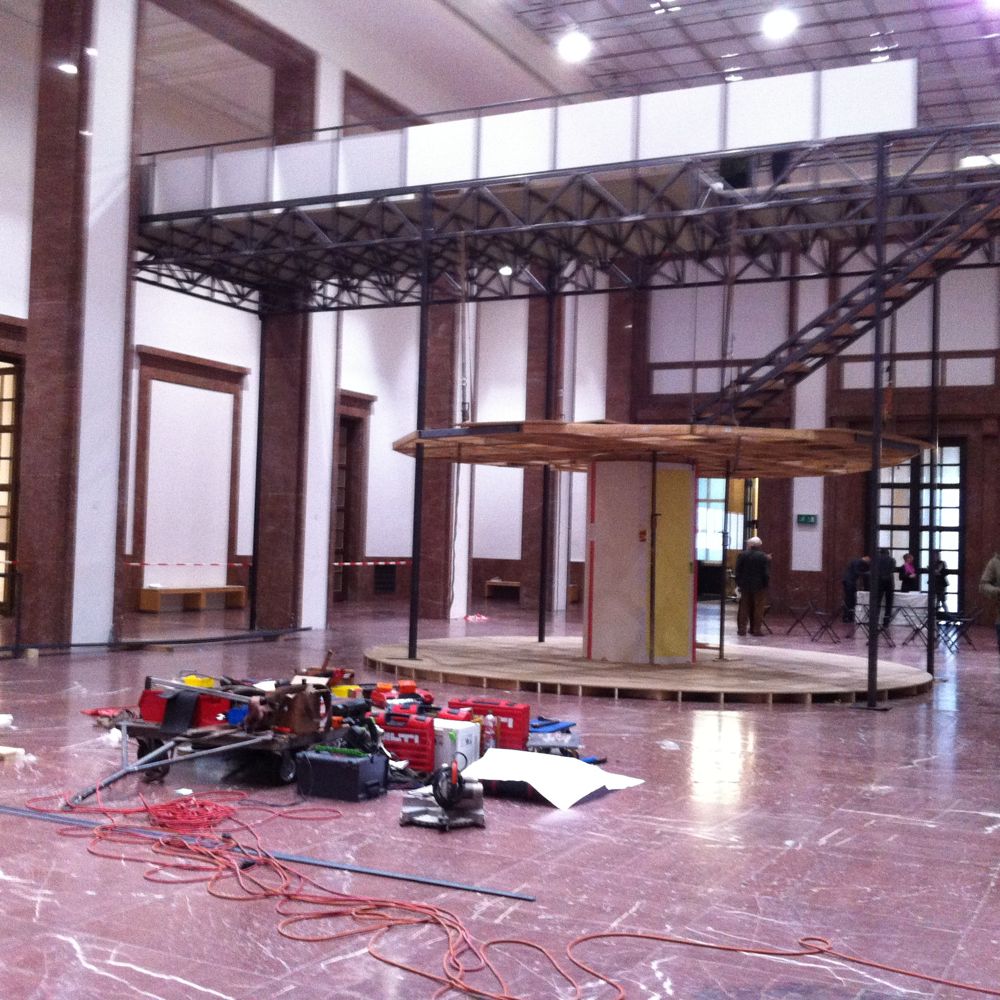
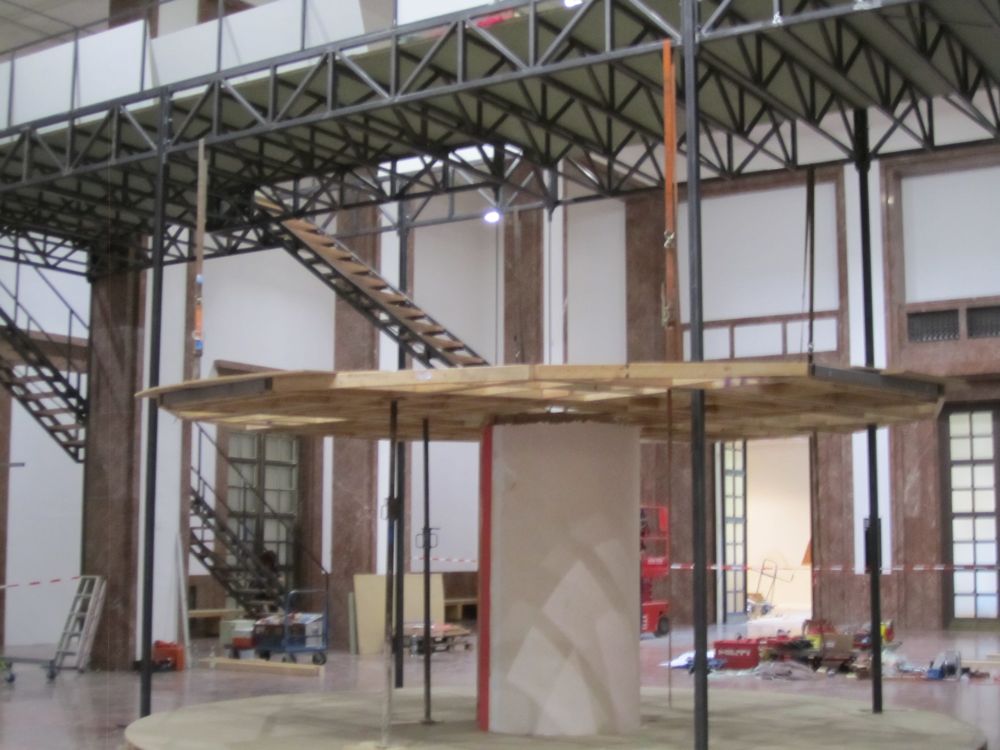


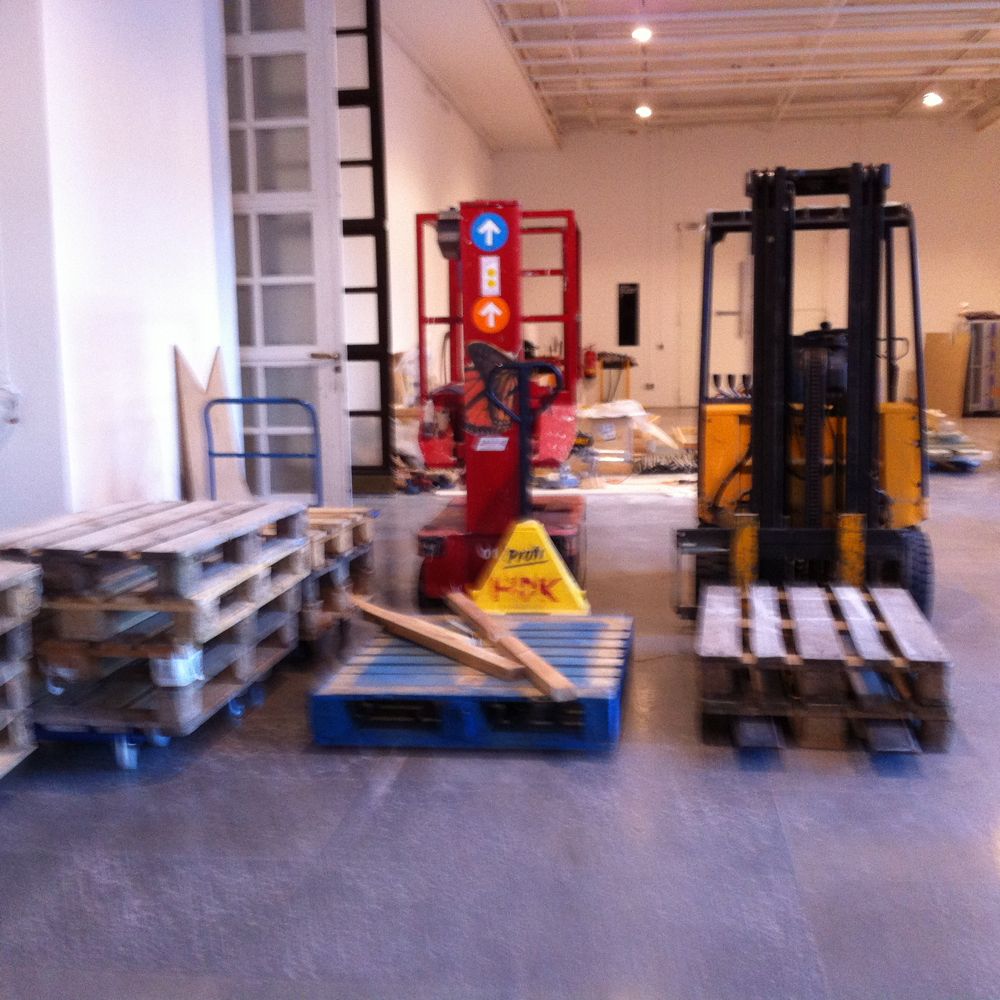
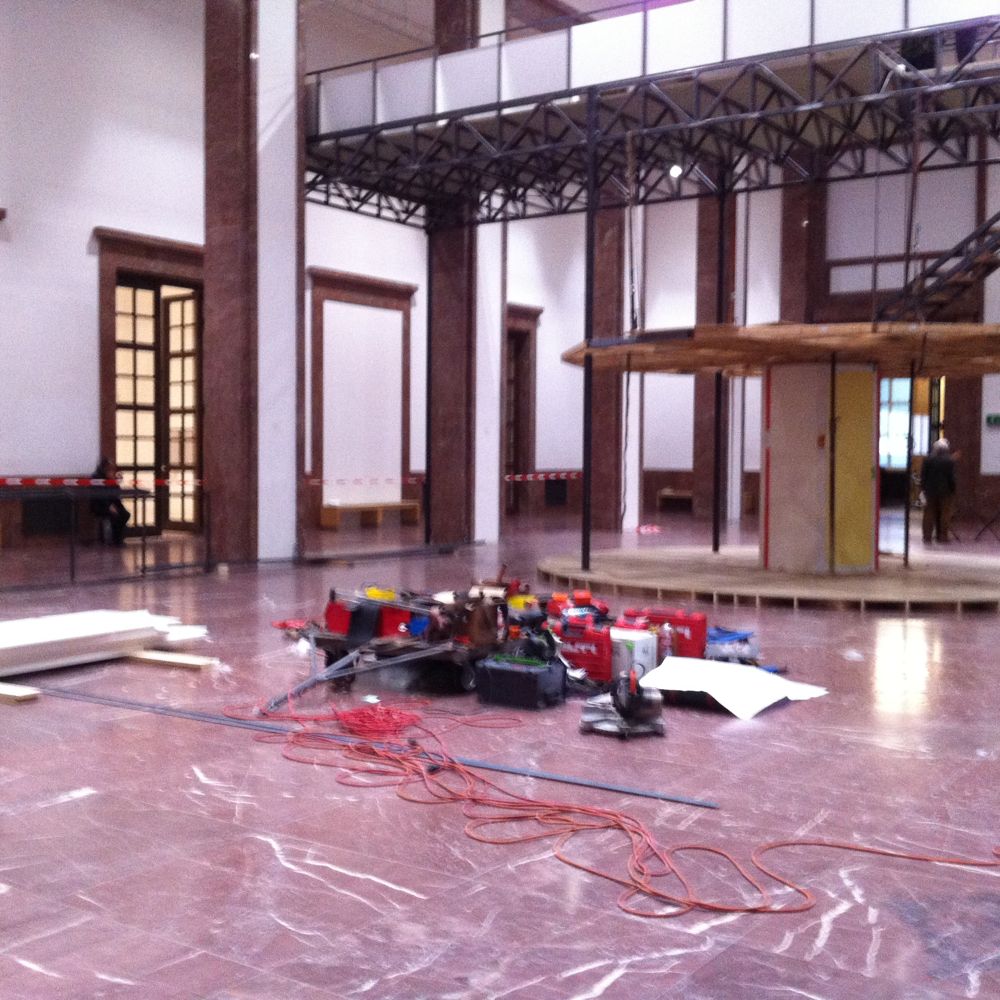
I cannot explain better what 18 of the 21 photographs above are better than the Haus der Kunst press release about this very subject, so here it is, partially ellipsed for brevity:
Manfred Pernice ... will create an expansive, accessible installation consisting of various, often "recycled" works. The artist is interested not only in the reusing of found objects and materials of various origins, but also, what is more remarkable, he uses his own earlier works as architectural elements for new works or as installation pieces in altered contexts of meaning. Pernice's planned intervention for Haus der Kunst's central Middle Hall relates directly to the space's architecture and consists of two main elements: Pernice will place his architectural sculpture "Tutti" from the year 2010 in the middle of the room. A spiral staircase leads up to the sculpture's roof. From there, via a second staircase, the visitor reaches a bridge, which spans the Middle Hall and from which visitors can continually view the room from new perspectives. For the bridge, the artist will develop an installation, which, as a result of the work process, will evolve on site. This form of spontaneous response to the spatial conditions is characteristic of Pernice's sculptural approach.
My friend who came with me to the opening exclaimed more succintly: “Mager! Ich mochte lieber sehen…”
Additionally, the director of HdK, Okwui Enwezor (who is having a cusp birthday this week), described Pernice’s work as an “intervention in the global crisis of modernity.”
The artist and sponsors (the Friends of Haus der Kunst) also spoke at length about the sculptural installation, which seems to suggest they realize that even for HdK regular patrons it requires some type of backgrounding. I give HdK a lot of credit for trying out global-art-fair-type works in its austere central hall and for the integration (too seamlessly really) into the “renovation.”
Having just been in six airports in six days, the kind of indistinguishable elevations, chutes, and stopping spaces of those reminded me of Tutti IV in sort of a vague “I’m tired” (not “I’m aware of phenomenology) way. I think maybe also for people living in München the trappings of renovation – with both the Lenbachhaus and the Pinakothek der Moderne having recently reopened – plus the endless “installations” of scaffolding and rerouting at the Hauptbahnhof and Marienplatz – are part of the normal whirring scenic backdrop of the city.