by Jean Marie Carey | 27 Jun 2010 | Art History, Stuff Found in Library Books
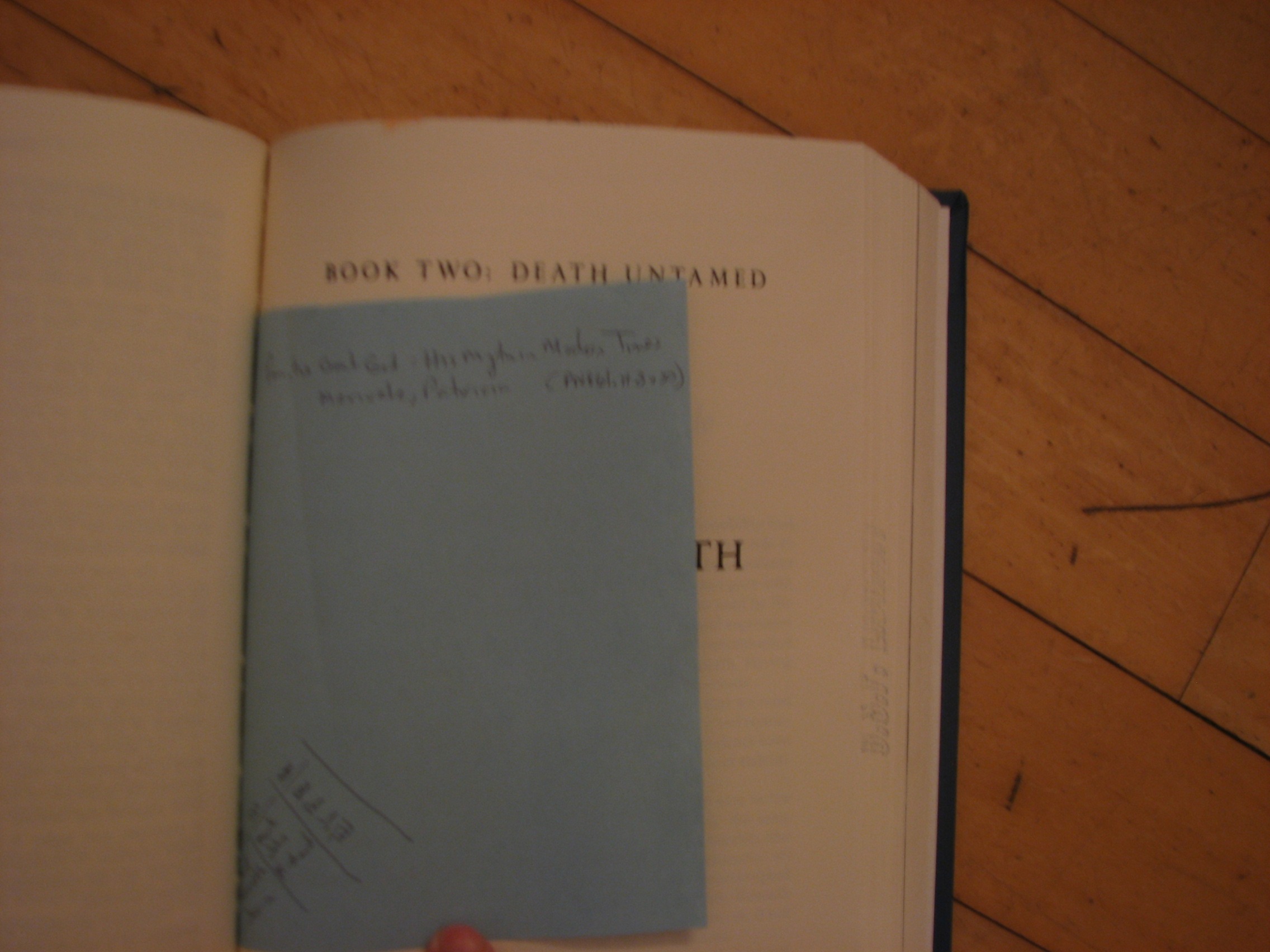
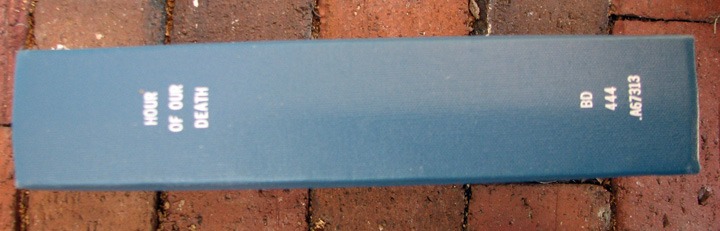
This book, The Hour of Our Death by Philippe Aries (New York: Knopf, 1961) and the pages inside it was rebound recently, with the ad hoc call slip of a patron (who apparently had found the book) joined to new (sewn) binding.
Call slip bound into “Remote and Imminent Death,” in The Hour of Our Death

by Jean Marie Carey | 9 Jun 2010 | Art History
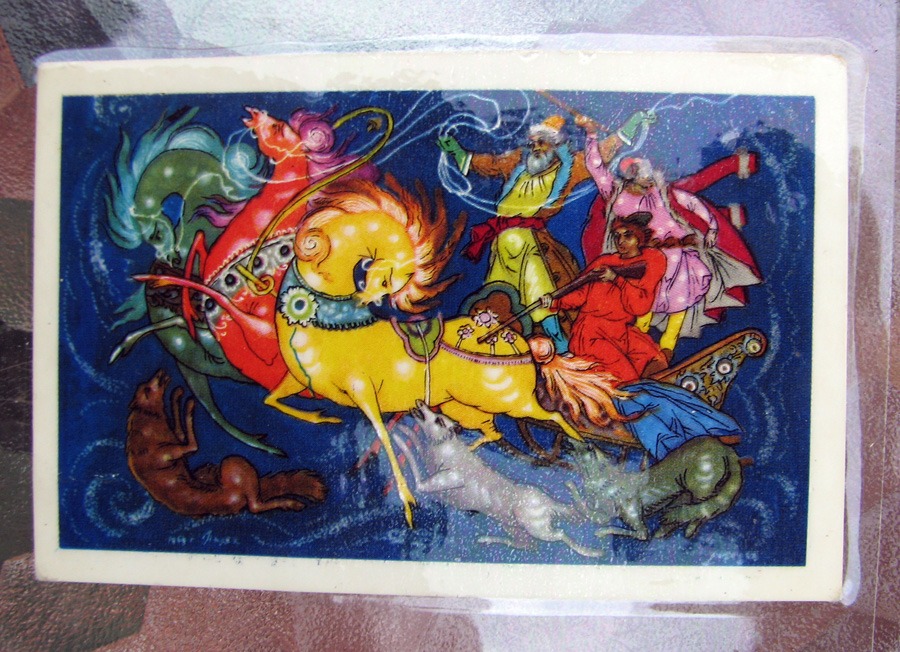
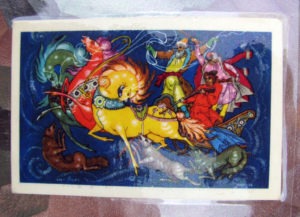
CCCP Calendar Card, 1971
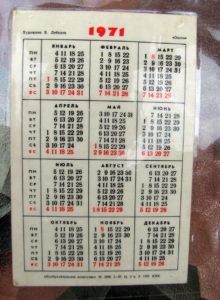
Soviet Calendar Card, 1971
Documenting odd things found in library books begins; this project is called The Lure of Salvage. Our inaugural item, this small (7 cm by 10.2 cm) calendar card from Moscow cicrca 1971 was found in a book of Russian poety printed in 1942. The photo does not do the image of the curly horses and leaping wolves justice but it is very dreamy and lovely.
‘There is no document of culture that is not at the same time a document of barbarism.’ – Walter Benjamin
by Jean Marie Carey | 16 May 2009 | Art History, Italian Greyhounds
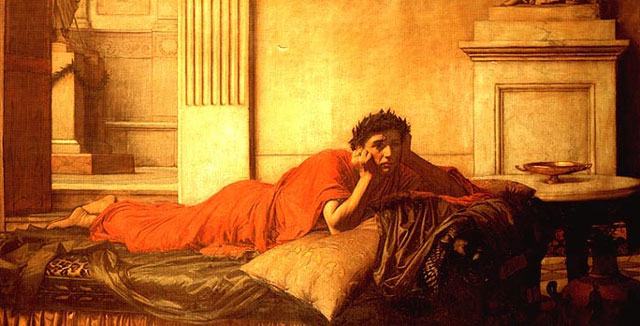
The Remorse of the Emperor Nero After the Murder of His Mother, John William Waterhouse, 1878
INTRODUCTION
An important distinction between Roman Emperor Nero and Chinese Emperor Kublai Khan (and his modern descendent, the William Randolph Hearst character entombed in Xanadu in Citizen Kane (1939) ), is that many of Nero’s ostentatious and ambitious construction projects – beyond and including the Golden Palace – contained spaces for the creation and display of art as well as libraries. In fact Nero’s baths offered one of the largest “public” libraries of the ancient world (Boese 2005, 102) (Staikos, K. 2000).
The purpose of this paper is to present a biography of Nero in relation to the development and subsequent destruction of First Century libraries in Rome, and to present an argument about how access to libraries and knowledge ebbs and flows, and how this access does not always correlate in predictable ways around what we normally think of as civilized and progressive behavior. Nero’s strategy – to earn the love and support of the Roman people by providing culture, food, entertainment, and the constant diversion of a capricious sociopath running the Empire – was successful; it was the senatorial class who actually despised Nero. As Christendom ascended, it adopted some of Nero’s tactics – the spectacular persecution of a minority, for one thing – while other beneficial societal institutions – the aqueducts and the libraries, for example – fell away (Kiefer, Highet, and MacInnes 2000).
(more…)

by Jean Marie Carey | 20 Sep 2008 | Art History
Peak Libraries: Developing Sensitivity to Future Consequences
Insensitivity to future consequences is an identified behavioral aberration experienced by people who have experienced traumatic brain injuries to the cerebral cortex (Franck, 1995). Though perplexing and disruptive, at least there is some explanation for the actions of those who suffer this affliction. There is no such biological explanation for the shortsighted and damaging behaviors affected by those responsible for the stewardship of public library and museum programs, particularly in Florida. Florida’s plight, which is duplicated in states and municipalities nationwide, presents a particularly tragic case as the consequences of defunding important cultural and social programs may easily be foreseen.
Parallels may be drawn between the “gas crisis” and the “library crisis.” For more than twenty years, since the administration of President Ronald Reagan, patrons and employees of museums and libraries have dealt with increased funding shortfalls and budget and staff cuts in pretty much the same way as the general population has dealt with the current petroleum crisis: by complaining, and doing nothing else. Until recently, drivers griped about gouging at the gas pump and kept buying Hummers. Librarians and museum curators long bemoaned the crumbling cultural infrastructure (Klein, 2007). Through 2006 and 2007 commuters continued to drive exactly as much as always, and since 1984, library administrators have also continued, with respect to the lack of public funding for collections and facilities, to commiserate with colleagues and at library conferences, and perhaps most damagingly, to continue to rely on the personal integrity and client focus of library staffers to maintain the high level of productivity and professionalism associated with librarianship.
(more…)
by Jean Marie Carey | 11 Nov 2007 | Art History
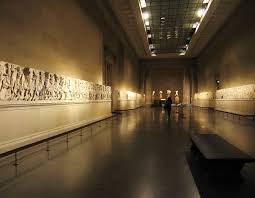
The Parthenon Friezes at the British Museum
At the end of the summer of 2007, the week before fall university classes began, Greece was on fire. The Peloponnese was uniformly scorched, nearly a hundred people were killed, rural economies were displaced, and flora and fauna indigenous only to Greek pine forests and mountainsides were burned, perhaps beyond any eventual recovery. Though the fires were barely held back from the famous antiquities of Olympia and Athens, other archaeologically priceless sites were not so fortunate .
Though some of the fires were attributed at their source to arsonists, Greek Prime Minister, Kostas Karamanlis, whose New Democracy party was returned to office this past September, is partially culpable in this tragedy. Karamanlis and other Greek officials were slow to acknowledge the severity of the fire emergency and have yet to admit the true extent of the damage.
“There are several well known ‘arsonists’ in Greece — garbage dumps (burning spontaneously), farmers burning brush, animal farmers burning land to sprout fresh grass for grazing,” Nikos Charalambides, director of Greenpeace in Greece, told a reporter from Reuters on October 1.
“But the biggest arsonist is the state, which has not clarified the use of land, leaving suburban forests vulnerable to rogue developers,” he added in the same piece.
“The lack of a national land registry and national zoning laws leave room for doubt about the characterization of land, whether it is forest or not,” told Reuters.
It is not a good time for antiquities, and the dire circumstances are of course more attributable to the traditional colonial superpowers than to Grecian malfeasance.
The blame for the theft of treasures from the Baghdad Archaeological Museum, the burning of Baghdad’s National Library, and the looting of more than 10,000 Ur, Sumerian, and Babylonian archaeological sites may be laid, in the name of Operation Iraqi Freedom, on the doorstep of the United States and bullied ally Great Britain.
(more…)