by Jean Marie Carey | 15 Jun 2014 | Animals, Animals in Art, Art History, Franz Marc, German Expressionism / Modernism, LÖL, Re-Enactments© and MashUps
August Macke and Franz Marc packed the friendship of a lifetime into the few short years they had together from early 1910 to the summer of 1914, even with a few breaks for pouting and sulking. Some of their correspondence is recorded in a dedicated volume, and other letters, notes, stories, and recollections of their doings from other people are hidden in unpublished works and Expressionist apocrypha.
Macke and Marc enjoyed working on their art as a pair and in fact they both considered the drawings and sketches they made while just being together to fall into the class of “things we made together” on the same level as the few categorical objects to which we ascribe to their dual provenance, of which the mural Paradies, from 1912, is one. The mural lives now at the Westfalisches Landesmuseum für Kunst und Kultur in Münster, but it was made in the upstairs atelier of the Macke house (now the August Macke Haus ) in Bonn.
Given Macke’s constant scheming and hustling, and the sort of declarations of superficiality he seems to make about all that is admirable in painting, it is easy to think of him as being a sort of light shadow to Marc’s heavy element, but this is not at all true. And Marc often seems supremely naïve and dopey in his out-of-itness, which was also more of an occasional condition. However, the story attendant to the making of this mural finds them both in exactly these roles.
In fact as soon as I learned more about how Paradies was made, I immediately thought of the famous story in Mark Twain’s The Adventures of Tom Sawyer printed below. In fact there is not much I can say about it, or as well.
Paradies, August Macke and Franz Marc, 1912
Excerpt from Tom Sawyer: Chapter 2
“Hi- yi ! You’re up a stump, ain’t you!”
No answer.
Tom surveyed his last touch with the eye of an artist, then he gave his brush another gentle sweep and surveyed the result, as before. Ben ranged up alongside of him. Tom’s mouth watered for the apple, but he stuck to his work. Ben said:
“Hello, old chap, you got to work, hey?”
Tom wheeled suddenly and said:
“Why, it’s you, Ben! I warn’t noticing.”
“Say — I’m going in a-swimming, I am. Don’t you wish you could? But of course you’d druther work — wouldn’t you? Course you would!”
Tom contemplated the boy a bit, and said:
“What do you call work?”
“Why, ain’t that work?”
Tom resumed his whitewashing, and answered carelessly:
“Well, maybe it is, and maybe it ain’t. All I know, is, it suits Tom Sawyer.”
“Oh come, now, you don’t mean to let on that you like it?”
The brush continued to move.
“Like it? Well, I don’t see why I oughtn’t to like it. Does a boy get a chance to whitewash a fence every day?”
That put the thing in a new light. Ben stopped nibbling his apple. Tom swept his brush daintily back and forth — stepped back to note the effect — added a touch here and there — criticised the effect again — Ben watching every move and getting more and more interested, more and more absorbed. Presently he said:
“Say, Tom, let me whitewash a little.”
Tom considered, was about to consent; but he altered his mind:
“No — no — I reckon it wouldn’t hardly do, Ben. You see, Aunt Polly’s awful particular about this fence — right here on the street, you know — but if it was the back fence I wouldn’t mind and she wouldn’t. Yes, she’s awful particular about this fence; it’s got to be done very careful; I reckon there ain’t one boy in a thousand, maybe two thousand, that can do it the way it’s got to be done.”
“No — is that so? Oh come, now — lemme just try. Only just a little — I’d let you , if you was me, Tom.”
“Ben, I’d like to, honest injun; but Aunt Polly — well, Jim wanted to do it, but she wouldn’t let him; Sid wanted to do it, and she wouldn’t let Sid. Now don’t you see how I’m fixed? If you was to tackle this fence and anything was to happen to it — ”
“Oh, shucks, I’ll be just as careful. Now lemme try. Say — I’ll give you the core of my apple.”
“Well, here — No, Ben, now don’t. I’m afeard — ”
“I’ll give you all of it!”
Tom gave up the brush with reluctance in his face, but alacrity in his heart. And while the late steamer Big Missouri worked and sweated in the sun, the retired artist sat on a barrel in the shade close by, dangled his legs, munched his apple, and planned the slaughter of more innocents.
by Jean Marie Carey | 10 Nov 2013 | Art History, Franz Marc, German Expressionism / Modernism
Atlas Mikromega @ the Lenbachhaus
A few years ago I went through a phase of being consumed with interest in Gerhard Richter’s cycle of 15 paintings, Baader-Meinhof (18. Oktober 1977). Writing this now my obsession seems doubly strange because I did not then have the geographic or cultural context for these works I have in 2013. One spring break I had seen the paintings – based upon photographs of Ulrike Meinhof, Holger Meins, Gudrun Ensslin, Andreas Baader; the funeral of Jan-Carl Raspe, and Baader’s books and record player – at the Museum of Modern Art and had a very strong reaction to them. I think I explored this subject so intently because my response was the opposite from my feelings for Franz Marc’s animals. The blurred details of the black and white photographs of portraits, news stills, and police snapshots made the subjects abjectly lifeless. The effect was like the dream of freezing; cold, sad, and bitterly empty. The paintings made me drained and ill. Yet I was fascinated by the tension – and desire – that was generated by being repelled by images whose subjects I was very drawn to.
(more…)

by Jean Marie Carey | 5 Nov 2013 | Animals, Animals in Art, Art History, Franz Marc, German Expressionism / Modernism, LÖL
Recovered Blue Horses
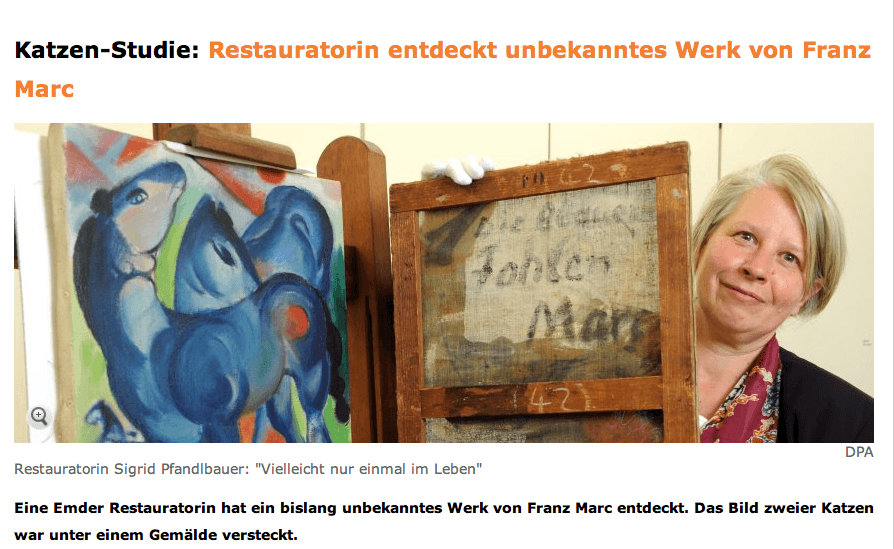
So you have probably heard by now the incredible story of how hundreds of amazing paintings were recovered right here in München – right here in Schwabing! – from the derelict apartment of an “art dealer” who had stored them in haphazard fashion amid cans of apricots and bottles of sherry. Included in the cache are long-missing works by Max Beckmann, Picasso, Renoir, Matisse. Of course most happily found is the painting above, one of Franz Marc’s Blue Horses missing for more than 70 years.
It has been super-exciting to be so lucky to be here for this momentous occasion. Everyone – not just at the museum but everyone in the city – is talking about the fantastic aspects of the story (please read up on it; it’s sure to become even more fascinating) but what is most awesome is the jubilation and delight people are expressing. I can’t think of many places where a city-wide celebration would erupt over such a story.
Of course I am not unmoved. FOCUS magazine broke this story on Monday. When I saw the headline in the Süddeutsche Zeitung’s Twitter feed I ran out to the news vendor to get a copy and snagged the last one, and the last print SZ in the stack too. I am very happy to have these print artifacts of this wonderful occasion.
Here are links from the Daily Mail (UK); Time Magazine (US); and Süddeutsche Zeitung (DE).
I am thrilled that one of the missing Blue Horses was found period, but it’s beyond overwhelming to be right here…Hopefully Turm der Blauen Pferde is hanging out in someone’s garage or wine cellar or something.

by Jean Marie Carey | 20 Oct 2013 | Art History, German Expressionism / Modernism
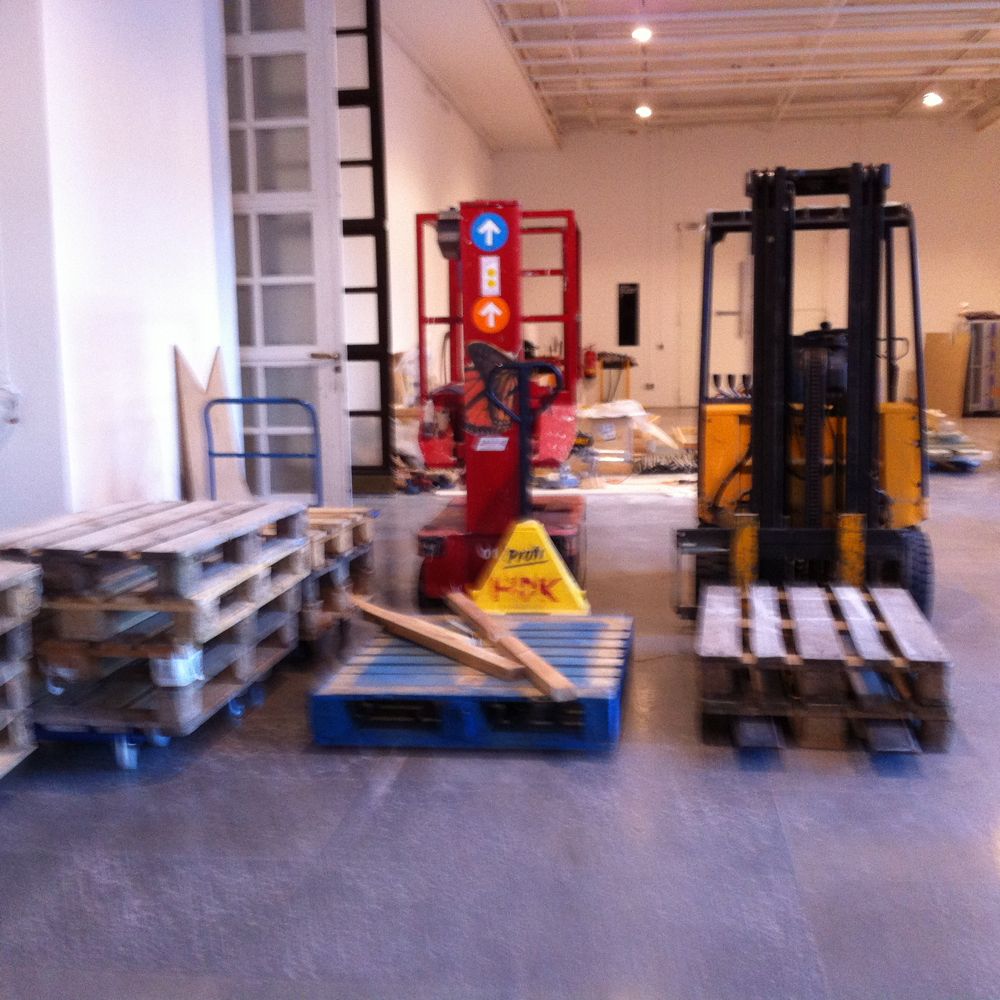
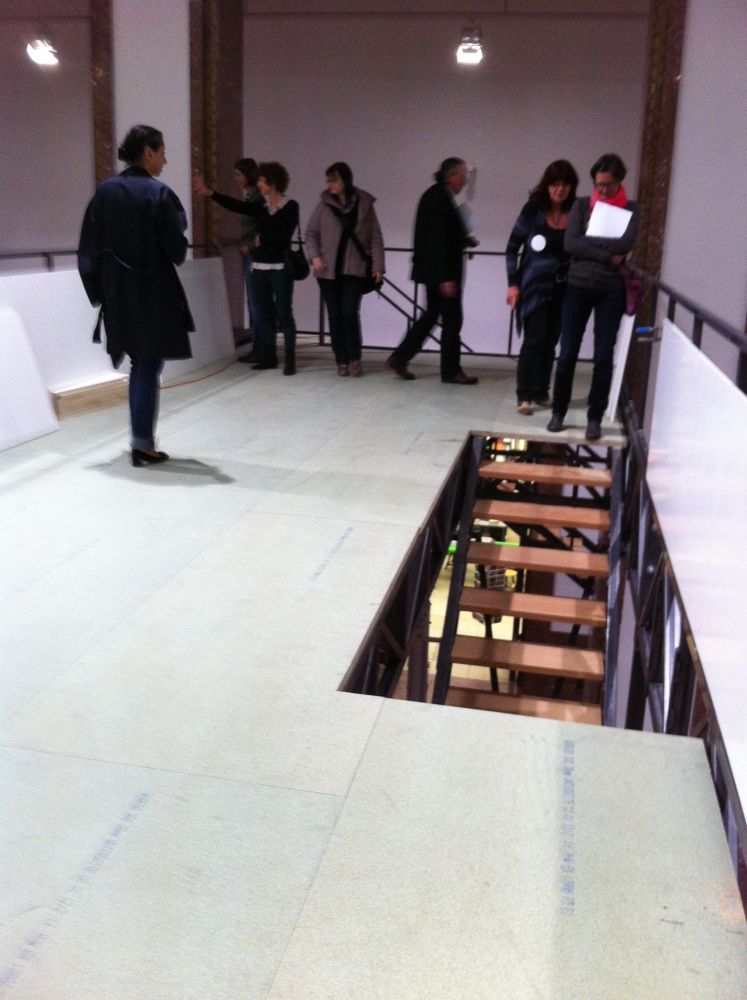
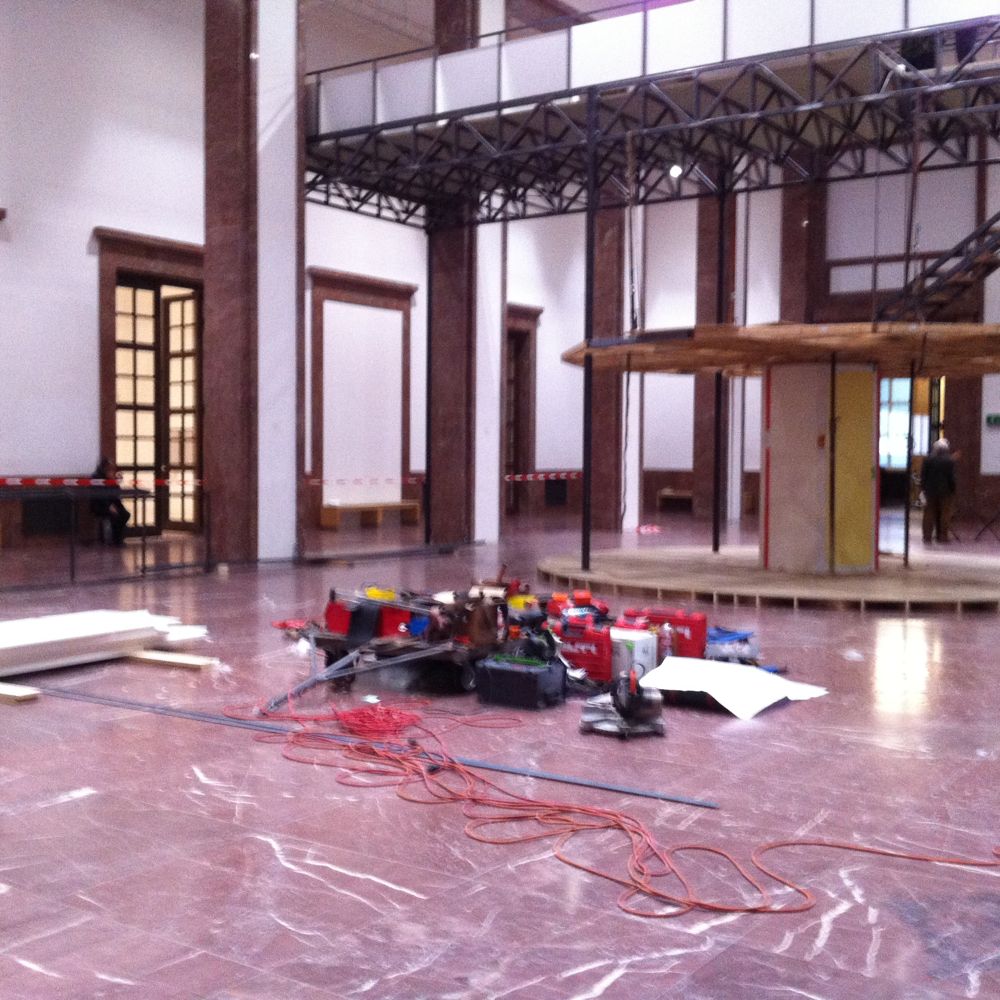
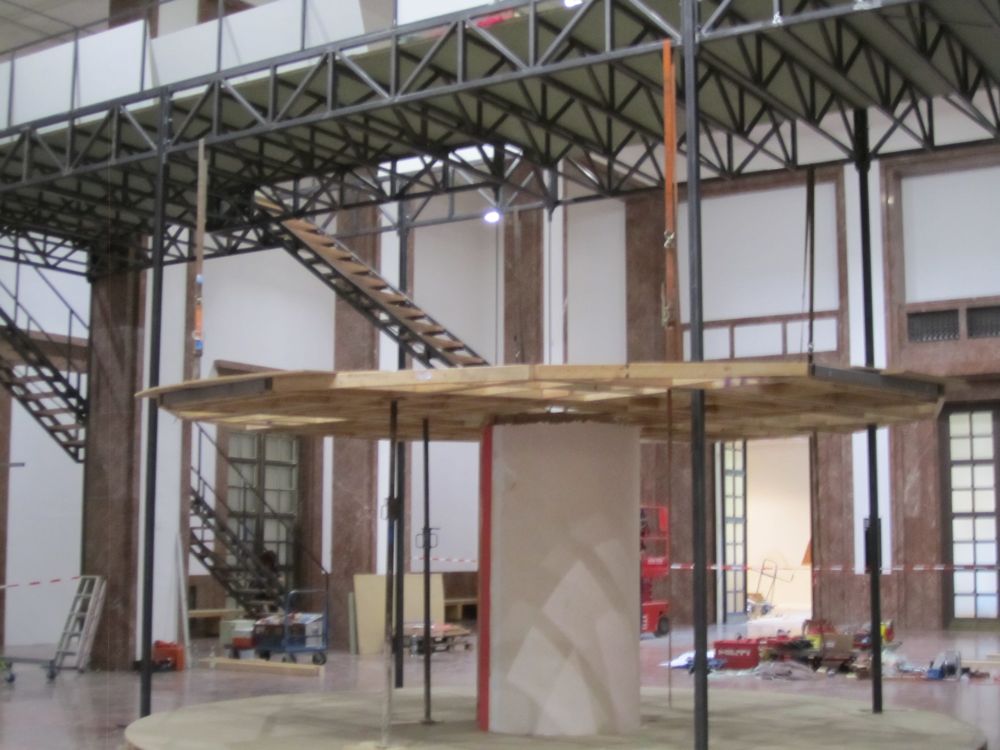
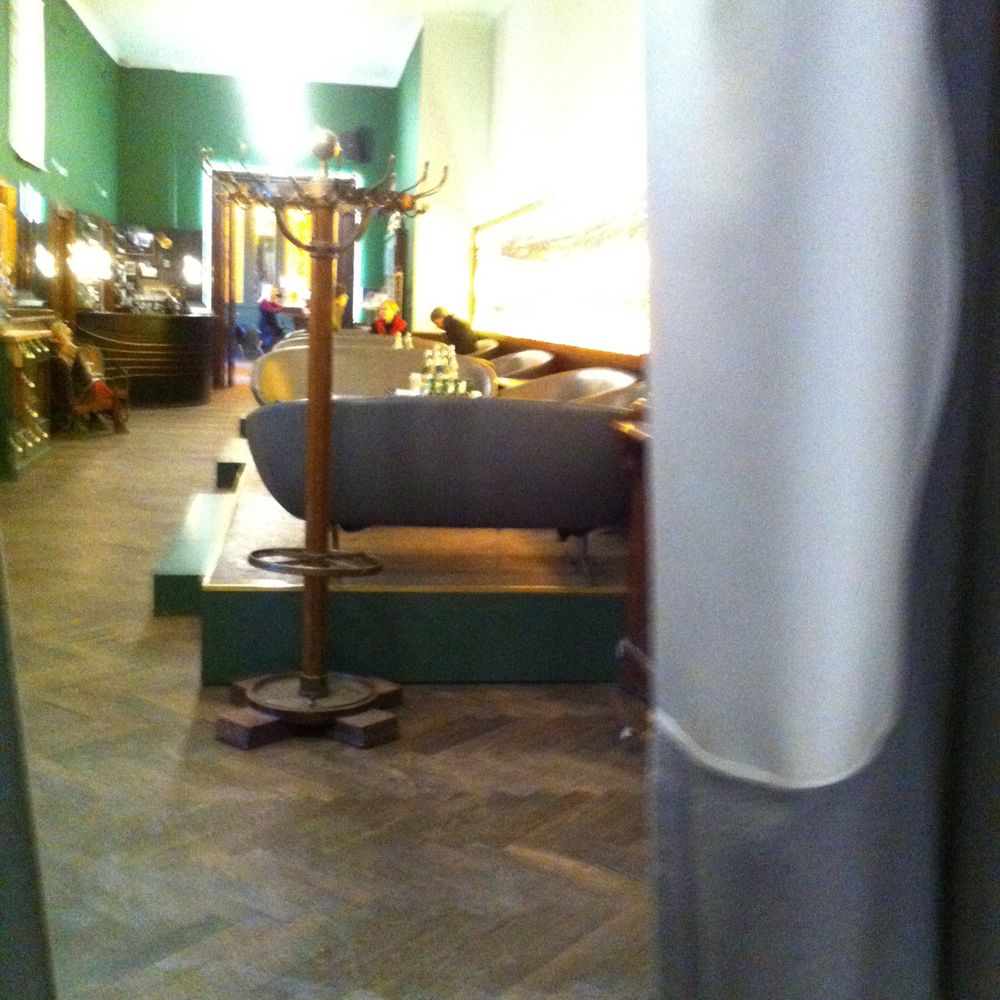
I cannot explain better what 18 of the 21 photographs above are better than the Haus der Kunst press release about this very subject, so here it is, partially ellipsed for brevity:
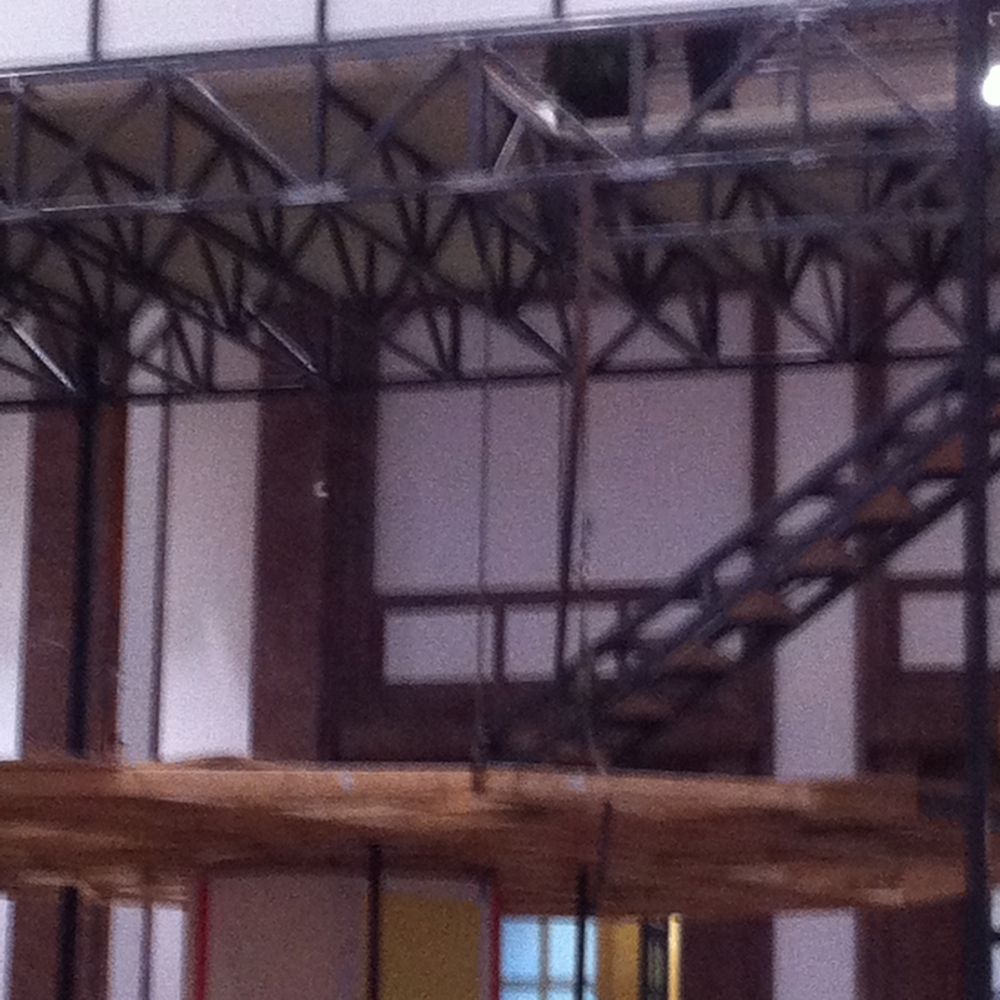
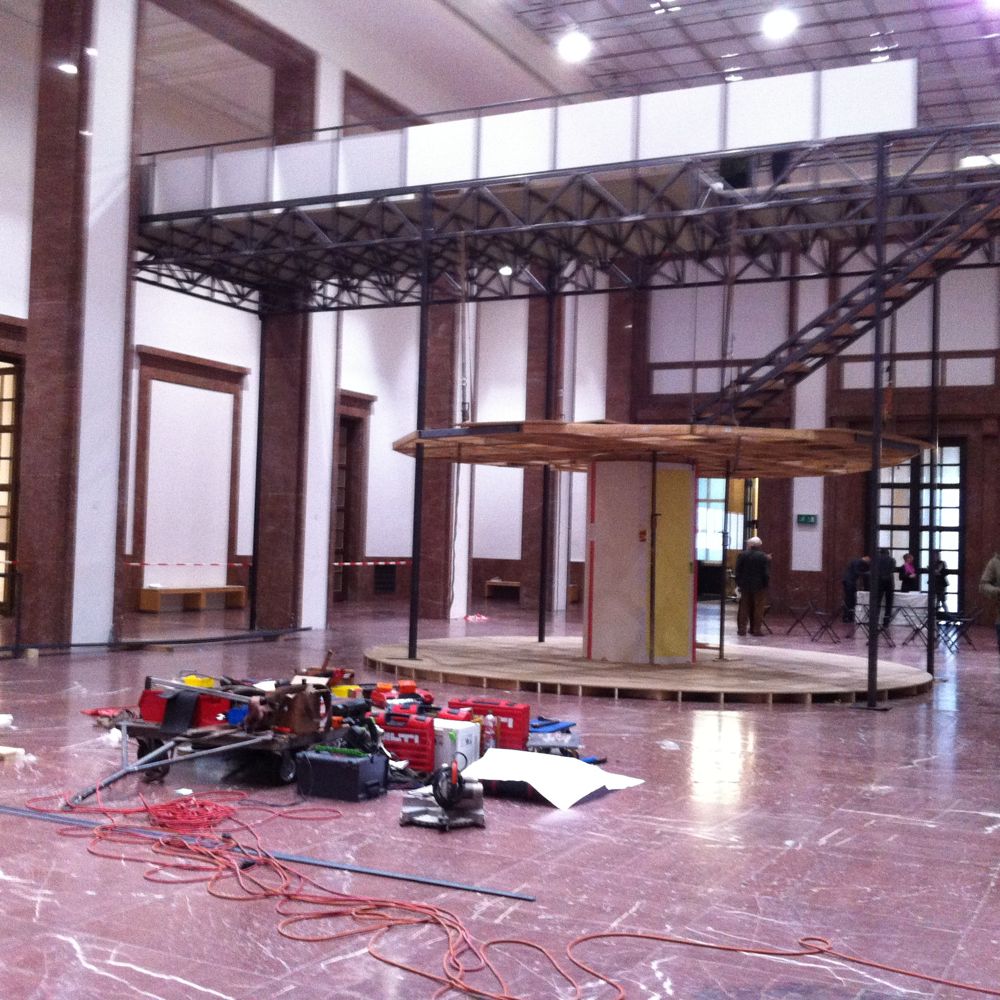
Manfred Pernice ... will create an expansive, accessible installation consisting of various, often "recycled" works. The artist is interested not only in the reusing of found objects and materials of various origins, but also, what is more remarkable, he uses his own earlier works as architectural elements for new works or as installation pieces in altered contexts of meaning. Pernice's planned intervention for Haus der Kunst's central Middle Hall relates directly to the space's architecture and consists of two main elements: Pernice will place his architectural sculpture "Tutti" from the year 2010 in the middle of the room. A spiral staircase leads up to the sculpture's roof. From there, via a second staircase, the visitor reaches a bridge, which spans the Middle Hall and from which visitors can continually view the room from new perspectives. For the bridge, the artist will develop an installation, which, as a result of the work process, will evolve on site. This form of spontaneous response to the spatial conditions is characteristic of Pernice's sculptural approach.
My friend who came with me to the opening exclaimed more succintly: “Mager! Ich mochte lieber sehen…”
Additionally, the director of HdK, Okwui Enwezor (who is having a cusp birthday this week), described Pernice’s work as an “intervention in the global crisis of modernity.”
The artist and sponsors (the Friends of Haus der Kunst) also spoke at length about the sculptural installation, which seems to suggest they realize that even for HdK regular patrons it requires some type of backgrounding. I give HdK a lot of credit for trying out global-art-fair-type works in its austere central hall and for the integration (too seamlessly really) into the “renovation.”
Having just been in six airports in six days, the kind of indistinguishable elevations, chutes, and stopping spaces of those reminded me of Tutti IV in sort of a vague “I’m tired” (not “I’m aware of phenomenology) way. I think maybe also for people living in München the trappings of renovation – with both the Lenbachhaus and the Pinakothek der Moderne having recently reopened – plus the endless “installations” of scaffolding and rerouting at the Hauptbahnhof and Marienplatz – are part of the normal whirring scenic backdrop of the city.