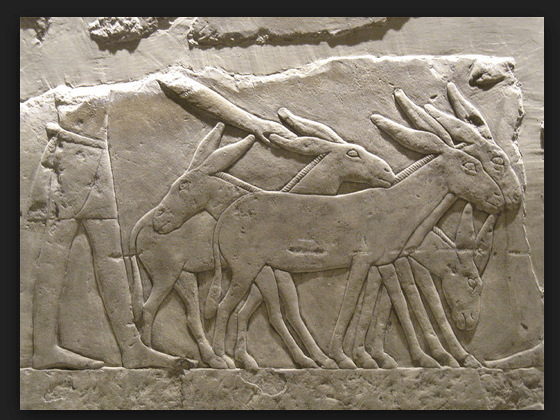
A couple pending matters before getting along to new business; thus, before too much more time goes by, my adventures in Hull, England, in which it turned out that donkeys were very important. Incredibly before last fall, I had never been to England, let alone Yorkshire…*
When I first became aware of Botschaften an den Prinzen Jussuf, the story around which I originally intended to discuss at the University of Hull’s Visions of Egypt: History and Culture from the 19th Century to the Present conference, my immediate reactions was, “Wow…So Sylvester!” I’m sure you are aware of who Sylvester is but, as a reminder, before Boy George, before Lady Gaga, there was Sylvester.
In addition to being an amazing soul and HiNRG dance music recording artist, Sylvester was known for hanging out in San Francisco dressed in amazing costumes, including his trademark pharaoh outfit. One of the only two times I snuck underagedly into a nightclub with a fake ID (the other time was to see the Thompson Twins) was to see Sylvester at El Goya.
So. Visions of Egypt was a conference mostly attended by actual Egyptologists, not art historians, and thus there was a lot of humor and pop-culture-referencing in many of the presentations so I think Sylvester would have been well-received. However owing to the great enthusiasm for donkeys expressed by insurgent quadruped fans, I did not get to work in any sort of reference to Sylvester in my presentation. (more…)
Henry Howard, the Earl of Surrey, is credited along with Thomas Wyatt for founding the English sonnet. Henry Howard lived in France for a long time, was frequently in trouble with Henry VIII for his boisterous behavior, and got into all sorts of adventures; he was a cool dude. This verse, thought to be about Anne Stanhope, Lady Hertford, is from about 1542.
A SONG WRITTEN BY THE EARL OF SURREY.
OF A LADY THAT REFUSED TO DANCE WITH HIM.
EACH beast can choose his fere according to his mind,
And eke can show a friendly chere, like to their beastly kind.
A lion saw I late, as white as any snow,
Which seemed well to lead the race, his port the same did show.
Upon the gentle beast to gaze it pleased me,
For still methought he seemed well of noble blood to be.
And as he pranced before, still seeking for a make,
As who would say, ‘There is none here, I trow, will me forsake’, I might perceive a Wolf as white as whalèsbone,
A fairer beast of fresher hue, beheld I never none ;
Save that her looks were coy, and froward eke her grace :
Unto the which this gentle beast gan him advance apace,
And with a beck full low he bowed at her feet,
In humble wise, as who would say, ‘I am too far unmeet.’
But such a scornful chere, wherewith she him rewarded !
Was never seen, I trow, the like, to such as well deserved.
With that she start aside well near a foot or twain,
And unto him thus gan she say, with spite and great disdain :
‘Lion,’ she said, ‘if thou hadst known my mind before,
Thou hadst not spent thy travail thus, nor all thy pain for-lore.
Do way ! I let thee weet, thou shalt not play with me : (more…)
At the end of the summer of 2007, the week before fall university classes began, Greece was on fire. The Peloponnese was uniformly scorched, nearly a hundred people were killed, rural economies were displaced, and flora and fauna indigenous only to Greek pine forests and mountainsides were burned, perhaps beyond any eventual recovery. Though the fires were barely held back from the famous antiquities of Olympia and Athens, other archaeologically priceless sites were not so fortunate .
Though some of the fires were attributed at their source to arsonists, Greek Prime Minister, Kostas Karamanlis, whose New Democracy party was returned to office this past September, is partially culpable in this tragedy. Karamanlis and other Greek officials were slow to acknowledge the severity of the fire emergency and have yet to admit the true extent of the damage.
“There are several well known ‘arsonists’ in Greece — garbage dumps (burning spontaneously), farmers burning brush, animal farmers burning land to sprout fresh grass for grazing,” Nikos Charalambides, director of Greenpeace in Greece, told a reporter from Reuters on October 1.
“But the biggest arsonist is the state, which has not clarified the use of land, leaving suburban forests vulnerable to rogue developers,” he added in the same piece.
“The lack of a national land registry and national zoning laws leave room for doubt about the characterization of land, whether it is forest or not,” told Reuters.
It is not a good time for antiquities, and the dire circumstances are of course more attributable to the traditional colonial superpowers than to Grecian malfeasance.
The blame for the theft of treasures from the Baghdad Archaeological Museum, the burning of Baghdad’s National Library, and the looting of more than 10,000 Ur, Sumerian, and Babylonian archaeological sites may be laid, in the name of Operation Iraqi Freedom, on the doorstep of the United States and bullied ally Great Britain. (more…)