by Jean Marie Carey | 15 Aug 2013 | Animals, Animals in Art, Art History, Re-Enactments© and MashUps
This post was actually written quite some time ago and held in reserve with about 50 other little stories under the title “Grendel’s Mother Doesn’t Have a Name!” which is now the title of a book chapter. It is actually only a little confusing, and also my devotion to pinnipeds remains unswerving.
I was inspired to revisit by sequential experiences, the first running across an adorable video of a sea otter playing a sort of tag with an Australian cattle dog. The sea otter is clearly enjoying himself, and as I watched him woof softly as he partially clambered up onto a dock, I heard myself think “…er lacht…” followed by a moment of confusion and then thinking… “… was ist das auf Englisch?” For a second I couldn’t think of the words. I have had a few fragmentary dreams in German, but this is the first time anything like this has ever happened in regular life. It was actually very pleasant and I hope it will begin to happen more often.
The other addition to this post is this image of this astounding statue watching over Hohenzollernplatz. It was made by Ferdinand Liebermann in 1930 and has withstood a lot. This is a very evocative image naturally and also reminds me of the moschophoros, which in turn puts me in mind of Knabe Mit Lamm and the poor unfortunate kids…(just a tiny image here because a whole story is coming along about this painting).

by Jean Marie Carey | 3 Sep 2011 | Animals in Art, Art History, Music
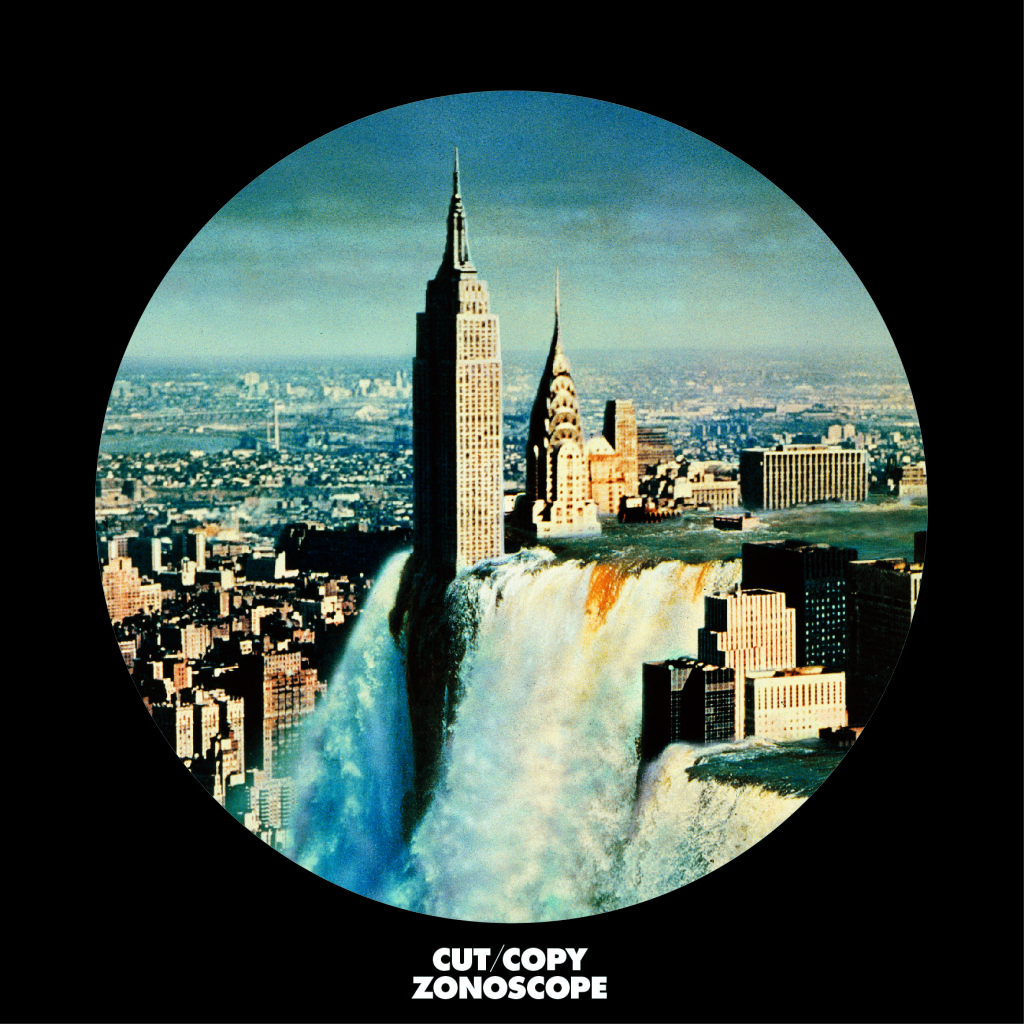
If Cut Copy had 24 albums I would probably listen to Cut Copy all day and all night all the time…as it is hardly a cycle goes by that I don’t hear all or parts of Bright Neon Like Love (2004), In Ghost Colours (2008) or Zonoscope (2011).
Though Melbourne-based Cut Copy is most often washed with the ‘referencing the ’80s’ brush I think it is more apt to say the ‘reference’ is less by way of the [film versions] of Less Than Zero than The Informers — a time and place that never existed removed by memory. And while Cut Copy’s hooks and basslines are superficially poppy, the intentionally stuttering four and eight count measures are demanding of engaged listening.
Zonoscope in particular seems symphonic in the way it is presented as an arc, even without some of the ambient noise segues so prevalent on In Ghost Colours. If IGC was lyrically about the limitations of primary relationships to conquer doubt and isolation, Zonoscope is immersed diametrically in stealthy hope and crushing disappointment that is more internally oriented/externally directed.
Although these three albums are very distinct — mostly owing to the decreasing emphasis on guitars to propel melodies — Cut Copy’s mainstay continues to be danceable, or at least move-able, complicated synth pop of incredible harmonics and density. Dan Whitford is able to pack an epic amount of yearning and escalation into both arrangements and vocals; the devastating release of Hanging on to Every Heartbeat begins at the 2:00 mark of the 4:30 song. The descant, and the change in meaning of the chorus, almost makes me sick it’s so upsetting, and that’s a pretty good shake-up from what begins so cheerfully.
Zonoscope re-presents Cut Copy in a sort of Symbolist ethic, with an interest in the macabre and in hermetic, already-nostalgic technology. Here is a link to listen to Hanging onto Every Heartbeat. Also Cut Copy will play out at the Firestone in Orlando on October 1!
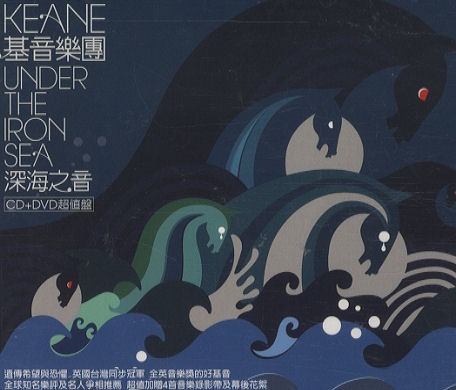
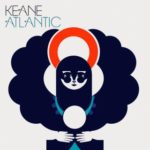
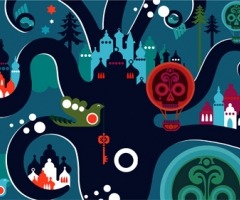
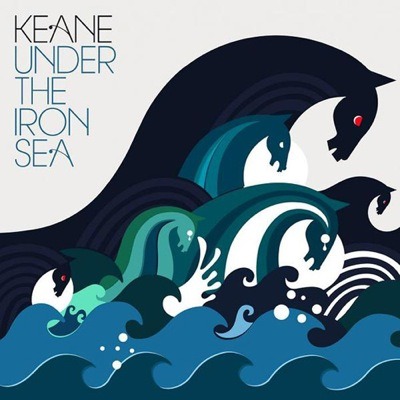
Though Keane is mostly known in the U.S. for the single “Bend and Break” from 2004’s Hopes and Fears, the 2006 more electronics-driven follow-up, Under the Iron Sea, is also a pretty good album. I had only heard UtIS on iTunes and dataheaven.us and so had not until recently (when I saw it in the library) become aware of the fantastic cover design(s) by Sanna Annukka.