by Jean Marie Carey | 23 Mar 2014 | Animals, Animals in Art, Art History, Dogs!, Franz Marc, German Expressionism / Modernism, LÖL, Re-Enactments© and MashUps
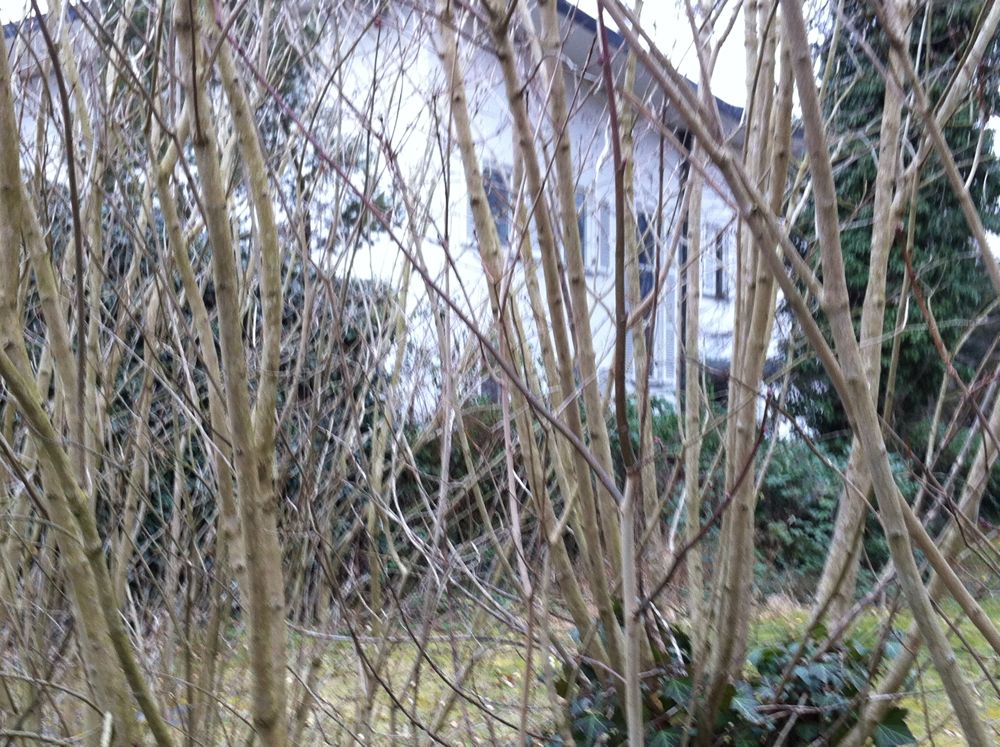
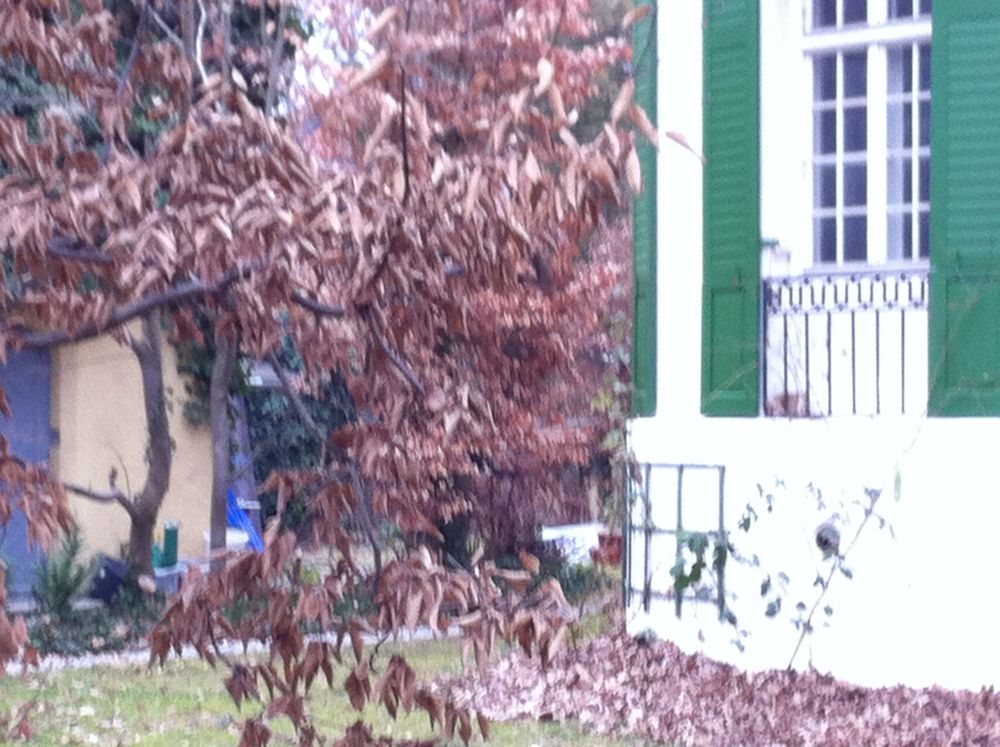
Franz Marc’s family home in the München suburb of Pasing.
I’ve written a little bit about (we’re saving our full repertoire for our even-bigger-screen reveal) the accidental hobby of my creative partner and myself, a sort of reverse geocaching + film. Basically we found out we like to research the addresses of art-historical places and find the spot on the earth where they once stood. In most of these cases, such as the pop-up gallery in Berlin search which ended up being recorded during a blizzard, or the colorful studio here in München destroyed in the war, we had city records and things like invitations to or posters for exhibits to go on, and it was possible to figure out, even where addresses had changed or buildings had been demolished, where they once stood. Sometimes we were able to use GPS coordinates, tagging our own maps as we went along, and sometimes we just used a compass, building keystones, and asking questions. Most of these excursions took a couple days of research and a one-shot hike.
Franz Marc’s family house in the München suburb of Pasing turned out to be our biggest challenge, though, and somewhat unexpectedly since Pasing was never destroyed and a lot of the old buildings have been preserved. However, perhaps not surprisingly, neither were Sophie and Wilhelm Marc, the parents of Franz, nor Paul, Franz’s brother, either very good with managing money nor with keeping records. Thus as it turns out the Marcs owned the house through a chain of convoluted machinations, so the normally very useful city and state records were not helpful. We assembled our clues – fragments of notes and letters mostly, and importantly, photographs showing the house and the yard – and set off to Pasing with only a couple of bottles of water because “how big can Pasing be?”.
Well, Pasing is not that big, but, never underestimate the amount of confusion Franz Marc can cause. On our first journey (like, on the Straßenbahn Linie 19 so not that far) we walked around the neighborhood with the most Altbauten – nothing. The second day we knew to bring some snacks, but, still, after many hours – nothing. We were getting a bit anxious time-wise, and looked over all our notes again. I kept going back to the photographs, which showed very clear views of the property including which way the shadows were falling, and, since they photos were clearly taken in summer, and then in winter, you could see which way the house itself faced. We decided on the third trip to just be more playful and counterintuitively left everything at home but the camera, and getting off the tram just walked in a direction that seemed, for lack of a better way to describe, enticing and pleasant.
Not even half an hour into the walk, we turned a corner, and there it was. The other times we had been going completely in the wrong directions, by the way. Even if I didn’t know from the photographs, I would have just known, I think, that this was a place the Marc family would have lived. It’s a comfortably large enough home, but kind of secluded, even though it’s on city block, with many trees that were saplings in the photographs, a sort of open gazebo, and many eaves and places for birds to live. It definitely had an aura and I was very happy to have found the place – it made me feel very light at heart – and happy that the Marcs had lived there. Sophie Marc stayed on at the house after Wilhelm Marc died in 1907 until she went to stay with Maria Marc later in 1914 (yes, Sophie Marc outlived Franz by just a few months).
Unfortunately, as you can see from the photos, the home is abandoned and in desperate need of some repairs. It’s probably not habitable the way it is now. I dearly hope someone will lovingly restore this historic treasure. If that person is you, please write to me and I will send you the address!
Once my heart had turned to being interested in “recovered biography” I realized how important it is to actually physically experience places and things important in the life of Franz Marc. It’s incredible to me that in a place as self-consciously “historic” as Bayern so many things are falling away. In 2013, the Goltz book store closed its physical location on the Türkenstraße, which should really have been outlawed or something. We did make some documentation of that location, too, though. But that is another story.
UPDATE: May 2015
In some recent research I was doing about some other property records and dates of births and things, I ran across an interesting fact: Around 1885-1900, Annette von Eckardt and her family, which then would have included her baby daughter Helene and husband Richard Simon, a professor at Ludwig-Maximilians Universität, lived in Pasing. By this time Richard Simon would’ve known Paul Marc, Franz Marc’s brother who also taught at the university, and who still lived with the family in Pasing, too. I’m writing something for publication about these interconnected relationships for soon, so…watch this space. The implications are interesting, and a little disturbing, too, but my intuition has been givine me this message for a long time…

by Jean Marie Carey | 8 Feb 2014 | Animals, Animals in Art, Art History, Franz Marc, German Expressionism / Modernism, LÖL, Re-Enactments© and MashUps
Tierschicksale, 1914, Franz Marc
Was kann man thun zur Seligkeit als alles aufgeben und fliehen? als einen Strich ziehen zwischen dem Gestern und dem Heute? – Franz Marc, February 1914, from the intended introduction to the second edition of the Blaue Reiter Almanac. First printed in Der Blaue Reiter. Dokumentarische Neuausgabe by Klaus Lankheit. München, 1965, p. 325.
One of the most frequently cited articles about Franz Marc in popular literature is Frederick S. Levine’s “The Iconography of Franz Marc’s Fate of the Animals” from a 1976 issue of The Art Bulletin, and, subsequently, a short book on the same subject. Apparently there are some issues with the accuracy of the translations presented in both. What’s interesting to me is the creative idea Levine had to analyze Marc’s enormous 1913 painting Tierschicksale (mysteriously residing in the Kunstmuseum Basel) as an expression of Ragnarök, the apocalypse of Norse mythology. My opinion is that despite being generally familiar with the Eddas and with Der Ring des Nibelungen Marc wasn’t that interested in these sagas and didn’t consider them as particularly German.
A few years ago Andreas Hüneke, researching at the Lenbachhaus, discovered that the inscription on the back of the painting, „Und alles Sein ist flammend Leid“ is from a volume of the Buddhist Dhammapada of the Pali Canon of Buddha Siddhartha Gautama given to Marc by Annette von Eckardt. So it doesn’t seem to refer to Ragnarök directly as Levine (not having the benefit of Hüneke’s recent work) asserts. It seems more likely that Marc was very distressed, in the summer of 1913 when he made Tierschicksale, about von Eckardt’s move away from Munich to Sarajevo. It explains a little bit about why, upon seeing the painting again a few years later, Marc says he doesn’t even remember creating it and ascribes its meaning to the more external conflagration at hand.
In any case, Levine was not discouraged by his translating experience and went on to the faculty at Palomar College in California and also spent a lot of time studying and teaching at the University of Tasmania in Hobart.
Today, on Marc’s birthday, with so many animals imperiled, Tierschicksale doesn’t really need any overdetermining; it would be very tempting to just turn and flee, if only there was somewhere to go.
by Jean Marie Carey | 20 Jan 2014 | Animals, Animals in Art, Art History, Dogs!, Franz Marc, German Expressionism / Modernism, LÖL, Re-Enactments© and MashUps
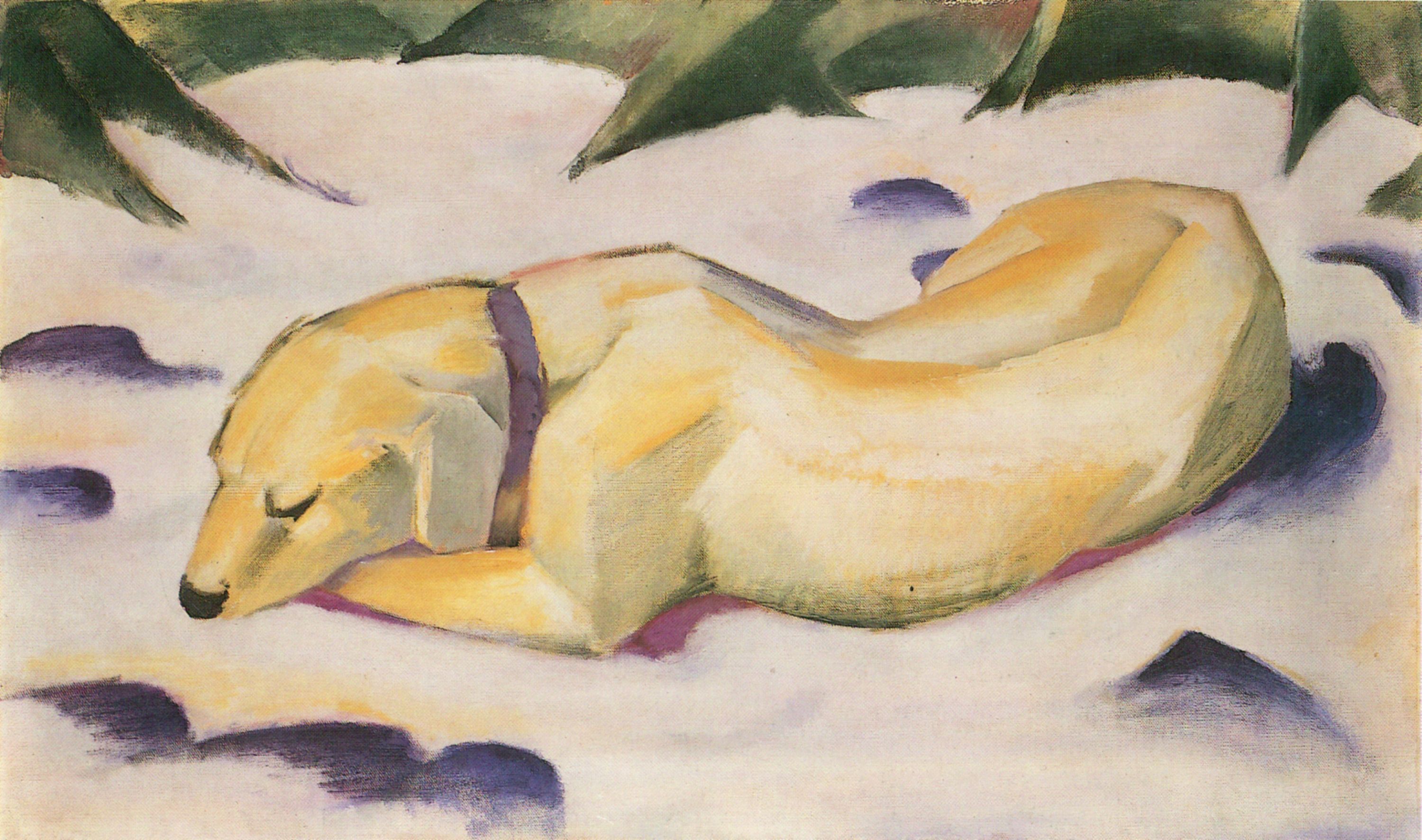
Liegender Hund im Schnee, Franz Marc, 1911
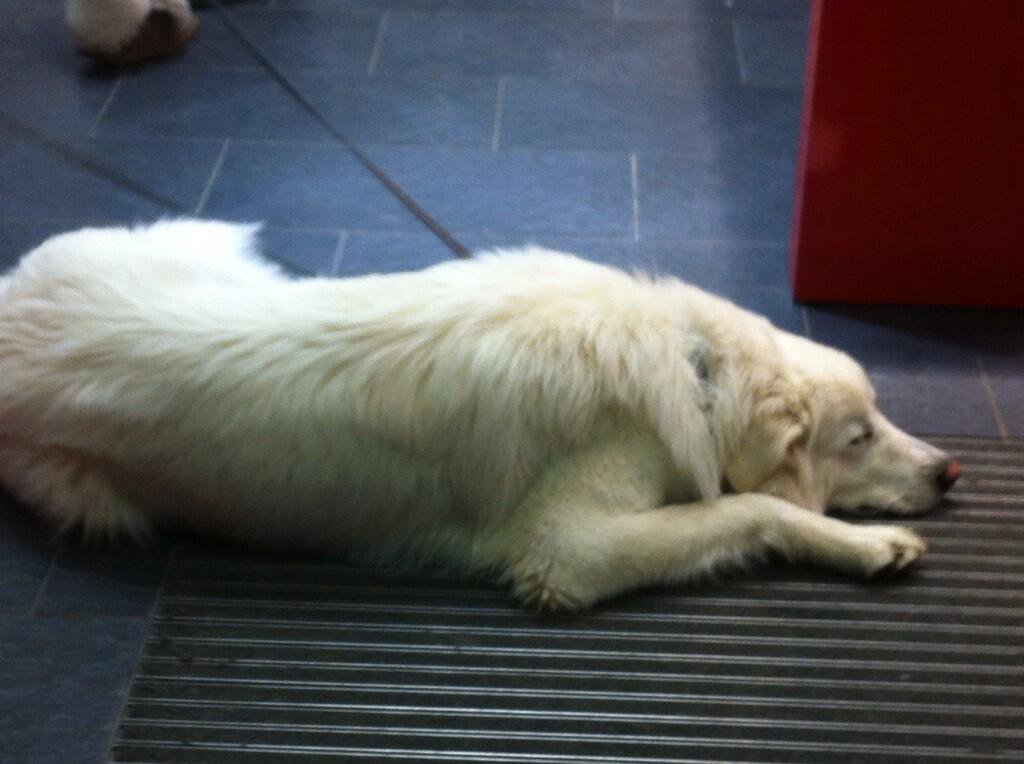
“… Du kannst Dir kaum vorstellen, wie wunderbar schön der Winter in diesen Tagen hier ist, schleierloses Sonnenlicht und dabei den ganzen Tag Rauhreif; sehr kalt, aber von jener schönen, erfrischenden Kälte, die einen nur äußerlich, nicht innerlich frieren macht. … Gegen Abend wird es chromatischer, statt blau weiß treten rosa und komplementär grünliche Töne auf, auch violett gegen farbige Abendluft. Ich habe zwei Sachen im Schnee in Arbeit: die Rehe unter schneebedeckten Ästen und den Russi im Schnee liegend. Ich komme mit beiden ganz gut weiter, sehr farbig. …”
Franz Marc, 17.1.1911
by Jean Marie Carey | 6 Jan 2014 | Animals, Animals in Art, Art History, Franz Marc, Music
Franz Marc’s Deer in the Snow at the Lenbachhaus; Persona
The article M83: Why Music Is Contemporary Art on the Installation website provides an excellent forum, in the comments section, for the discussion of the title subject.
I like M83 a lot and agree that their sound is ambitious beyond poptronica though as commenters on the Installation site point out this is not necessarily because of compositional enterprise or chord progression For me the attraction is the “celebrate the apocalypse” mood of “Midnight City” or the spoken “created sample” in “OK Pal:”
“We’re walking in the streets – or what’s left of them,
I take your hand, and the city is slowly vanishing.
There’s no crowd anymore, no cars, no signals.
But in the middle of the road, a purple and mellow shape is floating.
The shape of our mutual dream.
Stay calm, hold me tight, give it a chance to take us away.
We will live, we will dream on the shadow of our world.”
I had a dream the other night that incorporated both this song and the painting in the photo, Franz Marc’s Deer in the Snow (1911). In the dream a good friend of mine who recently has been through a difficult time was one of the deer, but hampered by a hank of rope or net caught between her hoof and head. The reindeer tender freed her, and despite being “caught,” my friend as the deer, didn’t have any broken bones, or even any bruises or lost fur. I hope she will be OK like the deer in the dream. In the dream, I heard the music from “Midnight City” (which reminds me of this friend). I don’t know why anyone would think people (and animals) don’t see colors or hear music in dreams…maybe everyone does and they just forget.

by Jean Marie Carey | 3 Jan 2014 | Art History, Franz Marc, German Expressionism / Modernism, Re-Enactments© and MashUps
One hundred years ago today, August Macke celebrated his 27th birthday – his last.
I spend a lot of research time excavating lost, unpublished, and little-known writings and facts about August Macke and his cousin (more like a little brother) Helmuth Macke. Franz Marc really loved the Mackes and his interactions with them are important for many reasons. But the Mackes are amazing on their own.
Famous Hyperbolic Color Chart
Like Franz Marc, August Macke was incredibly prolific across a number of mediums. As Marc notes from their first meeting, August is inescapably a benthic Capricorn, materialistic and practical. Yet his prose reads like verse, exploding with jokes (especially at the expense of Marc to whom he often “mit seinen im Ulk treiben”), imagery, sounds, and cheerful energy.

by Jean Marie Carey | 24 Dec 2013 | Art History, Franz Marc, German Expressionism / Modernism, LÖL, Re-Enactments© and MashUps
August Macke, Märchen (Sindelsdorf), 1911, Gouache, Deckweiß, Aquarell August Macke, Märchen (Sindelsdorf), 1911, Gouache, Deckweiß, Aquarell
Franz Marc note to August Macke:
19.12.1910
Sindelsdorf
Du Gauner und alter Kulissenschleicher,
schwelge nur ruhig in den Kulissengeheimnissen anderer, einmal und zwar bald, (hörst Du?), musst Du auch aus Deinen Kulissen heraus vor die Rampe, dann schleich ich hinter Dich und beseh mir die Garderobe dieses Genies. – Übrigens lasse ich jetzt einen F …. nach dem anderen in meiner Malerei, – hörst Du sie nicht? Dröhnend!! Ich rechne nicht mehr auf den Besuch der Leute vor Weihnachten und werde also Deine Sachen nächstens zusammenpacken; es tut mit wahrhaftig leid, – sie sind mir so vertraut und lieb geworden. Soll ich die Sachen von Helmuth auch alle dazupacken? Vielleicht schicke ich das gerahmte Stilleben einmal eigens, wenn es Dir damit nicht eilt. Schreib mir bitte darüber. Grüsse Frau Lisbeth herzlichst. Viel Glück und ›Mut‹! zum Einzug in’s Atelier!
Dein Fz. M.
• • •
Although FM kind of jokes here about it perhaps being time for Helmuth Macke – who has only just arrived – to depart, FM quickly gets used to having Helmuth around. At the end of the same month, the nurturing, self-possessed teenager makes art history happen…