Crop Circles of Fur
Marcie Carey has chosen “the quiet mind.” I loved from first sight and have come to greatly respect the steadfast “resistance to extroversion” of this retiring Italian Greyhound who mostly devotes herself to patient admiration of her cat and kitten friends. Marcie’s indulgences are that she enjoys eating all kinds of unusual foods, unusual for a dog, I mean, like cranberry relish, and to being stroked and snuggled by people she has known for more than six years, which at present includes only myself.
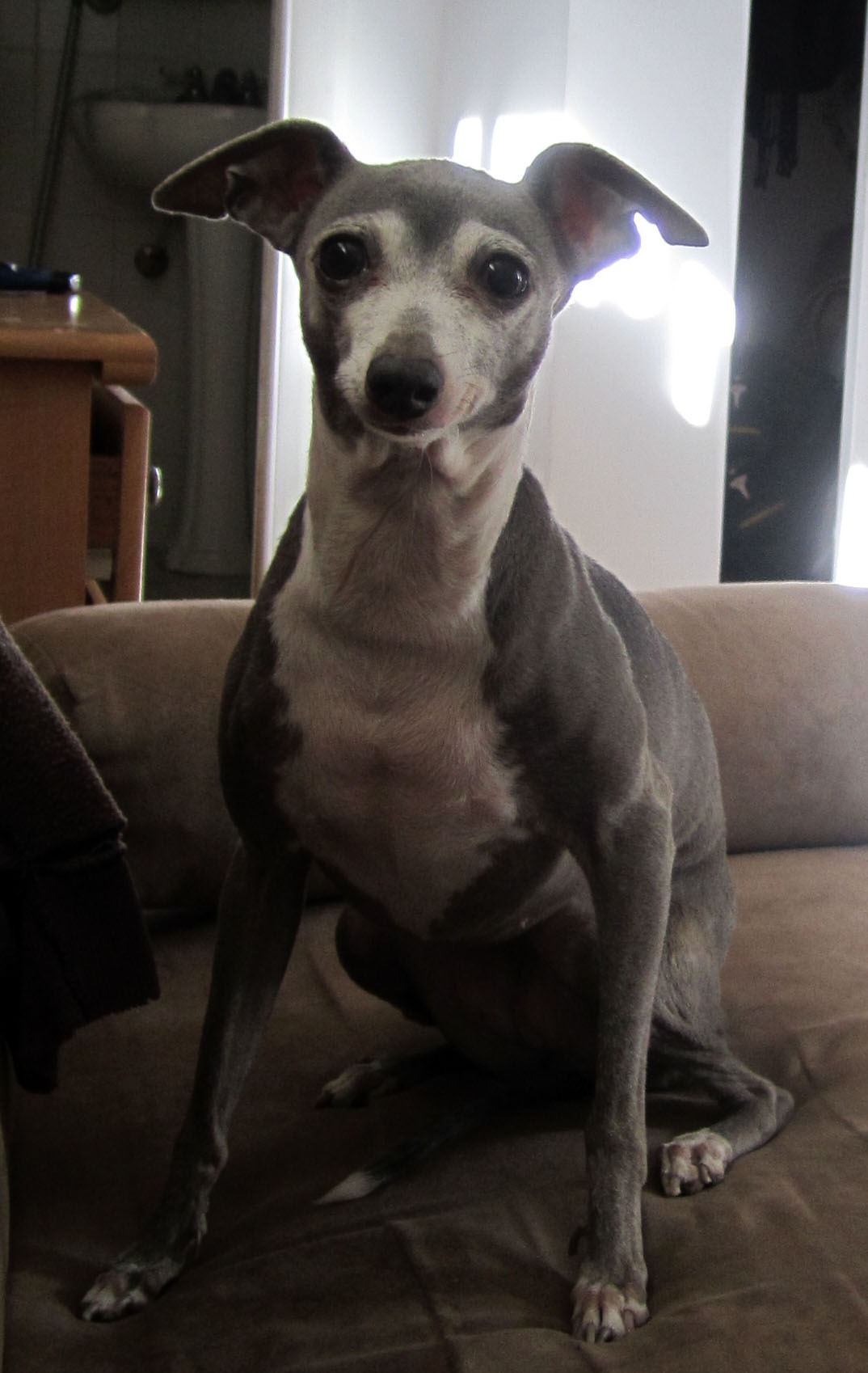
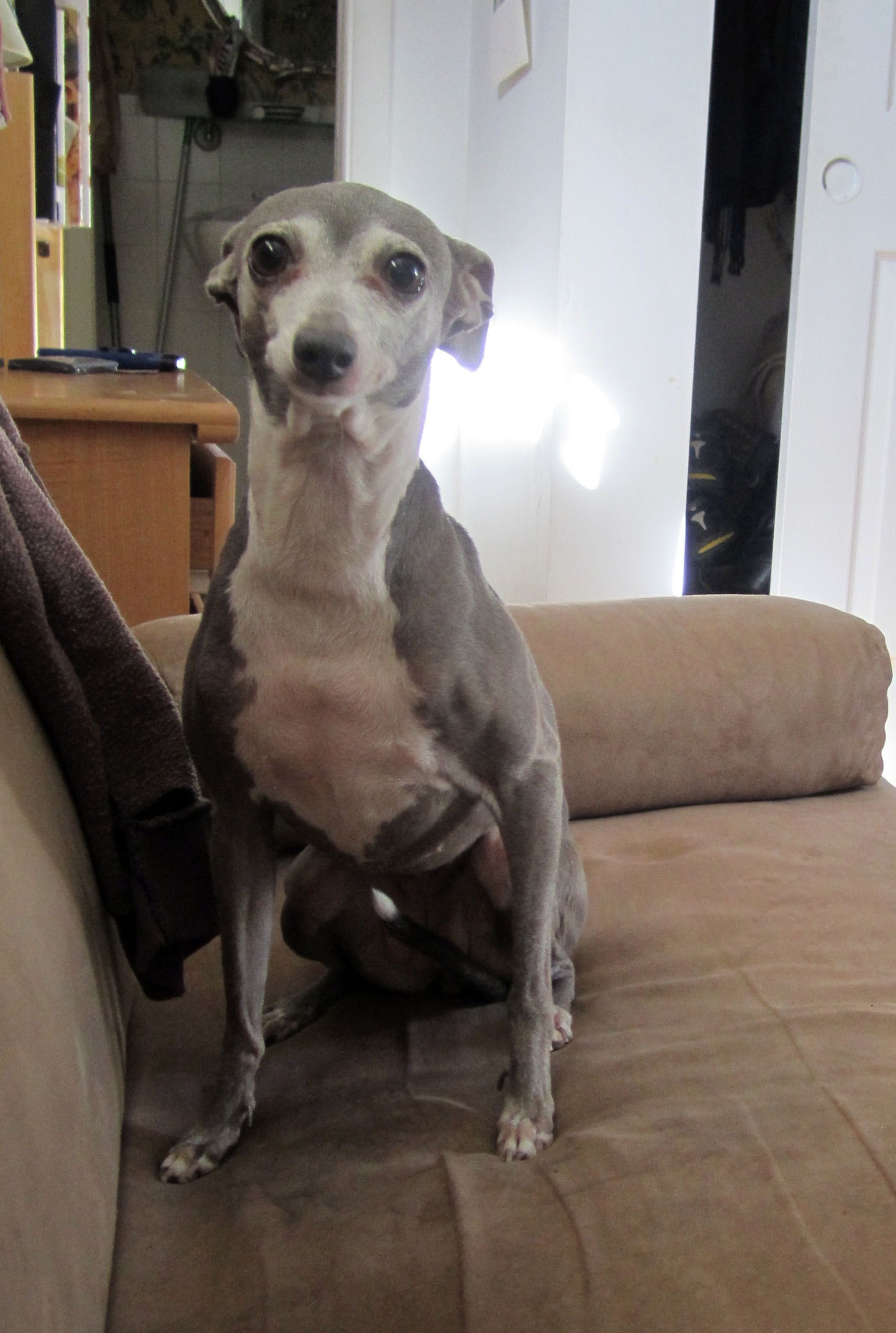
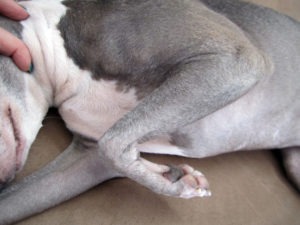
Marcie (who arrived with this normal non-avant garde non-literary name, the one word she knew, and thus kept) has always been a very beautiful little dog, tiny even by Italian Greyhound standards with expressive black shoe-button eyes and her white scarf, feet, and tail-tip. Since Marcie has gotten older her blaze and mask has extended up her nose and face and now covers her eyes. Her fur is also salted and peppered with many different flecks shading from white to black and all the saturations of grey in between; you can see some of these variations, even in the whiskers, in the high resolution photo above. Marcie has several whorls of fur, called when they occur in horses wheat ears or corn ears, on her chest and neck. These are oval, almost heart-shaped patches or hair that grow in opposite or circular directions as compared to the rest of the fur – crop circles of hair. I tried to get some photos of her (below) where you can see these patterns, but Marcie was skeptical about being photo documented.
I was thinking today about how talkative MC, as most people call her, has become over the years. When she first came to live with Queequeg, Astra, and me in Miami she hid for most of the first days. The person from Italian Greyhound Rescue who placed Marcie with us did so, actually, knowing that we would not try to make any extraordinary socializing efforts with this very timid dog who was seized from a puppy mill and very nearly feral. Quee and Astra were so gregarious. They were very loving with the new little sister at once and showed by example that there was only sharing of attention, sleeping surfaces, and food. Sometime I will tell more about Marcie’s first months, but they were spent in silence. I tried not to think about what had happened at the puppy mill but I began to worry that something had happened to MC’s larynx or throat and that she was unable to bark.
Gradually, though, Marcie did begin to express herself, through more frequent instances of allowing to be touched, stroked, and finally, held, and through some adorable “breath sounds,” small chuffing and sighing noises she still to this day makes. One day I was making some food she was particularly interested in – some kind of noodle soup I think because I remember the hot cauldron – and suddenly Marcie emitted a little “woof!”. MC was surprised and I was surprised. I tried not to react one way or the other so she wouldn’t attach any traumatic significance to using her voice, but I was very thrilled. After that, Marcie began vocalizing more and more and today she has the same screeching trill as many other IGs. Italian Greyhounds are close to Basenjis, the “yodeling” dogs, and like their cousins they are capable of quite a large range of sounds, almost like mynas. While she is far less interested in conveying communication to humans via sound (or understanding human speech) than her sisters were, Marcie has a fairly large repertoire of noises.