by Jean Marie Carey | 27 Jun 2010 | Art History, Stuff Found in Library Books
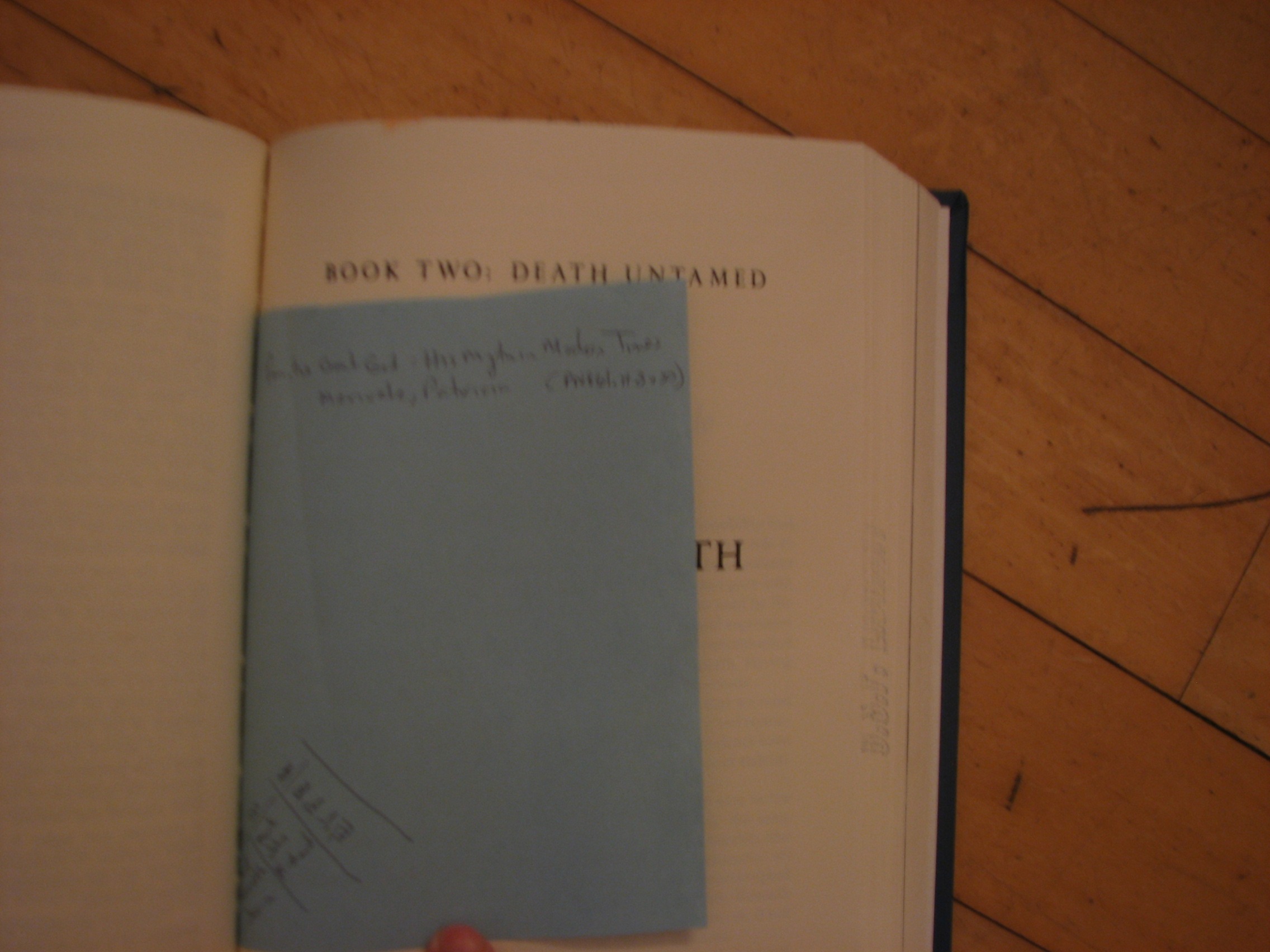
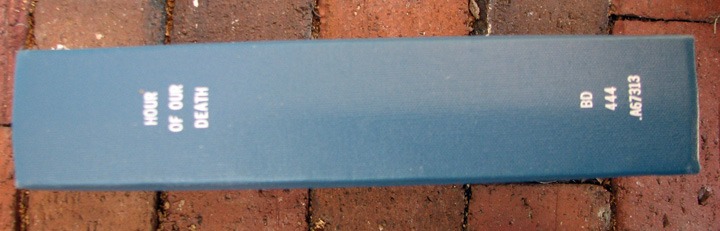
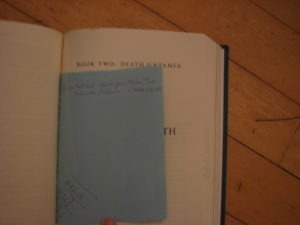
This book, The Hour of Our Death by Philippe Aries (New York: Knopf, 1961) and the pages inside it was rebound recently, with the ad hoc call slip of a patron (who apparently had found the book) joined to new (sewn) binding.
Call slip bound into “Remote and Imminent Death,” in The Hour of Our Death

by Jean Marie Carey | 23 Jun 2010 | Art History
The First Thilling Chapter
WARNING!
The Inspector for the Office of Literary Quality, a unit of the British Colonial Office, has determined that the following reading material is of the poorest possible grade, as it is solely structured around nonsense and simply “meaningless words on a page.”
This material is not intended for resale, and is the property of the University of Polyleritae.
Any infringement of the Statuatory Copywright by Dr. Moe Howard and the University is a violation of all applicable laws.
Please note that the names have been changed in order to encourage innocent parties to commit acts that would adulterate their innocence.
This is the first installment of the Tom Selleck/Opus the Penguin Literary Collection.
The University would like to thank you for helping us to establish the finest in InstiLit. Please remember that THIS IS A SECURED BUILDING. NO RIFF-RAFF. NO WHISTLING IN THE HALLS OR PLAYING WITH THE ELEVATORS.
THANX,
The University of Polyleritae

by Jean Marie Carey | 13 Jun 2010 | Art History, Franz Marc, German Expressionism / Modernism
Franz Marc’s best known writing is his public manifesto-ing, and also his correspondence with colleagues and family. But Marc also wrote on the covers of and inside his various sketchbooks all the time. This verse from around 1910 is really trippy in a Rimbaud sort of way. Some of the imagery and words come up again in paintings and painting titles. Thomas de Kayser, the editor of the volume in which this appears, organizes this material by theme very agreeably. Text in French follows the English translation.
Notes in the sketchbook XXVIII
— A pink rain fell over meadows.
— The air is like green glass.
— The girl [observed] looked into the water, the water was clear [as] crystal, the girl was crying.
— Trees had their growth rings, the animals their veins.
Notes in the sketchbook XXXI
The storm roared.
I entered the house and saw all
A tall woman red small black cat [playing] on the green table.
Kraak, lightning strikes the vehicle – the beautiful little cats were playing with the woman, she smiled – ah ah [poor] man and horse are [is] dead. [The man cries] [sky] the angel of fear knocks at the window; the [poor woman] I could shake the red heart of the woman and black kittens knew the green table – what it [?], red and black and green? Three colors give it a thought? If we give to the red heart shape, the black that [one of three interspersed] small kittens, green form of [a large square plate ?…] the square.
I meditate on that thought.
The red heart of the woman breaks.
It [comes] springs a [blood …] [a streak of blood] A stream of blood [across the sky due] which falls into the river, it flows through the now red green pastures grazed by sheep or black.
The storm has withdrawn his hand from the earth.
The blue sky [?] Ogle like a gigantic glass eye the scene [of] red, green, and black, this thought is not it terrible? […] Do you understand what the painters paint?
(more…)
by Jean Marie Carey | 9 Jun 2010 | Art History
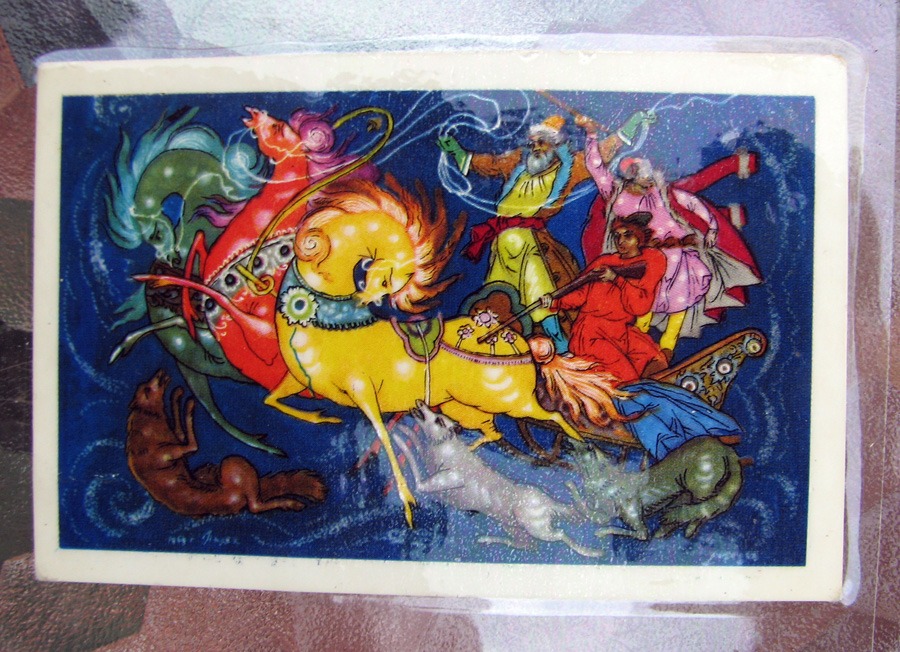
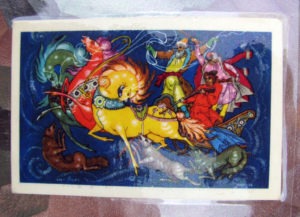
CCCP Calendar Card, 1971
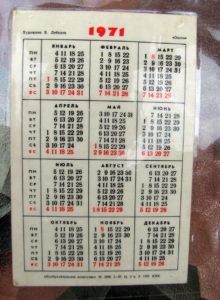
Soviet Calendar Card, 1971
Documenting odd things found in library books begins; this project is called The Lure of Salvage. Our inaugural item, this small (7 cm by 10.2 cm) calendar card from Moscow cicrca 1971 was found in a book of Russian poety printed in 1942. The photo does not do the image of the curly horses and leaping wolves justice but it is very dreamy and lovely.
‘There is no document of culture that is not at the same time a document of barbarism.’ – Walter Benjamin
by Jean Marie Carey | 1 Jun 2010 | Art History
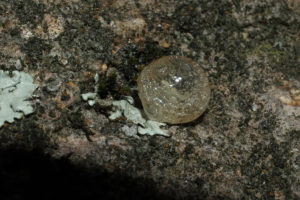
Unidentified Coastal Organism
It’s June 2010.
“The end of history involves, then, an ‘epilogue’ in which human negativity is preserved as a ‘remnant’ in the form of eroticism, laughter, joy in the face of death. In the uncertain light of this epilogue, the wise man, sovereign and self-conscious, sees not animal heads passing again before his eyes but rather the acephalous figures of the hommes farouchement religieux, ‘lovers,’ or ‘sorcerer’s apprentices.’ ”
— Giorgio Agamben, The Open: Man and Animal, (Stanford, CA: Stanford University Press, 2004), 7.