by Jean Marie Carey | 25 Sep 2008 | Art History
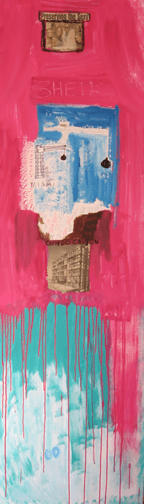
“Enraged by Tea,” one of my all-time photophone favorites, from 2005.
The three essays discussed in this response paper relate to contemporary concepts around the analysis of visual culture through the interpretation of the philosophies of history, commodification, and language as refracted by The Man’s capitalistic hijacking of the involuntary human practice of looking.
While Karl Marx and Friedrich Engels use the terminology typically associated with the social proposals of communism including the expected references to the “proletariat” and the “bourgeois,” these selections from German Ideology constitute less a political manifesto than an intellectual proposal for the active reconfiguring of the recording and interpretation of history. Marx and Engels (and, for the consideration of these works, Barthes) are not particularly known for easily comprehensible prose styles. German Ideology capitalizes, so to speak, on the even more opaque writing of the greatest German ideologue of the time, Georg Wilhelm Friedrich Hegel. Marx and Engels propose that while there is some fundamental correctness to the Hegelian principle of the dialectic – ascertaining an absolute truth through logical dissection and argument – historians and philosophers following Hegel had simply got everything wrong. Rather than intangible evolved yearnings for “immanence” and “transcendence,” humanity is a material manifestation controlled by economics. This definition of “historical materialism” is preceded by “dialectic materialism,” which establishes both the sole existence of the physical (as opposed to ephemeral) world, and, more significantly in connection to visual culture studies, the establishment of the thesis/antithesis paradigm which eventually becomes known as “binary opposition.” (Marx – more Marx than Engels – also takes exception to other “Hegel deconstruction” scholars such as Ludwig Feuerbach and Max Stirner). In a certain titular and textual respect, these selections undercut some of the assumptions endemic to the concepts of alterity politics and false constructions of Otherness raised during the heights of Post-Modernism simply by presuming that such a thing as an ideology based not upon colonial dynamics or Western European cultural dominance but on the national identity of Germans.
(more…)

by Jean Marie Carey | 20 Sep 2008 | Art History
Peak Libraries: Developing Sensitivity to Future Consequences
Insensitivity to future consequences is an identified behavioral aberration experienced by people who have experienced traumatic brain injuries to the cerebral cortex (Franck, 1995). Though perplexing and disruptive, at least there is some explanation for the actions of those who suffer this affliction. There is no such biological explanation for the shortsighted and damaging behaviors affected by those responsible for the stewardship of public library and museum programs, particularly in Florida. Florida’s plight, which is duplicated in states and municipalities nationwide, presents a particularly tragic case as the consequences of defunding important cultural and social programs may easily be foreseen.
Parallels may be drawn between the “gas crisis” and the “library crisis.” For more than twenty years, since the administration of President Ronald Reagan, patrons and employees of museums and libraries have dealt with increased funding shortfalls and budget and staff cuts in pretty much the same way as the general population has dealt with the current petroleum crisis: by complaining, and doing nothing else. Until recently, drivers griped about gouging at the gas pump and kept buying Hummers. Librarians and museum curators long bemoaned the crumbling cultural infrastructure (Klein, 2007). Through 2006 and 2007 commuters continued to drive exactly as much as always, and since 1984, library administrators have also continued, with respect to the lack of public funding for collections and facilities, to commiserate with colleagues and at library conferences, and perhaps most damagingly, to continue to rely on the personal integrity and client focus of library staffers to maintain the high level of productivity and professionalism associated with librarianship.
(more…)
by Jean Marie Carey | 13 Sep 2008 | Art History

“I’m really shocked that the city has made the decision to close the library on Friday and Saturdays,” resident June Connell said of the city’s proposal to close the Countryside Library on Fridays and Saturdays to save money. — From The St. Petersburg Times September 5, 2008, edition.
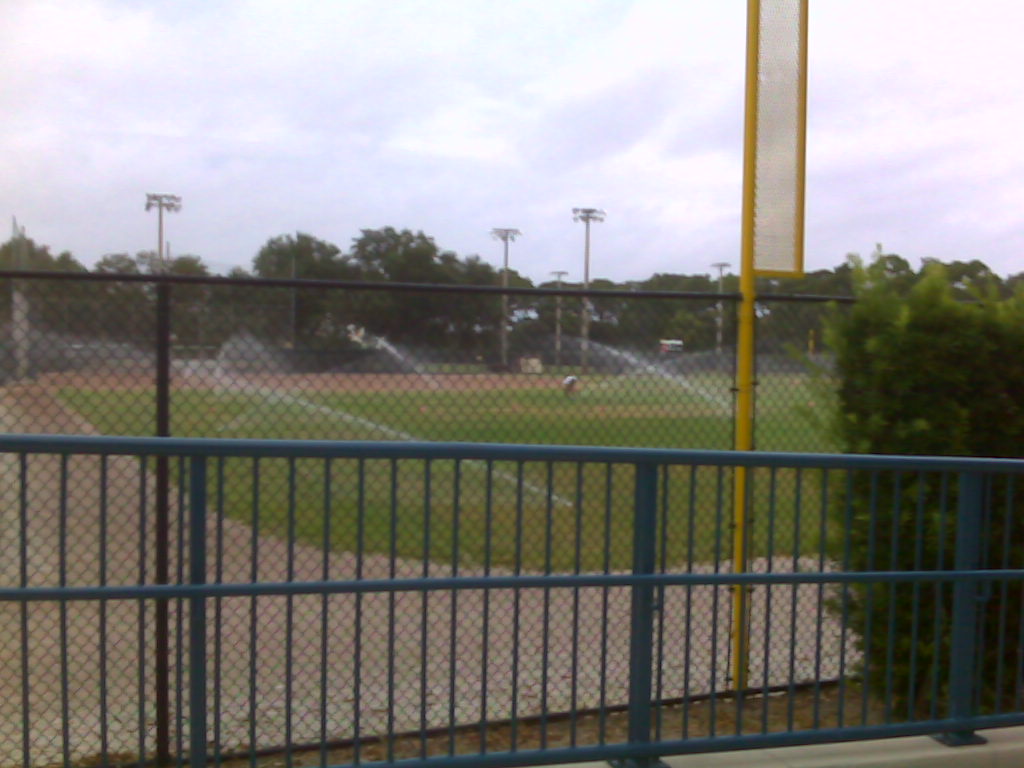
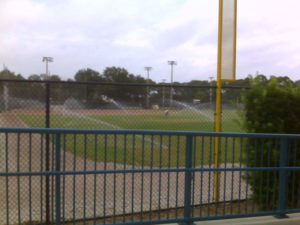
Hey city of Clearwater residents, particularly those who voted for Amendment 1! Here’s what the closings of the Clearwater library branches are paying for: For the sprinkler system to be turned on while four city workers lay chalk lines and even up the turf at the Drew Street sports complex, commencing at 6:00 a.m. weekdays.

by Jean Marie Carey | 12 Sep 2008 | Art History
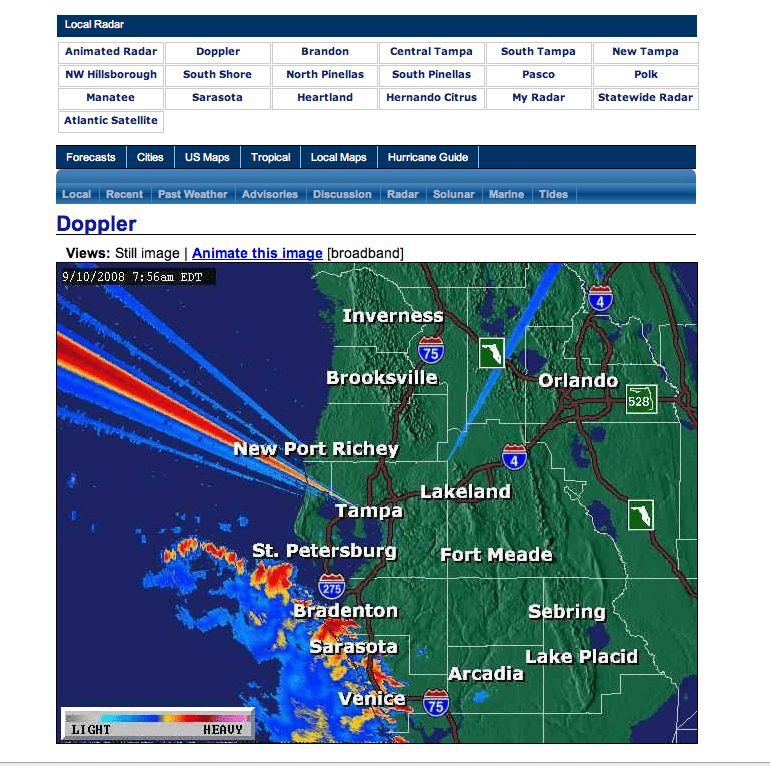
What’s going on with this radar image captured from Tampa Bay NBC affiliate WFLA on 8 September 2006 (during the week Hurricane Ike was just off the coast out in the Gulf of Mexico)?
Is the Bay Area being affected by streaking columnar bolts of weather?