“In Plato’s Cave” by Susan Sontag from On Photography, 1977
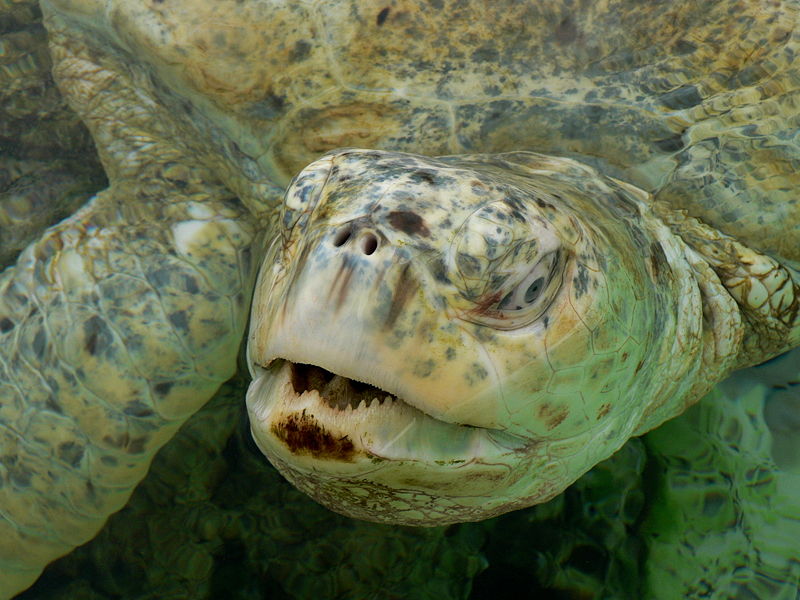
[Green turtle, albino. By David Monniaux]
“To photograph is to appropriate the thing photographed.”
On Photography, Susan Sontag’s exhaustive critique of photography, which excoriated photographers even as it elevated the art form, opens (in the 1977 book form of the collected essays) with the chapter “In Plato’s Cave.” Arranged and edited in this manner this chapter is meant to serve as the introduction to Sontag’s collection of ideas on the sociological implications of the medium of photography.
So much has been written by and about Sontag with respect to the construction and importance of these essays, and so much biographical detail about Sontag has come to light since her death a few years ago, that is it difficult to consider “In Plato’s Cave” unto itself, separate from that information, let alone separate from the other essays in the collection.
Basically, Sontag takes humankind to task, as did Plato, for sitting around accepting whatever images that happen to dance past as a perfect mirror (or projection) of reality and judges photographers equally harshly for approaching their subjects with acquisitiveness and predation. Sontag investigates the simile of the cave but more deeply the metaphor of the mirror.
I was interested to learn that Sontag had also written extensively about Persona, the 1966 Ingmar Bergman film, probably around the same time she began the series of essays that are collected in On Photography. Persona can also be construed as being about mirroring, and also about a kind of (seemingly) passive transmission and reception of knowledge, as well as a complicated examination about the relationship between the beholder and the beheld. Persona is open to interpretation as a horror movie rather than a psychological study, one in which a very modern sort of vampire sucks the being from a similar but not identical human. (more…)